




This Coastal Connection is sponsored by Baths by Spicer Bros.
LEWES, Del. — While Lewes proudly calls itself “The First Town in The First State,” history suggests the coastal community may have been among the last places in Delaware to fully embrace American independence.
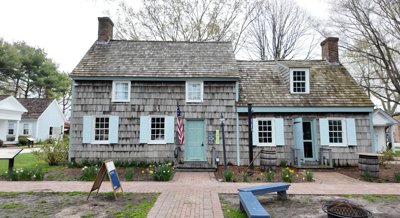
A visit to the recreated Sussex Tavern is also a step back in time with Bill Hicks, the tavern’s manager and a former teacher who now spends his days dressed in full 18th-century clothing while sharing Delaware history with visitors.
“We try to be as authentic as possible, within reason,” Hicks said.
Hicks said the tavern was designed to resemble the original inn that once stood on Second Street in Lewes.
“That building was torn down in 1831, but this building on our property best lends itself to be that recreation,” Hicks said.
Using the tavern as a backdrop, Hicks explained Delaware’s unusual beginnings under British rule and William Penn’s influence over the region.
“Delaware has a very strange, convoluted history,” Hicks said. “William Penn takes over in 1681. He gets his charter for the colony of Pennsylvania. Delaware was known as the Lower Three Counties on Delaware.”
Penn also played a role in naming the area.
“And so the folks here said, ‘William Penn — hey, Billy — how about a new name?’ And he says, ‘We’ll name the town Lewes after the town in England where my mother-in-law comes from.’ And we’ll name the county Sussex, after the county in England where my mother-in-law… he must have known his mother-in-law big time,” Hicks said. “But in any event, the folks here got a much more palatable name. And we’ve been Lewes — two syllables — ever since.”
During the 1770s, Sussex County maintained close ties to England in the years leading up to the American Revolution.
“I always say Sussex County has been on the wrong side of history,” Hicks said. “Because back then, in the 1770s, Sussex County was a hotbed of Tories and Loyalists.”
According to Hicks, support for Britain nearly altered Delaware’s role in the vote for independence in 1776.
“A petition is circulated throughout the county. Here in Sussex County, 5,000 Tories signed that petition. Five hundred Patriots signed their own petition. They’re all being sent up to the capital to help determine what course Delaware takes,” Hicks said. “Well, somewhere along the way, that Loyalist petition disappeared.”
The disappearance of the petition, Hicks explained, helped clear the way for Delaware to support independence alongside the other colonies, contributing to the unanimous vote at Philadelphia’s Independence Hall in July 1776.
Today, the Sussex Tavern continues serving as both a tourist attraction and a living history lesson about Delaware’s 18th and early 19th century past.
