The Voting Rights Act over its six decades became one of the most consequential laws in the nation’s history, preventing discrimination against minorities at the ballot box and helping to elect thousands of Black and Hispanic representatives at all levels of government. On Wednesday, the U.S. Supreme Court knocked out a major pillar of the law that had protected against racial discrimination in voting and representation. It was a decision that came more than a decade after the court undermined another key tenet of the law. Voting and civil rights advocates say the decisions hollow out the law and will lead to a severe erosion of minority representation.

The Supreme Court has struck down Louisiana’s second majority Black congressional district in a decision that could open the door for Republican-led states to eliminate Black and Latino electoral districts that tend to favor Democrats. The court’s conservative majority Wednesday found a district represented by Democrat Cleo Fields relied too heavily on race. The decision weakens a landmark voting rights law’s protections against discrimination in redistricting. It’s unclear how much is left of the Section 2 provision, the main way to challenge racially discriminatory election practices. The 1965 voting rights law was the centerpiece legislation of the Civil Rights Movement and succeeded in opening the ballot box to Black Americans.

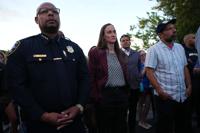
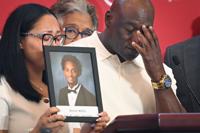
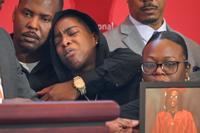
Two deadly cases of domestic violence — one in Louisiana and the other in Virginia targeting Black mothers — have sparked a national conversation about domestic violence prevention and mental health care resources available to Black communities. Specifically, advocates in the aftermath of the headline-grabbing cases say the tragedies highlight troubling underlying issues. They see Black women as more likely to experience domestic violence and are calling for the nation to confront disparities in access to care. Authorities say a man on Sunday fatally shot seven of his children and another child in Shreveport, Louisiana. And last week, police say, former Virginia Lt. Gov. Justin Fairfax shot his estranged wife and then killed himself.

Pope Leo XIV has traveled to pray at a popular Catholic shrine in Angola that was an epicenter of the African slave trade. Leo prayed Sunday the Rosary prayer at the Sanctuary of Mama Muxima. The church was originally built by Portuguese colonizers at the end of the 16th century. It was where enslaved Africans were gathered to be baptized by Portuguese priests before being forced to walk to the port of Luanda to be put on ships to the Americas. Leo's own American ancestors include enslaved people and slave owners. He recalled it was here “where, for centuries, many men and women have prayed in times of joy and also in moments of sorrow and great suffering in the history of this country.”

  • Updated

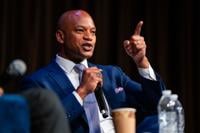
Sen. Cory Booker, D-N.J., speaks at the National Action Network (NAN) Convention in New York, Saturday, April 11, 2026. (AP Photo/Angelina Katsanis)