





Treasury Secretary Scott Bessent says no further restrictions on older Nvidia chips to China are needed. This follows the administration's recent move to restrict China's remote access to the latest semiconductors. Bessent's comments come after the House Foreign Affairs Committee released information about the Commerce Department approving sales of over 850,000 chips from Nvidia and AMD to Chinese companies. Some of these companies have ties to the Chinese military. The Commerce Department says the report illustrates its history of transparency with Congress about licensing activity for these chips. Despite receiving some licenses, Nvidia has said it's stopped shipping its H200 chips to China.
From
To

Senate Democrats are debating the best way to move quickly to regulate artificial intelligence in the next Congress, with one senator pushing the two candidates for Senate majority leader to create a new committee just to handle the issue. Colorado Sen. John Hickenlooper said this week that the person leading their majority next year should have a “day one plan for responsible regulation” on AI as he has so far withheld an endorsement in the race between Senate Democratic Leader Chuck Schumer and Maryland Sen. Chris Van Hollen.


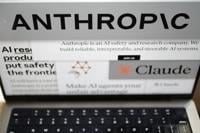
A mere five years before breaking the record for the biggest public stock offering ever, Anthropic began as a Silicon Valley startup when its founders broke away from OpenAI with their own ideas about how to develop artificial intelligence. Today, the company that dedicated itself to prioritizing safety, building the Claude chatbot along the way, has been one of the loudest voices raising warnings about how the same technology could bring catastrophe. It is one of several contradictions that mark the brief, colorful history of Anthropic, which emerged Thursday from its first day of trading on Wall Street with a market value of $1.75 trillion.

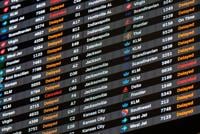
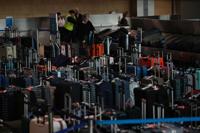
At this point, it’s practically as much of a Thanksgiving tradition as turkey and stuffing— crowded airports, long lines, jam-packed flights, the ever-present worry about delays and cancellations and extra expenses. And for 2026’s busy holiday travel week, there’s an additional ingredient in the mix: new concerns about the possibility of disruption and chaos after a nationwide ground stop last week — the first since 9/11 — and a separate airline outage a few days later. Not to mention other, non-air-travel outages and tech problems that are causing nails to be bitten and hair to be pulled across the nation.
The reveal earlier this month that billionaire Nvidia CEO Jensen Huang had extramarital affairs has sent shock waves through the tech world, particularly with Asian Americans who revered him as a once-in-a-generation talent. But what hit hard for Asian American women was the discourse around the allegation that Alice Huang, a Chinese businesswoman at the center of the scandal, was possibly a spy. Videos and memes reviving tired tropes fetishizing Asian women have subsequently flooded social media. Asian American women working in tech and civil rights advocacy say the fallout may make it harder for Asian female workers to be taken seriously. The U.S. has a history of objectifying Asian women in society and media going back to the Page Act of 1875.

Widespread outages and technological failures have caused chaos worldwide recently. Over the past week alone, it’s felt like an ever-growing list — cascading disruptions for everyday services powered by big names like Microsoft, JP Morgan Chase and Apple, to even the U.S. government’s Federal Aviation Administration and National Security Agency. Those problems appeared to emerge from separate routine updates or security patches gone awry, if not an unspecified software bug. The Trump administration maintains there is “zero” indication that the latest outages are linked, or caused by bad actors like cybercriminals. Still, some suspect that such disruptions could be the new normal, especially in the artificial intelligence era.
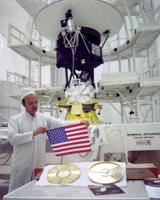
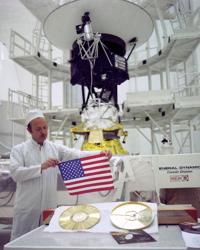
NASA’s Voyager 1 has phoned home from one light-day away. The spacecraft is humanity’s first emissary to cross this monumental threshold way out in interstellar space. Flight controllers received the spacecraft’s call Thursday, exactly 24 hours after it was sent. That’s how long it took for the radio signals to traverse the more than 16 billion miles at the speed of light. Voyager 1 launched in 1977 and swept past Jupiter and Saturn. It became the most distant human-made object in 1998 and crossed into interstellar space in 2012. Its twin Voyager 2 won't reach a light-day until 2035.

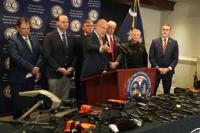
The Federal Communications Commission is poised to grant permission to state prisons across the United States to jam the signals of cell phones smuggled to inmates. Authorities say the devices represent the No. 1 security threat in the nation’s correctional facilities. Officials say inmates have used contraband cell phones to run drug rings, coordinate prison riots and even order acts of violence. For decades, officials have unsuccessfully pushed for permission to jam the signals with technology already allowed in federal facilities. But that would require FCC permission. That’s set to change on Thursday at an FCC meeting.
Anthropic is set to begin trading on the Nasdaq on Thursday after pricing its IPO at $83 per share. That pricing valued the artificial intelligence giant at $1.5 trillion, surpassing SpaceX as the largest-ever public offering. The higher-than-anticipated amoung signals broad investor enthusiasm for AI stocks. That is the case even amid some market uncertainty stemming from the ouster of Nvidia’s CEO and worries about an AI bubble. But the bigger test will be how Anthropic fares on the stock market.

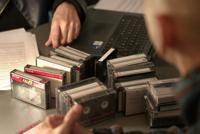
Video cassettes that Yohan Chabert, a 41-year-old physiotherapist, brought to the Ofnibus home-movie archiving group in hopes of having some of the recorded images from the 1990s preserved for the future as digital files, during an Ofnibus residency in Antibes on the French Riviera on Friday, Nov. 6, 2026. (AP Photo/John Leicester)