





CARACAS, Venezuela (AP) — Venezuela’s opposition supporters have long hoped for the day when Nicolás Maduro is no longer in power — a dream th…
From
To


DUBAI, United Arab Emirates (AP) — Iran faces a new round of protests challenging the country's theocracy, but it seems like the only thing pe…

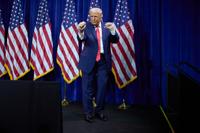
President Donald Trump says Venezuela will be providing 30 million to 50 million barrels of oil to the U.S., and he pledges to use proceeds from the sale of this oil “to benefit the people” of both countries. Earlier Tuesday, officials in Caracas announced that at least 24 Venezuelan security officers were killed in the dead-of-night U.S. military operation to capture Nicolás Maduro and spirit him to the United States to face drug charges. And the country’s acting president, Delcy Rodriguez, pushed back on Trump, who earlier this week warned she’d face an outcome worse than Maduro’s if she does not “do what’s right.”


President Trump has made broad but vague assertions about the U.S. "running" Venezuela after Nicolás Maduro's ouster, leaving lawmakers questioning the administration's plans. Secretary of State Marco Rubio and other officials have given mixed signals about U.S. intentions, causing confusion. House Speaker Mike Johnson says he doesn't expect U.S. troops to be deployed. Concerns are rising, especially among Democrats, about potential U.S. expansionism without congressional input. Meanwhile, protests have erupted, and international reactions are mixed, with some countries criticizing the U.S. intervention as a violation of international law.


MIAMI (AP) — In 2017, as political outsider Donald Trump headed to Washington, Delcy Rodríguez spotted an opening.


WASHINGTON (AP) — The Trump administration has launched what officials describe as the largest immigration enforcement operation ever carried …


It's only been days since an audacious U.S. raid snatched Nicolás Maduro from a Venezuelan military base and sped him to a Brooklyn prison, ye…

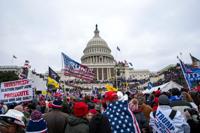
On the fifth anniversary of the Jan. 6, 2021, attack on the Capitol, there's no official event to memorialize what happened. Instead, the day displayed the divisions that still define Washington, and the country. President Donald Trump shifted blame, telling House Republicans during a morning meeting at the Kennedy Center that he only meant for his supporters to march peacefully to the Capitol that day, where Congress was certifying Democrat Joe Biden's win. Meanwhile, Democrats were hearing from a police officer, a rioter and others during a House panel discussion in an attempt to prevent what they said was a whitewashing of history. It all carries echoes of the split screen five years ago when the Capitol descended into chaos.


THE HAGUE, Netherlands (AP) — From the smoldering wreckage of two catastrophic world wars in the last century, nations came together to build …

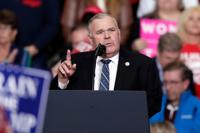
President Donald Trump said Tuesday that Indiana U.S. Rep. Jim Baird, a Republican, and his wife are recovering in the hospital following a ca…