








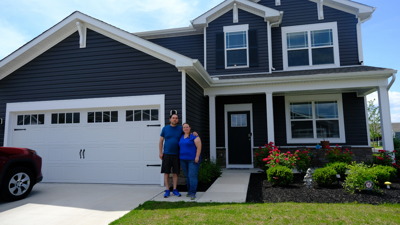
LEWES, Del. - A bedroom is supposed to be a place to rest, but as Ben Hoshaw lay down to recover from recent brain surgery, the creaking ceiling above him kept him awake. Sounds like this in the house he and his wife, Gretchen, thought would bring peace have brought headaches instead.
"It's almost like the three little pigs," said Gretchen Hoshaw. "We expected a house of bricks, but I feel like we've got one that's made of sticks or straw."
FOREVER HOME... FOR NOW
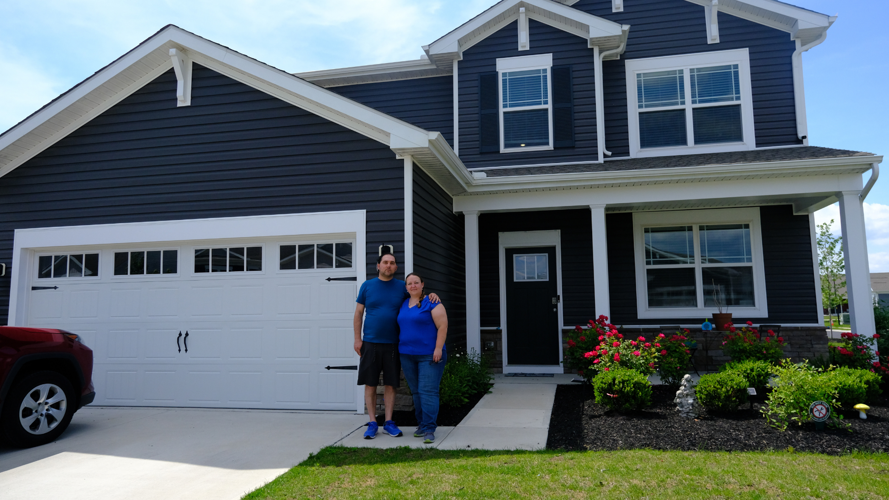
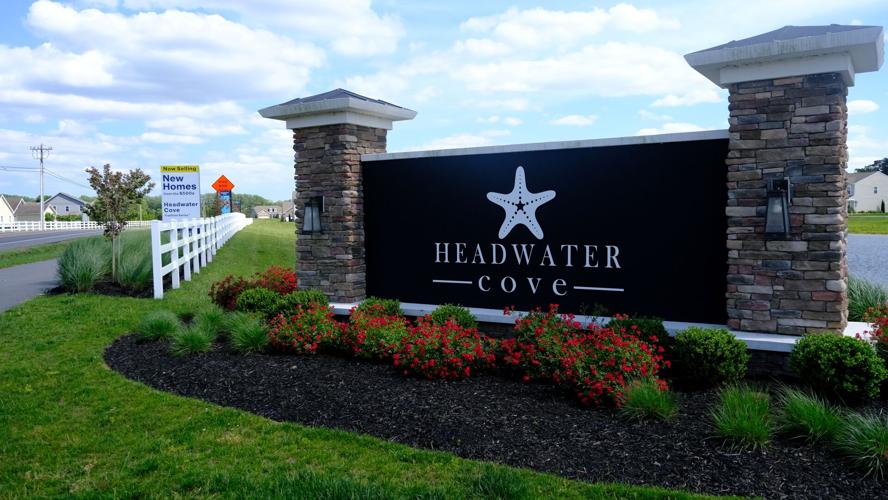
The Hoshaws say this was supposed to be their forever home, bought move-in-ready in September 2023. Homes like theirs in Headwater Cove, a new development off Route 24 in near Angola, start in the $500,000s, according to builder D.R. Horton's website and advertisements at the neighborhood entrance. Before reaching the first anniversary of their move-in, the Hoshaws hired an independent inspector to take another look.

D.R. Horton homes in the Headwater Cove neighborhood, near Angola, start in the $500,000s.
Specifically, within five months of moving in, they submitted warranty tickets with D.R. Horton for over ten separate issues they say have arisen with their home. These include:
- An unsealed and rocking toilet noted during the closing walk-through that had not been resolved.
- Cold air entering the house through the stove fan.
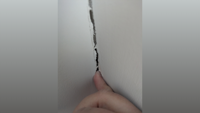
- Wall corners separating with gaps as wide as a finger.
- Dips and soft spots in the second floor flooring.
- Concerns with stud alignment and bowing walls.
- Broken stairs.
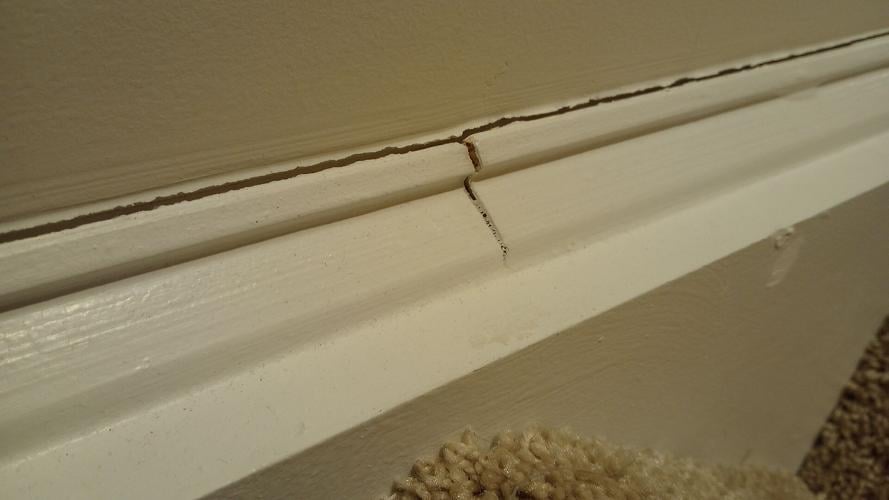
- Baseboards and crown molding tearing away from walls and doorways.
- A replacement for a door lock.
- Repainting.
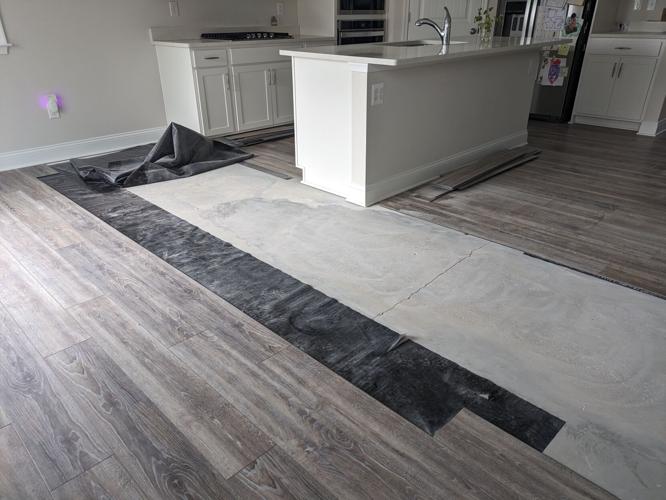

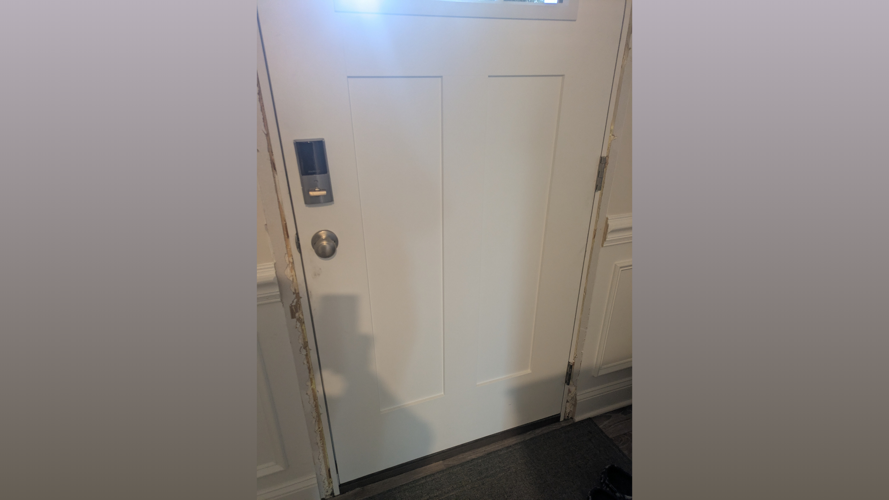

House concerns
A few months after moving in, the Hoshaws say they began to notice issues with their home.
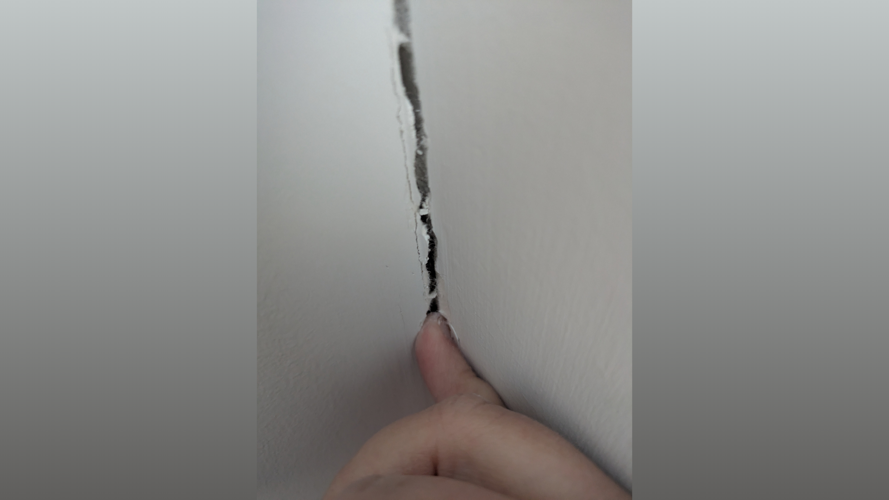
Wall corner cracks
Cracks in corners of different rooms of the Hoshaws' home go from the floor to ceiling. (Gretchen Hoshaw)
"If you look at everything in isolation, you're like, 'okay, that's a one-off.' But when you start putting things together, it gives you a sense that there really is a concern," Gretchen said. "You work so hard. We lived in a condo before. We wanted to give our kids grass, we wanted to give them a swing set and a backyard."
Having more space to raise their family in a quiet though quickly growing community was just one reason the Hoshaws decided to relocate to Sussex County from Frederick, Md. The other is that Ben was diagnosed with brain cancer in July of 2018 and receives treatment in Philadelphia, a commute which is now shorter.
In October 2023, right after moving in, Ben was diagnosed with another brain tumor and had surgery. The Hoshaws thought they were prepared, as part of the reason they chose their new home was because it would allow Ben to live and recover solely on the first floor, complete with a Roman shower so he could use a wheelchair if necessary. Getting quiet rest and avoiding the stairs didn't happen, as the Hoshaws say difficulties in regulating temperatures between floors and a creaking and cracking first floor ceiling have made it challenging for Ben to rest.
"Sometimes it sounds like the wood is breaking in the ceiling," Ben described.
HOME WARRANTY WOES
Gretchen has submitted dozens of warranty tickets and keeps track of emails with D.R. Horton's customer care team. She says she's grown frustrated with the process, as the email exchanges reveal challenges with receiving planned dates for subcontractors to visit the home to investigate issues or make repairs. According to the Hoshaws, communication with the builder's warranty team has made it difficult for them to schedule subcontractors to repair ticket item issues around their normal work schedules and Ben's treatments.
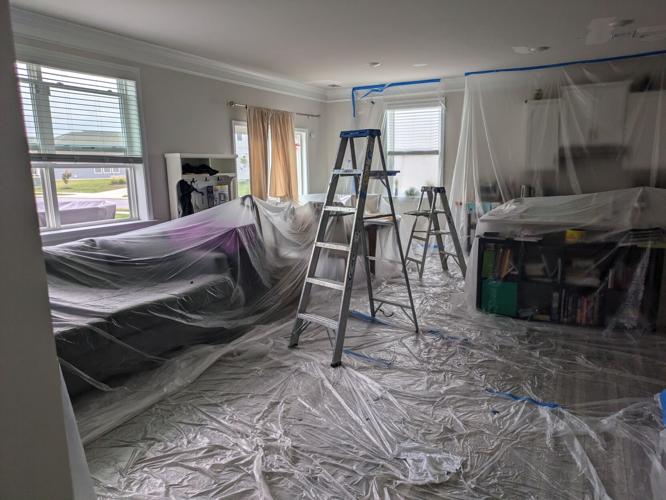
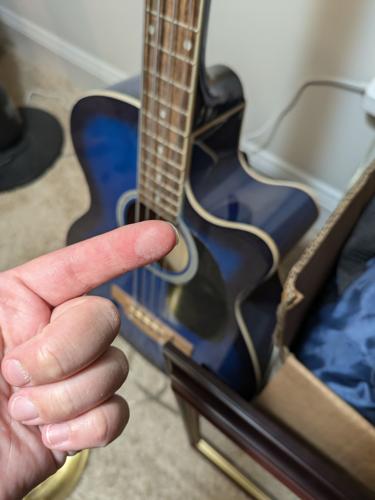
They say that sometimes subcontractors arrive unexpectedly, which doesn't allow them time to cover belongings or move furniture to protect it from construction. Since moving in, the Hoshaws say they've replaced furniture and lost other items like musical instruments and their kids' stuffed animals due to construction dust that's difficult to clean up. Other times, they say multiple workers show up at once but get in each others' way and cannot complete the task at hand.
"We live here," Gretchen said. "This is not a vacant home where people can just come and go and make messes and not worry about damaging our belongings."

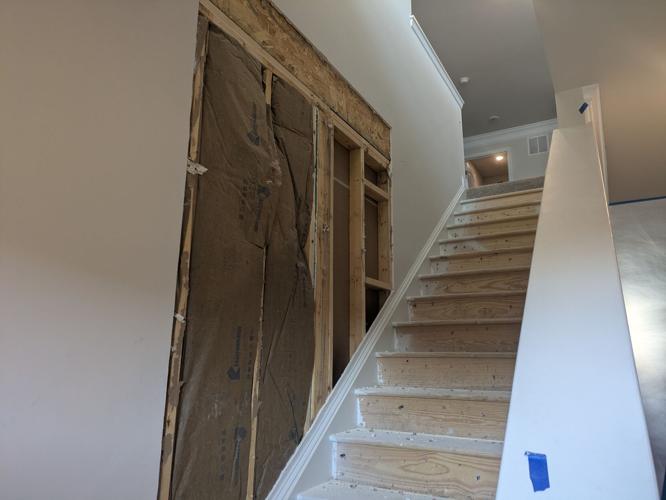

Living in a construction zone
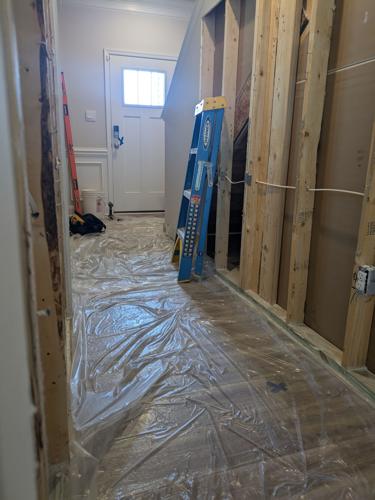
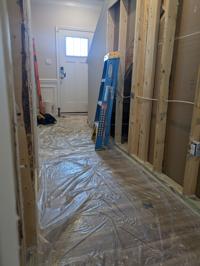
A year-and-a-half after moving in, the Hoshaws feel like they're living in a construction zone despite buying a move-in ready spec home for ease, speed and simplicity.
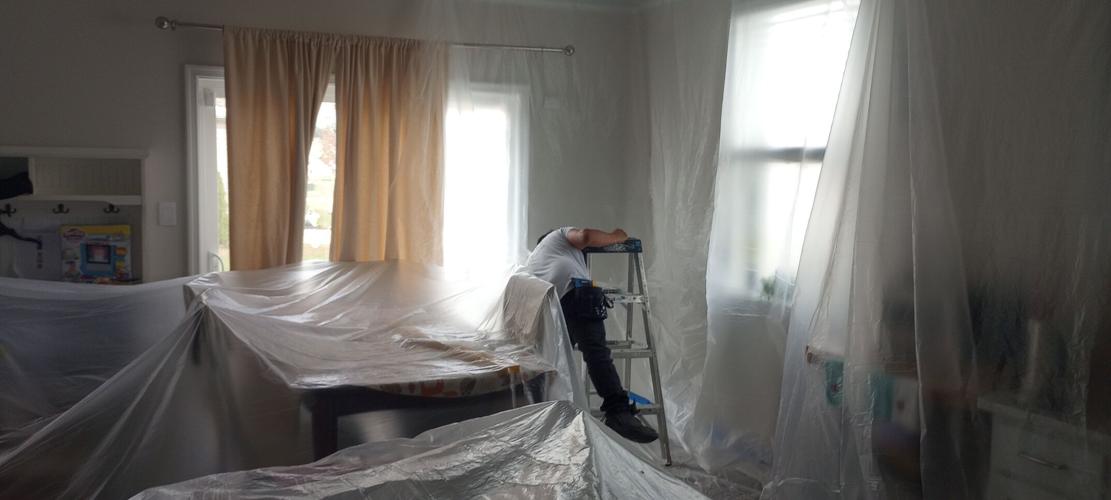
Kitchen construction
Plastic sheets cover a corner of the kitchen during problem identification and repair, according to the Hoshaws. (Gretchen Hoshaw)
After a subcontractor visits or work is completed, obtaining documentation of what was done and what still needs work is difficult, the Hoshaws say, as paperwork for issue summaries and detailed next steps are not provided in writing by the workers and they haven't been able to get copies from D.R. Horton. Gretchen says subcontractors sometimes arrive to resolve smaller parts of larger issues, as if the entirety of the warranty claim isn't being fully communicated. Once the workers or warranty team members leave, Gretchen says the verbal promises she receives differ from what she's able to get in writing.
"They told us very point blank that poor workmanship is not covered under the warranty," Gretchen said. "So, if somebody doesn't do a good job, then that's not their fault. But ultimately, they're the builder; they're the ones who hire the contractors."
CoastTV requested an interview with D.R. Horton representatives at both the national and regional level to discuss warranty coverage. Jessica Hansen, senior vice president of communications and people for D.R. Horton, declined the interview and did not answer questions regarding the subcontractor vetting process, timelines for warranty items to be completed or provide clarifications on the warranty and its inclusion or coverage of poor workmanship. Instead, a written statement attributed to Bob Vantrease, president of the Delaware division of D.R. Horton, was provided through email.
"At D.R. Horton, we are deeply committed to supporting our homeowners well beyond the completion of construction. We understand the importance of lasting quality, responsive service and clear communication. We aim to uphold these values in every community we build," Vantrease stated. "We always encourage any homeowner with a concern about their home to contact us directly at DelawareCustomerService@DRHorton.com or to submit a warranty request online."
"We value our relationship with the Headwater Cove community," Vantrease's statement continued, "and our team is always here to assist and ensure homeowners feel confident and cared for throughout their experience with D.R. Horton."
Instead of feeling valued, the Hoshaws say they and their neighbors are worried and want action.
"There are several concerned neighbors who have gotten together and we're trying to figure out what we can do, because our biggest fear is that, as soon as they're done in this neighborhood, they're just going to leave," said Gretchen. "Then for anyone with outstanding problems, it's just going to be up to us to fix and we feel as though they're just not going to honor the warranty."
D.R. Horton did not answer when asked about what division or office would be responsible for still-open or ongoing structural or warranty claims after construction is completed in Headwater Cove.
While many look to the Sussex County government when it comes to development related concerns, the county says it is not involved in policing claims under a home warranty or issues related to workmanship. Its role includes performing multiple inspections of a home to ensure its construction and design comply with the adopted building code requirements at the time of inspection and before a certificate of occupancy is issued.
As the county code only relates to compliance with building code standards, which are different from issues relating to workmanship, the county recommends homeowners go through the State of Delaware's Ombudsperson's Office for potential recourse against a homebuilder for defects in workmanship.
COMMUNITY COMPLAINTS AGAINST D.R. HORTON
The Hoshaws are not alone in their frustrations with D.R. Horton. According to the Delaware Department of Justice, 15 consumer complaints have been filed against the builder in Delaware alone since 2020.
Across the country, homebuyers have gone beyond complaints. A number of class action and individual lawsuits have been filed against D.R. Horton in the last decade.
A 2019 case, brought by about 200 homeowners in the Easley, S.C., Rose Hill neighborhood, mentioned foundational issues and concerns with framing, windows and doors. D.R. Horton and numerous subcontractors settled with the homeowners in September 2023 for a combined $18.5 million, according to a law firm involved in the case.
Another case in Taylors, S.C., included 128 homeowners. They sued in July 2022 over allegations of drainage defects, slab foundations with excessive cracking and a lack of problem rectification on D.R. Horton's part, according to the initial court complaint filed in the Greenville County Court of Common Pleas. As of June 2025, the case is still pending in court.
Farther south in Louisiana, a putative class action petition was filed in March 2022 against D.R. Horton, Inc. Gulf Coast and Bell Mechanical Services, an LLC contracted with D.R. Horton to design and install HVAC systems in Horton homes constructed in south Louisiana. Court documents allege excessive moisture, water intrusion and drywall damage, growth of toxic mold and an inability for homes to cool during the summer. The documents go on to say that, despite multiple warranty claims to D.R. Horton, work did not commence to remedy issues until months after warranty claims were submitted and repairs were dragged out, with D.R. Horton and its subcontractor attempting "to conceal the home issues and defects with quick fixes..." This case has been bounced between federal and state court and is ongoing at the time of publishing.
And in Texas, Houston couple Daniel and Trisha Mitchell purchased a home built by D.R. Horton in 2014. Shortly after, court documents say they discovered defects in the home's foundation, provided the builder with written notices and filed suit after D.R. Horton did not respond. The couple claimed breach of implied warranties and negligent construction. The parties ended up agreeing that D.R. Horton would pay $60,000 as partial settlement, according to documents.
INSPECTION LIMITATIONS
Without knowing about these lawsuits, the Hoshaws say they did what they thought was their due diligence to ensure their home was in good shape before purchasing; they got a pre-closing inspection, like any other homebuyer. Their original closing inspection was completed by HMS Home Services doing business as HouseMaster in September 2023, the month before they moved in. HMS Home Services was recommended through the D.R. Horton sales office, according to Gretchen.
Because the Hoshaws' home is a spec home, they were not able to get a drywall inspection. The inspection they did get listed foundation and substructure items like the slab foundation, walls, floor framing and main beams as not visible for inspection, as they were covered at the time by finished materials.
The winter after moving in, the Hoshaws say they began to notice issues with their home and pursued a second, independent inspection through Tri-State Home Inspections. This second inspection, completed in February 2024, listed subflooring on the second floor as soft and uneven when walked upon, as well as wall framing in many locations throughout the home as bowed or out of square. It noted that wall framing was concealed by finished surfaces and couldn't be visually inspected, however it noted indications of possible deficiencies in multiple downstairs corners. All of these structural findings were listed as significant concerns, according to the second inspection. "Significant concerns" are defined in the inspection report as conditions for which correction might be expensive and additional costs could be incurred if hidden conditions are discovered during repair.
A contractor explains how a laser level shows that a wall in the Hoshaws' home is leaning inwards at the top more than the bottom. (Gretchen Hoshaw)
CoastTV requested an interview with HMS Home Services, the company that did the Hoshaws' initial closing inspection. Scott Henschen, a certified home inspector and the owner of HMS Home Services who completed the Hoshaws' first inspection, declined an interview, stating that the inspection was more than a year ago and his opinions are all contained within the report provided to the homeowner.
When asked through email about the bowing walls and "squishy" subflooring mentioned in the second inspection from a few months later but listed as not inspected in the initial one, Henschen said his opinions and the report were based on what was accessible and visible at the time of the inspection.
"If a floor is squishy during a home inspection, I recommend my client have a specialist evaluate the issue to find the root cause. I would not be permitted to perform the invasive and destructive testing that would be required to identify the source of the problem," Henschen said.
Henschen continued to say that homeowners should consider a limited visual home inspection as a focused walk-through where a trained inspector visually assesses readily accessible parts of the house– walls, ceilings, floors, visible plumbing and electrical, accessible HVAC, roof and foundation. The goal is to spot obvious, visible red flags or significant deficiencies without moving items or entering accessible areas.
"A home inspection provides a helpful initial overview but won't reveal hidden issues or involve in-depth testing," Henschen said. "It's the first step to identify potential major concerns that need further expert evaluation, not a comprehensive defect discovery. It would not identify latent defects or faulty workmanship unless the issue manifests during the inspection."
Now, nearly two years after moving in, the Hoshaws feel like they're living in a construction zone despite buying a move-in ready spec home for ease, speed and simplicity.
"I think it's a larger issue," continued Gretchen. "When we look around at the speed of how quickly they're putting these homes together in our neighborhood and, you know, around the county, and even the contractors that we've seen who come in, who don't seem to be experts or have any sense on what they're supposed to be doing that are best practices, that's where our concerns are."

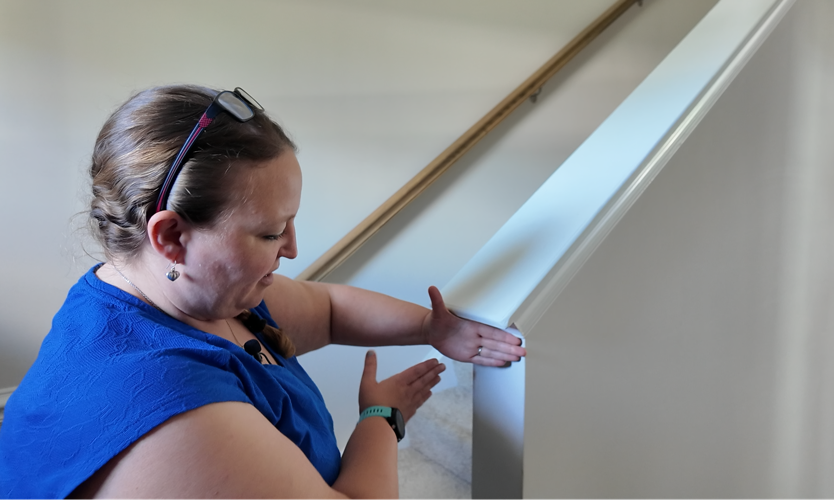
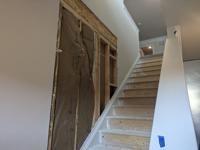
Gretchen Hoshaw describing work that had been done to a wall adjacent to the staircase after moving into her home.
D.R. Horton did not respond when asked about the process for selecting contractors to build homes and issue warranty repairs, or how it holds contractors and subcontractors accountable for quality workmanship.
Additionally, CoastTV reached out to the Home Builders Association of Delaware, a trade association descibed on its website and social media as being focused on protecting and preserving Delaware's building industry. It serves as an advocate for builders and remodelers and represents hundreds of businesses and thousands of employees in Delaware's construction and housing industry. D.R. Horton is a member of the association, according to the Home Builders Association of Delaware website.
When asked to discuss member benefits, member vetting processes, patterns of complaints about member builders or subcontractors and balance between supporting members, construction, the economy and protecting the reputation of the homebuilding community with workmanship expectations and homeowners, the Home Builders Association of Delaware did not respond to multiple requests for an interview or respond in writing.
SUSSEX COUNTY PACE OF DEVELOPMENT
The Hoshaws' concerns about the speed of building homes and Sussex County's development is shared by residents around the county and has been validated by state agencies. The 2023 report on state planning issues highlighted concerns over Sussex County development. In fact, the report, which is compiled by the Office of State Planning Coordination for the Cabinet Committee on State Planning Issues, shows that Sussex County had a one-year increase in development applications of 101 percent. This is the highest level of developer interest in the Sussex County residential market since 2008, according to the Delaware Office of State Planning Coordination.
Similarly, the 2024 report says that, despite annual fluctuations, the overall trend of residential construction in eastern Sussex County continues. Although there was a 48 percent drop in Sussex County development applications in the 2024 report, Sussex County still had 4,021 applications, which is the fourth-highest number of applications since 2008. The county accounts for the majority of residential development in the state at 61 percent.
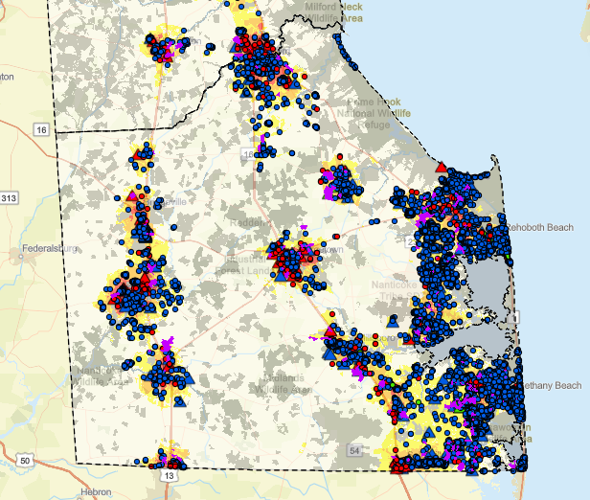
Development trends
Blue dots depict residential building permits from 2019 through September 2024. Level 1 areas, for established areas with infrastructure and other services already in place, are red. Level 2 areas, with newer infrastructure and planned investments, are orange. Level 3 areas, which are experiencing development pressures and require more advanced planning, are yellow. Level 4 areas, which are rural and where conservation and preservation are the goal, are white. Dark tan areas are out-of-play and not available for private development. (Delaware Office of State Planning Coordination)
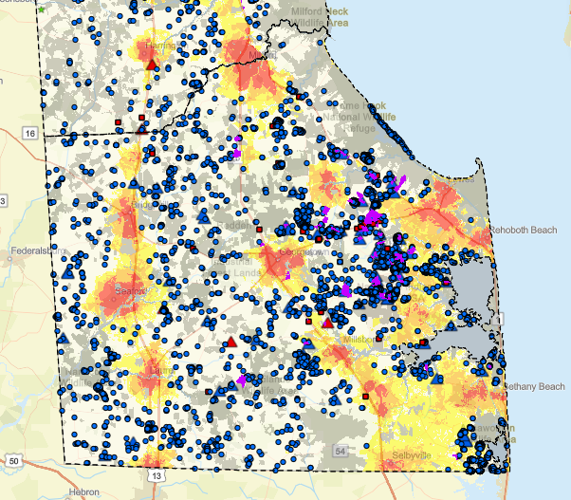
There were 5,558 total units for residential building permits in Sussex County Level 4 areas from 2019 through September 2024. (Delaware Office of State Planning Coordination)
Paradoxically, the Headwater Cove neighborhood is on land that went through the state's Preliminary Land Use Service, or PLUS process, in 2017 before development. Office of State Planning Coordination documents say the state was opposed to its proposed development.
Although it did not directly answer if there is a concern at the state level about whether state or local oversight is keeping up to protect residents and communities when it comes to rapid development, particularly in Sussex County, the Office of State Planning Coordination said that the enforcement of building codes and quality of construction is the responsibility of the local government, whether the county or a municipality.
According to the Sussex County planning and zoning and building code offices, before a building permit is issued, each application and its associated drawings and plans is reviewed by a county plan reviewer. Requirements for single family construction include a floor plan and structural information like foundation type, sub floor type, beams, walls and type of HVAC equipment and locations. During and after construction, additional inspection requirements must be met before a certificate of occupancy can be issued. The county's planning and zoning and building code offices say the same inspection procedures are applied regardless of how a home is marketed or sold, whether they're custom build or sold move-in ready.
WHAT'S NEXT FOR THE HOSHAWS
"The amount of new neighborhoods that are being built is really making it hard to consider wanting to be here," said Ben. "When we first moved here it was nice and quiet, and it's not as quiet as it used to be."
At this point in time, however, the Hoshaws feel stuck.
"If there was a lemon law for homes– we wish that there was something like that. They have them for cars. I can go and spend $30,000 on a car and if it's a piece of junk, I can get my money back," said Gretchen. "But you spend a quarter of a million, half a million, some of the people around here spend over $1 million and they're getting this same terrible quality, and there's no recourse. There's nothing that supports the buyer other than just trying to find somebody to talk to the builder, to get them to honor a warranty, fix something we can't."

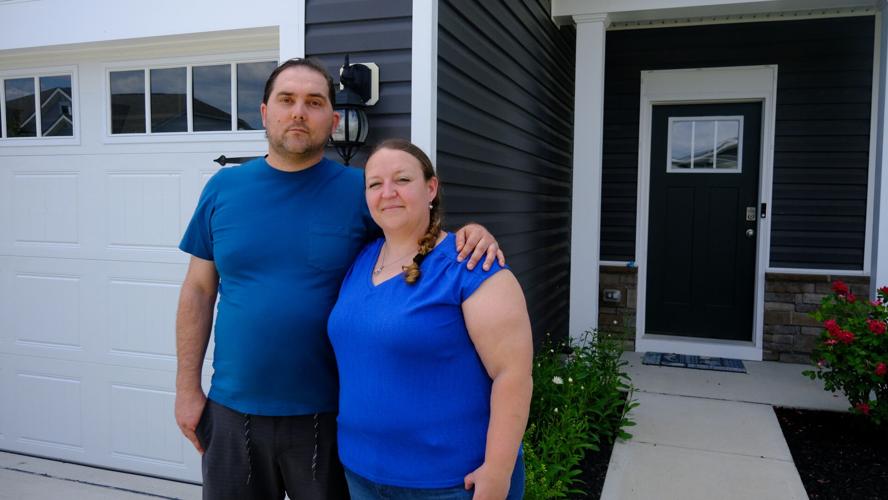
Nearly two years after moving into their new D.R. Horton home, the Ben and Gretchen Hoshaw aren't sure what's next for them. "You work so hard," Gretchen said. "We lived in a condo before. We wanted to give our kids grass, we wanted to give them a swing set and a backyard."
The Hoshaws have reached out to attorneys about their home. They haven't heard back from two and a third was unable to get involved due to a conflict of interest.
"We picked this home so that we could settle in... We intended on staying here forever," Gretchen said. "But right now, if we could have returned the home, we absolutely would have."