




DELAWARE - Delaware State University was offered a $1.15 million grant dollar grant by the National Institute of Health to study COVID-19 factors in Delaware's minority and impoverished communities.
DSU is just one of the 32 institutions that received this grant from the NIH's underserved populations program (RADx-UP). Along with community partners, students will also be working on the research project.
"{It’s] a study to better understand the social and behavioral implications of COVID testing in our undeserved communities in Delaware,” said Dr. Dorothy Dillard, Director of the Center for Neighborhood Revitalization and Research and Principal Investigator of the Grant.
The study aims to see how COVID-19 and testing initiatives are going in Seaford, Bridgeville, and Georgetown. According to DSU, the project will work to develop communications strategies to increase the acceptance of testing and a future vaccine.
"We wanted to make sure we had a better understanding of attitudes and behaviors, risk behaviors, in these communities so that we could inform public health and community partners the best way to intervene and serve residents that may not have access to testing or easy access, they may not trust some of the more traditional health sites,” said Dr. Dillard.
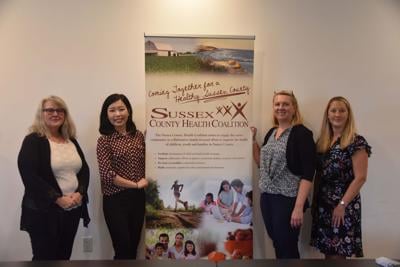
The Sussex County Health Coalition will be on the ground speaking to people in Sussex and Kent counties, focusing on West Camden, West Dover, and Harrington there.
“We provide quick access to DSU on who the key players are in the geographic region they are hoping to study. I think we know more quickly how to do a lot of landscape work. If they need a community voice we’ll know what community voices are available. We will be an engager,” said Peggy Geisler, Executive Director of the Sussex County Health Coalition.
The study will follow 1,200 participants for a year, conducting extensive interviews and antibody tests.
DSU says these participants will come from areas, like Georgetown, that score poorly on Delaware's community health index. These are also the same communities that have been hit hardest by COVID.
"We know there's a disproportionate number of black and brown communities who have high rates of chronic health conditions because of inadequate health care, lack of preventive care, a lack of being insured or actually living below the poverty rate so they're making choices between food or preventative care,” said Geisler.
As the world works towards a vaccine, "We want to make sure that residents and communities that often don't have access to vaccines, or have resistance and mistrust of vaccines, we understand what's driving that so we can be able to address it and increase access and willingness for both COVID tests and vaccination,” said Dr. Dillard.
The community partner up north is the Wilmington Community Advisory Council and will be focusing on Westside, Riverside, and NE Prices Run in New Castle County.
