



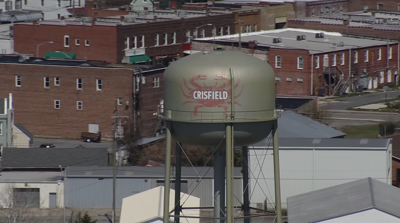

CRISFIELD, Md. - Oysters have been a staple of Maryland’s seafood industry since the state’s earliest days, providing both food and a source of income for generations of watermen.
Native to the Chesapeake Bay, oysters have played a major role in Maryland’s economy for centuries. Their impact was especially significant on the Eastern Shore, where one waterfront community was quite literally built on oyster shells.
In what started as Somers Cove, large numbers of oysters were harvested and shucked as the local seafood industry expanded. The discarded shells were used as a foundation to create dry land from surrounding marshes, making it possible for additional infrastructure to be built in the growing town.
The community’s fortunes changed dramatically after massive oyster deposits were discovered in the Tangier Sound. Seeing an opportunity, John W. Crisfield worked to position Somers Cove as a booming center of the oyster industry as watermen flocked to the area.
Crisfield also played a key role in bringing the Eastern Shore Railroad to the town in 1866, connecting the community to markets across the country and helping fuel its rapid growth.
As a result of his efforts, Somers Cove was renamed Crisfield in 1872. The town would go on to earn international recognition as the Seafood Capital of the World, a title tied closely to the oyster industry that helped shape its history.
