




This Coastal Connection is sponsored by Baths by Spicer Bros.
REHOBOTH BEACH, Del. — Rehoboth Beach continues to grow in popularity each summer, and one local historian is helping people understand just how much the city has changed over the past century.
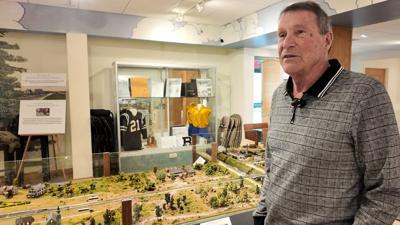
Paul Lovett, a Rehoboth Beach historian, has spent years studying the area’s past, and showcasing it through a detailed diorama that captures what life looked like in the early 1900s.
“I have introduced this diorama probably 300 times to different people,” Lovett said. “I figured they might want to learn and and many of them do like to learn about how their part of town developed and became part of the town of Rehoboth.”
Lovett’s work reflects a lifelong connection to the area.
“I had spent a lot of time growing up and playing on the canal bank,” he said. “So I became very interested in understanding why and how the city developed.”
In 2024, Lovett unveiled his completed diorama at the Rehoboth Beach Museum. The model highlights the layout and structures of the beach town at the start of the 20th century, including transportation and architecture that shaped the community.
Beyond the model, Lovett continues to share stories about how different parts of the city developed. In a recent lecture, he focused on the southern portion of Rehoboth Beach near Silver Lake, which was once a separate community known as Rehoboth Heights.
“Saint Charles Street, Bayard Street, and the cross streets of South Rehoboth, which are New Castle Street. They were named in 1876, but it isn't until 45 years later that it gets developed,” Lovett said. “It's a story about the doubling of the size of Rehoboth.”
Today, Lovett’s research and storytelling offer insight into how a small seaside destination evolved into what many now call the nation’s summer capital.
