 

Easton pastor detained by ICE shares his story

EASTON, Md. - For the first time, Easton pastor Daniel Fuentes Espinal is speaking out about his recent detention by U.S. Immigration and Customs Enforcement, an experience he says tested his faith and separated him from his family for weeks.

Fuentes Espinal, who is originally from Honduras and preaches at Iglesia del Nazareno Jesús Te Ama in Easton, has lived in the United States for 24 years. He says he was pulled over by ICE agents on July 21 while on his way to his construction job.

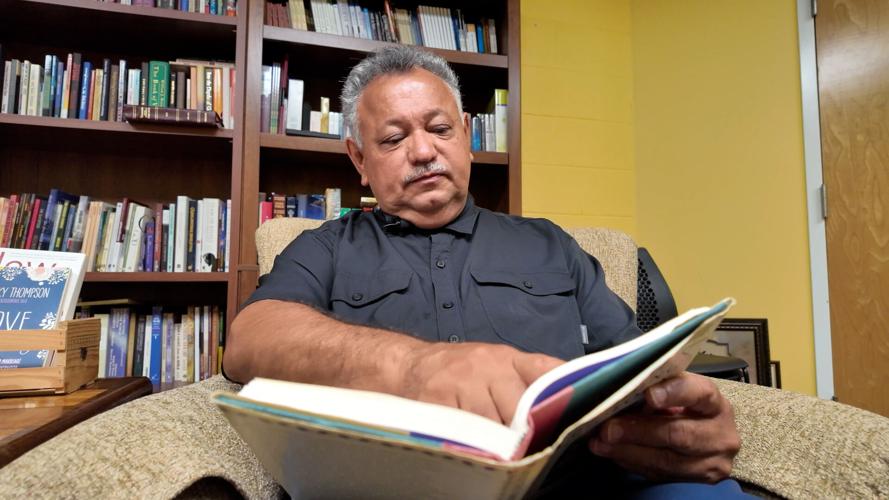
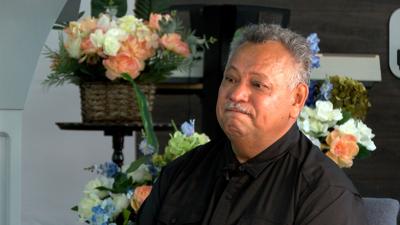
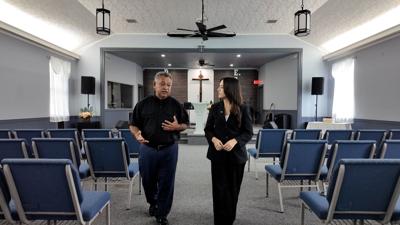
Pastor Daniel Fuentes Espinal speaks with CoastTV News and Telemundo Delmarva reporter Ana Sofia Román about his experiences during and after his detention by ICE.

"I handed him my license," Fuentes Espina recalled. "Then he asked if I could please step out of my vehicle. He said, 'Are you here legally or illegally in this country? And I told him, 'Well, I can't answer that question because my attorney isn't with me."

Moments later, Fuentes Espinal, who has no criminal record, says he was placed under arrest by ICE.

"At that moment, maybe there wasn't much time to think, just to believe that all of this had to be part of the Lord's purpose," he said. "Of course, in that moment, I thought about my family, my wife, how they would be, how they would feel. Yet beyond that, there was peace in my heart."

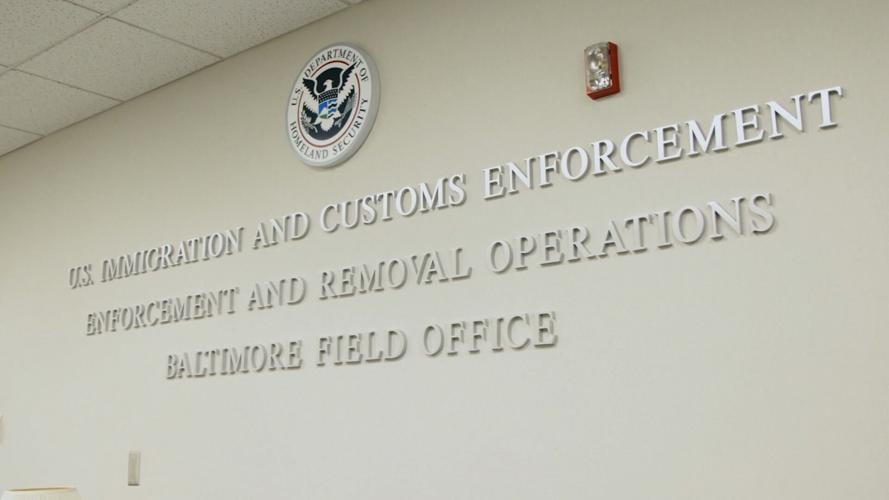
Fuentes Espinal was first taken to the ICE field office in Salisbury, where he spent only a few hours before being transferred to the Baltimore ICE field office inside the George Fallon Federal Building.

Those Baltimore holding rooms have since become part of a federal class-action lawsuit alleging inhumane conditions, allegations ICE denies. Maryland lawmakers, including U.S. Senator Chris Van Hollen, toured the facility in August after initially being denied access in July. 

"We were there for three and a half days," Fuentes Espinal said. "It wasn't the best place with the best conditions, but we had to go through that process. During those three nights we spent there, we slept on the concrete floor without sheets, just a simple aluminum blanket that they give out."

CoastTV News contacted ICE about the alleged conditions, and a spokesperson responded:

"ICE remains committed to enforcing immigration laws fairly, safely, and humanely. The Baltimore Field Office ensures that our holding facility operates in full compliance with federal laws, agency policies, and established standards to uphold the well-being and dignity of those in our custody. Any claims that the holding facility does not provide humane conditions for detainees are completely false."

The national waiver on the use of holding rooms for ICE field offices, issued on June 24, states that detainees may remain in a detention facility "for up to, but not exceeding, 72 hours, absent exceptional circumstances."

Before the memorandum, ICE policies stated that, except under exceptional circumstances, no person should remain in a field office holding room for more than 12 hours.

CoastTV News also asked about the length of time the pastor was held in Baltimore, but did not receive a response. 

For the first time, Easton pastor Daniel Fuentes Espinal is speaking out about his recent detention by U.S. Immigration and Customs Enforcement, an experience he says tested his faith and separated him from his family for weeks.

After Baltimore, Fuentes Espinal was transferred thousands of miles away to the Winn Correctional Center in Louisiana.

"Why are they moving us so far away when they could have left us in closer states where family could even visit us?" he asked. "What came to my mind was that maybe I wouldn't be able to see my children for a long time, because I didn't know how long they were going to keep me detained, or how long it would take for them to deport me, or how long it would take for me to be able to leave the place free."

He describes that time as both terrifying and uncertain.

"Well, of course, there's sadness. There's uncertainty. What's going to happen?" he said. 

Through it all, Espinal Fuentes says he relied on his faith to stay strong and to help others around him.

Building a church from inside a cell

Upon arriving at the detention center in Louisiana, Fuentes Espinal said his health was checked, including blood pressure and sugar levels. After that, he said he noticed much better conditions compared to the ICE facility in Baltimore.

"They were screaming, and I said, 'Lord, what is happening? Why are you bringing me to this place?'" Fuentes Espinal recalled. "I was shocked by what was happening."

U.S. Immigration and Customs Enforcement Baltimore Field Office.

Walking into his cell for the first time was terrifying, he said. However, things began to change when he started talking to other detainees. It was then that he said he found a way to turn his fear into faith and felt called to serve. Quickly upon arrival, he organized a small group for prayer inside his cell. Just two days after arriving, the prison chaplain invited Fuentes Espinal to preach at the facility's church.

"I was lying in my bed, and they told me, 'Pastor, you're on the news,'" he said. "Everyone was watching and listening to the report, very happy, saying, 'We have the privilege of having you here with us, and you're truly giving us words of encouragement.' I could see how they were moved, as well. I felt the Lord's presence, I felt God's support working inside that place."

Upon arriving at the detention center in Louisiana, Fuentes Espinal said his health was checked, including blood pressure and sugar levels. After that, he said he noticed much better conditions compared to the ICE facility in Baltimore.

The pastor says the religious gatherings grew to more than 70 detainees, even meeting on weekends when the prison church was closed.

"I had other people there who weren't Hispanic; they were Pakistani, Indian, South African, people who kept telling me in English, 'Pastor, I don't know what happened here. I'm feeling something special in my body when you pray, when you are preaching,'" Fuentes Espinal said of his new congregation. "I told them, 'I know what it is. It's the Holy Spirit, don't worry about it."

Fuentes Espinal said his faith not only kept his fellow detainees strong, but it kept him going, too. Things came to a peak when he was granted bond during his hearing and eventually released. His daughter traveled to Louisiana to pick him up and bring him back home to Easton.

"It was a very emotional moment. It truly broke my heart. You just can't hold back the tears in that moment because you're seeing your family," he described. "Not everyone was there, but seeing her filled me with emotion. I hugged her and told her how much I loved her."

Pastor Daniel Fuentes Espinal.

Over two decades in America and an uncertain future

Daniel Fuentes Espinal and his wife came to the United States with their daughter in 2001 on tourist visas, several years after Hurricane Mitch devastated their home country, Honduras, in 1998. The hurricane changed everything, he said, and forced them to make the difficult decision to leave their families and professions behind. 

Pastor Daniel Fuentes Espinal.

"We've looked for information on how we could obtain citizenship. In 2001, I started working for a cleaning company, and the manager asked if I wanted to fix my legal status. I told him yes. Then he said, 'Find a lawyer and we'll sponsor you,'" Fuentes Espinal recalled. 

Fuentes Espinal referenced Section 245(i) of the Immigration and Nationality Act. At the time, it enabled certain people who were present in the United States and would not normally qualify for a status adjustment to obtain lawful permanent residence, like getting a Green Card. Under this section, it didn't matter how a person entered the U.S., whether they were working in the U.S. without authorization or if they failed to maintain lawful status consistently after entering. It was amended at the end of the year 2000. 

According to the U.S. Citizenship and Immigration Services, one piece of potential eligibility criteria to receive a Green Card through Section 245(i) requires that a person was physically present in the United States on Dec. 21, 2000.

"When I went to see the lawyer, she told me, 'Life can be ironic. If you had entered through the Mexican border, I could have helped you fix your documentation, but your entry was legal, you came in with a visa, and you entered in March of this year, 2001. You needed to have been here," he recalled.

After that, Fuentes Espinal says he didn't seek legal help again.

Daniel Fuentes Espinal and his wife came to the United States with their daughter in 2001 on tourist visas, several years after Hurricane Mitch devastated their home country, Honduras, in 1998. The hurricane changed everything, he said, and forced them to make the difficult decision to leave their families and professions behind. 

What's next for Pastor Daniel Fuentes Espinal

After spending weeks under ICE custody, Fuentes Espinal has returned home. Months after his release, he is back to continuing his ministry in Easton and finding new ways to serve others, including those still behind bars.

Between balancing his calling as a pastor with working in construction, Fuentes Espinal is staying in touch with many of the immigrants he met while detained. 

"Every day, I receive about six to 10 calls from people who are there asking for prayer and also for financial support," he said.

He says the outpouring of support he personally received from his congregation and the wider community, including donations to a GoFundMe account, has allowed him to pay kindness forward.

"We've helped other people with funds," he said. "We've helped other people who can't afford to pay their bond. We've also been helping families whose husbands were captured and who were left without money in their homes."

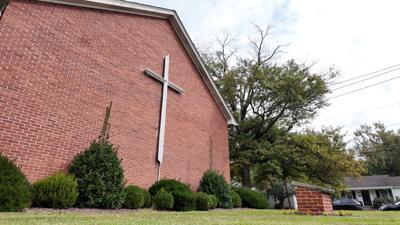
Fuentes Espinal's church in Easton, Iglesia del Nazareno Jesús Te Ama.

According to Fuentes Espinal, the ministry he started inside the detention center is still active today. After having that experience, he says coming home to his congregation was an emotional experience. 

"Knowing that we've been in ministry for 14 years, preaching the word here in this place, filled my heart with joy," he said. "Knowing that God didn't allow me to be sent back to my country, but kept me here to continue preaching his word. So, for me, this place is very special."

Fuentes Espinal says his greatest hope is to stay in the United States legally and to one day visit his family in Honduras for the first time in decades. For now, he will continue visiting churches to share his testimony and encourage families facing similar situations.

"The only desire in our hearts is to give the best to our families," Fuentes Espinal said. "We are not criminals. We are not bad people. We are people who have emigrated from our nations out of necessity."

Fuentes Espinal is scheduled to appear before an immigration judge next year.

Editor's note: This interview was conducted in Spanish and translated into English by CoastTV and Telemundo Delmarva reporter Ana Sofia Román for clarity and context, as well as to share pastor Daniel Fuentes Espinal's story with a broader audience.