



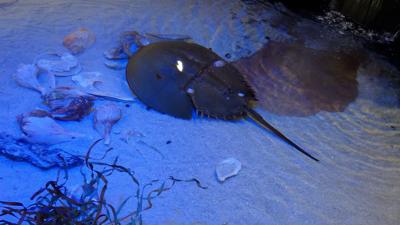
Sussex County, Del.- The Delaware Center For Inland Bays has recently finished a horseshoe crab survey in Delaware's waters.
After their research, the decided not to recommend the Atlantic States Fishery Commission's proposal to harvest female horseshoe crabs for bait.
Climate change, lack of population growth and previous overharvesting are just some of the center for inland bay's concerns.
But the biggest issue is the fate of endangered shorebirds like the red knot, which rely on horseshoe crab eggs for food.
Chris Bason with the Delaware Center For Inland Bays says that the horseshoe crabs are vital to the ecosystem.
"The horseshoe crab supports the entire food web," he said. "All the way down to the little food fish that the big fish that we then catch, to the juveniles of recreationally and commercially important fish species."
But there are people who say this is supported by science.
Allen Burgenson is on the horseshoe crab advisory board for the Atlantic States Marine Fishery Commission. He says that this was planned for a long time.
The allowance to harvest female horseshoe crabs was accounted for in the adaptive resource model that was developed by the Atlantic States Marine Fishery Commission and their stakeholders, including the birding community, the fisheries and also the biomedical industry," he said. "That allowed once the horseshoe crab recovered, to harvest female horseshoe crabs."
Burgenson does urge people to help flipped hermit crabs, however. Female horseshoe crabs can lay up to one thousand eggs, and many die from getting stranded on the beach. Burgenson says that flipping a stranded horseshoe crab is a great thing for the ecosystem.