





BUENOS AIRES, Argentina (AP) — Argentina on Friday announced plans to offer citizenship to wealthy foreigners in exchange for cash contributio…
From
To


HARRISBURG, Pa. (AP) — A federal judge on Monday blocked the authority of President Donald Trump’s administration to withhold some federal cou…

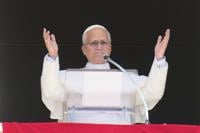
Pope Leo XIV is set to return to Peru in November, retracing his steps as a missionary priest. This will be his longest trip yet, also taking him to Uruguay and Argentina. The Vatican released his itinerary on Monday. Leo, who has Peruvian citizenship, spent two decades there as a priest and bishop. The visit begins in Uruguay, where he'll mark an important Catholic feast day. In Argentina, he'll honor the patron Our Lady of Lujan. The highlight will be his return to Peru, especially his former diocese of Chiclayo. He'll spend time in Lima, Cusco and Pucallpa.

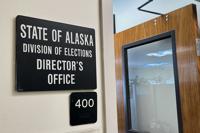
FILE - A sign indicates the director's office of the Alaska Division of Elections, March 19, 2026, in Juneau, Alaska. (AP Photo/Becky Bohrer, File)


A former senior budget official for Connecticut's Democratic governor is now a fugitive in Greece after fleeing the U.S. by boat and plane ahe…


President Donald Trump has scored a series of wins at the Supreme Court, but he's had some setbacks on key issues, despite the court’s conservative majority. On Monday, the justices rejected his administration’s planned restrictions on mail ballots for the midterm elections. None of the justices he appointed publicly disagreed. Trump criticized the court on social media, expressing frustration over losses on tariffs and birthright citizenship. While the court has allowed Trump to advance much of his agenda, including on immigration and transgender rights, some high-profile losses have rankled him. The court’s recent decisions also suggest a reluctance to intervene in election litigation before the midterms.


Know an Indian River High School graduate who deserves to be in the Hall of Fame? Nominations are now open for the 2026-27 class.

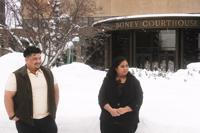
ANCHORAGE, Alaska (AP) — Alaska prosecutors are dropping voter misconduct cases against a group of residents born in American Samo a after a s…

AP
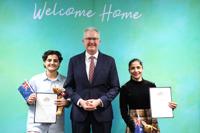
FILE - Fatemeh Pasandideh, left, and Atefeh Ramezanisadeh, right, former members of the Iranian women's soccer team, stand with Australia's Minister for Home Affairs, Tony Burke, after receiving their citizenship in Brisbane, Australia, on Aug. 5, 2026. (Department of Home Affairs via AP, File)


The U.S. Supreme Court ruled that children born in the United States are citizens at birth, prompting praise from elected leaders in Delaware and Maryland.