





WASHINGTON (AP) — Five states have agreed to accept nuclear waste from around the country in exchange for federal help developing nuclear ener…
From
To

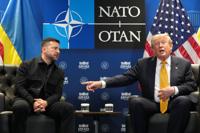
President Donald Trump and Ukrainian President Volodymyr Zelenskyy are set to meet at the White House ahead of Sen. Lindsey Graham's funeral. Tuesday's visit comes as the far-right activist Laura Loomer, who has influence with Trump, recently changed her stance on the Ukraine war after visiting the country. Zelenskyy has warned of Russian aid to Iran, but Trump downplayed the impact. This is the second meeting between Trump and Zelenskyy this month. Zelenskyy will also meet with senators to discuss sanctions legislation. Graham had visited Ukraine just before his death earlier this month and secured an agreement on Russia sanctions.


HASSELFELDE, Germany (AP) — Immo Feldmer carefully tipped smoldering charcoal into a tall mound of earth to kick off the ancient tradition of …

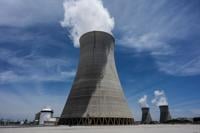
FILE - Cooling tower three with one and two in the background operate at the nuclear reactor facility at the Alvin W. Vogtle Electric Generating Plant, May 31, 2024, in Waynesboro, Ga. (AP Photo/Mike Stewart, File)

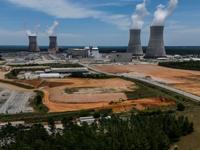
FILE - The four nuclear reactors and cooling towers operate at the Alvin W. Vogtle Electric Generating Plant, May 31, 2024, in Waynesboro, Ga. (AP Photo/Mike Stewart, File)
The Nuclear Regulatory Commission is proposing to eliminate a foundational safety principle that has for 50 years minimized the radiation peop…
Bahrain activated its sirens early Friday, warning residents to shelter from detected fire hours after the U.S. military said it had wrapped up its 13th night of strikes against Iran. The Gulf states have come under frequent fire over the past week as the U.S. and Iran exchange escalating strikes in fighting that began with a struggle over control of the strategic Strait of Hormuz. On Thursday, Yemen’s Iran-backed Houthi rebels said they targeted two Saudi oil tankers in the Red Sea, potentially widening the Iran war as international oil topped $100 a barrel.


Houthis say they attacked 2 Saudi oil tankers in the Red Sea as US carries out 12th night of strikes
Yemen’s Iran-backed Houthi rebels says they have attacked two Saudi oil tankers in the Red Sea, and the U.S. military said it conducted a 12th night of strikes against Iran as the two countries vie for control of vital shipping lanes. The Houthi attack in the Red Sea announced Thursday threatened to open a new front in a war that has roiled the global economy, sending prices for fuel and other goods surging across the world. Saudi state media reported that a tanker named the Encelia was set ablaze by an attack while sailing overnight in the Red Sea, citing an unidentified source from the General Authority of Transport.

WASHINGTON (AP) — President Donald Trump on Thursday will have governors and electricity companies join a voluntary pledge to shield U.S. cons…

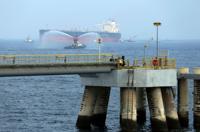
FILE - An oil tanker approaches the new Jetty during the launch of the new oil facility in Fujairah, United Arab Emirates, Sept. 21, 2016. (AP Photo/Kamran Jebreili, File)