



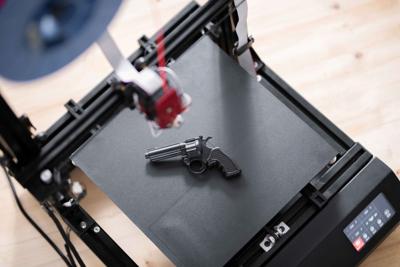


DELAWARE - A federal judge has ruled that portions of Delaware’s law banning ghost guns violate the Second Amendment, while allowing other restrictions to remain in place.
U.S. District Judge Maryellen Noreika issued the ruling Sept. 10 in a lawsuit brought by John Rigby, Alan Knight and the Firearms Policy Coalition against Delaware Attorney General Kathy Jennings.
The case challenged parts of House Bill 125, a 2021 Delaware law regulating unserialized guns, unfinished gun frames and receivers, 3-D printed guns and computer files used to make guns.
What is not enforceable
Noreika ruled Delaware may not enforce provisions that prohibit possession of certain unserialized guns and unfinished frames or receivers. She also permanently blocked portions of the law that prohibit manufacturing or assembling an untraceable gun and using a 3-D printer or similar device to create a gun or certain gun parts.
The court found that those provisions restrict conduct protected by the Second Amendment and that Delaware had not shown the restrictions were consistent with the nation’s historical tradition of gun regulation.
In the opinion, Noreika wrote that an untraceable gun qualifies as an “Arm” under the Second Amendment and that gun frames and receivers also receive constitutional protection because they are necessary for a gun to function as intended.
The judge also found that the right to keep and bear arms includes some protection for acquiring guns. Because the law blocked self-manufacturing as one way of acquiring a gun, the court determined the manufacturing and assembly restrictions implicated the Second Amendment.
Noreika found Delaware’s historical comparisons insufficient to justify the restrictions. The state pointed to laws involving clubs, knives, trap guns, large hunting guns and gunpowder storage, but the court concluded those regulations were not sufficiently similar in their purpose or use.
What is still enforceable
The court upheld provisions regulating the sale and transfer of untraceable guns and unfinished frames or receivers. Noreika wrote that those rules concern commercial distribution rather than the keeping or carrying of guns.
The court also upheld Delaware’s ban on distributing certain computer-aided design files or other electronic instructions that can be used to program a 3-D printer to make guns or gun components.
The plaintiffs argued that restriction violated the First Amendment. Noreika concluded they had not provided enough evidence showing the computer code at issue was expressive speech protected by the First Amendment rather than functional code.
The ruling grants parts of both sides’ requests for summary judgment.
