



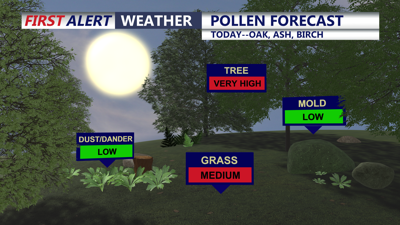

LEWES, Del. — A long, dry stretch across Sussex County has helped keep pollen, dust and other airborne irritants hanging in the air. Now, a turn toward wetter weather could bring a different allergy problem: a fresh burst of blooming plants along the Delaware coast.
The setup comes as we monitor a developing El Nino pattern in the Pacific. NOAA has issued an El Nino Watch, saying El Nino is likely to emerge soon and continue into the winter. While that does not mean every storm in Sussex County is caused by El Nino, it can influence broader weather patterns that affect temperature, rainfall and the length of the growing season.
For allergy sufferers, the timing matters.
Sussex County has been running dry. Drought.gov reports all of Sussex County’s population is affected by drought, with April ranking as the county’s seventh-driest April in 132 years and the January-to-April period ranking as the 10th-driest start to a year. Dry weather can allow pollen and dust to build up, especially on warm and breezy days, when irritants are more easily lifted into the air.
The National Weather Service says that pattern is changing. A cold front moving through Delmarva is expected to bring showers and thunderstorms, followed by significantly cooler weather and several rounds of rain through the end of the week and the holiday weekend. The region needs rain because a long-term drought continues.
That rain may help wash some pollen out of the air at first. But it can also jump-start grasses, weeds, trees and flowering plants that have been waiting on moisture. After a dry spell, that kind of soaking rain can lead to a quick green-up, followed by another round of pollen once sun and warmth return.
Along the coast, places such as Lewes, Rehoboth Beach and Cape Henlopen can see allergy conditions change quickly. Wind off the ocean may cool the beaches, but shifting winds can also move pollen, mold spores and dust between inland fields, marshes, neighborhoods and the shoreline.
Health experts say longer and warmer growing seasons are already making allergy seasons more intense. The CDC says climate change can increase pollen concentrations and extend pollen seasons, heightening health effects for more people. In Delaware, Dr. Greg Marcotte, an allergist at ENT & Allergy of Delaware and Christiana Care, has said earlier springs are making pollen seasons longer and more intense.
The next stretch of weather could also create short-term spikes. NOAA research shows rain often cleans pollen from the air, but thunderstorms can concentrate pollen particles in downdrafts. Humidity and lightning can also break pollen into smaller fragments that are easier to inhale.
That means Sussex County residents may get brief relief during steady rain, but allergy symptoms could flare before storms, during gusty showers or after plants respond to the new moisture.
For now, doctors and allergy groups recommend checking pollen and air quality forecasts, keeping windows closed on high-pollen days, showering after spending time outside and using allergy medicine as directed. People with asthma should keep rescue inhalers nearby, especially when thunderstorms are in the forecast.
Christen Owen, who often experiences allergies, said the symptoms are getting worse. "I've had, nosebleeds frequently, something I haven't had in years. And last evening, gardening and planting some flowers, I just had a sneezing fit. I couldn't stop sneezing. Watery eyes, you know, I had to run in and get tissues. Just itchy all over."
The bottom line for the Delaware beaches: The dry pattern helped load the air with irritants. The wet pattern may help plants reload the season.
