



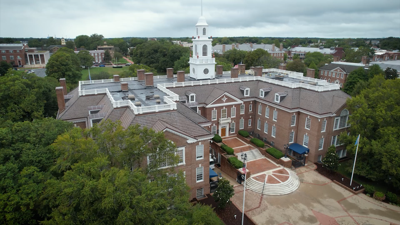

DOVER, Del. — The Delaware Senate on Thursday approved legislation aimed at changing how school districts can raise local tax revenue following property reassessments, a move lawmakers say will reduce sticker shock and provide more predictable school tax increases.
Senate Bill 322 would eliminate a provision in state law that allows school boards to approve revenue increases of up to 10% after a property reassessment. In its place, the bill would allow school boards to increase local revenue by up to 2% annually without voter approval.
The legislation is part of a broader effort to address concerns raised after Delaware completed its first statewide property reassessments in decades.
A 1972 change to Delaware law granted school districts the authority to increase revenue by up to 10% after reassessment. While the provision remained largely unnoticed for years, it drew significant attention in 2025 when updated property values led to higher tax bills for many property owners.
Lawmakers said reassessments in New Castle County shifted more of the tax burden from commercial properties to residential properties, contributing to higher bills. Some school districts also exercised their authority to increase revenue following reassessment.
According to lawmakers, Appoquinimink and Christina school districts approved the full 10% increase after reassessment in 2025, while Colonial School District approved a 7% increase. Most school districts in Kent and Sussex counties also used the authority.
Sen. Dave Sokola said the current school funding system places additional pressure on less affluent communities.
“Our current system of school funding has forced poorer communities to overtax themselves just to provide something close to the same level of service as wealthier districts. So by uniquely requiring our schools to beg for every dollar they need to keep pace with inflation, population growth and student need, when a referendum fails, those districts fall further and further behind,” Sokola said. “Our schools and our communities deserve a holistic and carefully measured approach that balances the financial interests of Delaware taxpayers with the overwhelming need to maintain and improve academic performance for all students — regardless of where they live or how much their families earn. And that’s what we’re doing with Senate Bill 322.”
House Speaker Melissa Minor-Brown said taxpayer concerns following reassessment helped shape the legislation.
“Many New Castle County homeowners experienced sticker shock when they received their tax bills following reassessment. For many people who live there, one of the biggest surprises was learning that school districts could increase property tax revenue by up to 10% after reassessment without voter approval,” Minor-Brown said. “This was one of the key issues our Special Committee on Property Tax Reassessment spent months examining. I appreciate the committee's work in helping develop solutions like SB 322, which provides greater fairness, transparency, and predictability for taxpayers while ensuring schools have the resources they need to educate our children.”
The bill now moves to the Delaware House of Representatives for consideration.
