



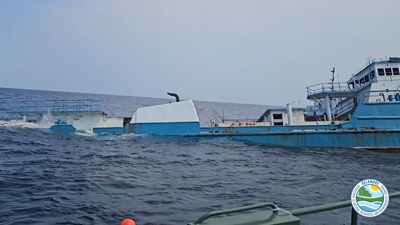

MILFORD, Del. — The Delaware Department of Natural Resources and Environmental Control has expanded the state's artificial reef system by sinking the 180-foot Calcasieu Pass at Reef Site 13, creating new marine habitat and recreational opportunities for anglers and divers.
Reef Site 13, also known as the Del-Jersey-Land Reef, is located offshore at a point roughly equidistant from ports in Delaware, New Jersey and Maryland, due east of Bethany Beach. DNREC describes the site as the centerpiece of Delaware's artificial reef system.
According to DNREC, the Calcasieu Pass, which has a 40-foot beam, began its working life as an offshore oilfield supply ship before being converted into a menhaden processing ship. DNREC said its placement on the reef will provide habitat for aquatic life while supporting Delaware's coastal recreation economy.
“The addition of this vessel to our reef system continues DNREC’s commitment to improving marine habitat while giving retired maritime vessels a new purpose beneath the waves,” said DNREC Secretary Greg Patterson. “The artificial reef system is a driver for Delaware’s coastal and conservation economies, and carries out the Department’s mission of conserving and sustaining our natural resources.”
Built in 1982, the Calcasieu Pass initially supported offshore oilfield operations. Its name comes from Calcasieu Pass, a bend of the Calcasieu Ship Channel near Lake Charles, Louisiana.
The ship was converted into an Atlantic menhaden fishing vessel in 1989 and spent more than 30 years sailing from Reedville, Virginia, as part of the Atlantic menhaden reduction industry. Menhaden is processed for use in commercial products ranging from fish oil and pet food to cosmetics.
At the Del-Jersey-Land Reef, the ship is expected to provide complex underwater habitat for reef-associated fish and invertebrates. DNREC said mussels, barnacles, corals and other marine organisms will colonize the structure over time, supporting marine life as well as recreational fishing and deep-water diving.
