





BOGOTA, Colombia (AP) — The rise of Abelardo de la Espriella, a businessman and lawyer set to be Colombia's next president, is raising questions about whether political shifts underway across Latin America could reshape the future of the Amazon rainforest.
The Colombia election result comes as Peru appears poised to elect Keiko Fujimori as president following a closely contested vote. Meanwhile, Brazil is preparing for a presidential election that could push the country back to the right if Flávio Bolsonaro, son of former President Jair Bolsonaro, defeats President Luiz Inácio Lula da Silva.
The elections raise the possibility that countries with the largest shares of the Amazon could move toward policies that place greater emphasis on economic growth, extractive industries and efforts to combat organized crime and reassert state control in remote regions.
“There’s an interesting alignment, particularly across the Andes region and the broader Amazon basin,” said Elizabeth Dickinson, deputy director for Latin America at the International Crisis Group, referring to a growing belief among some governments that economic development and conservation can be pursued simultaneously.
Colombia's election results showed that de la Espriella, who was endorsed by U.S. President Donald Trump, defeated Iván Cepeda, a lawmaker who was endorsed by outgoing President Gustavo Petro, by 1 percentage point, or nearly 251,000 votes. Cepeda conceded on Wednesday.
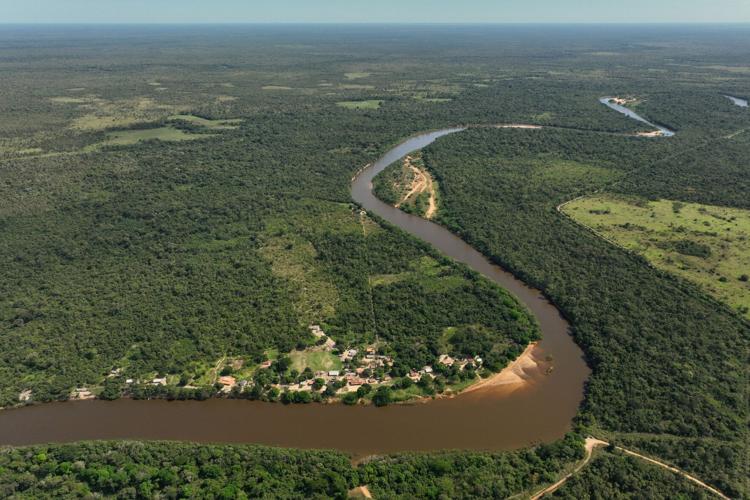
The Amazon rainforest spans much of northern South America and helps slow climate change by absorbing large amounts of carbon dioxide, a greenhouse gas that warms the planet. Scientists have for years warned that continued forest loss could push parts of the Amazon toward a tipping point beyond which large areas may no longer be able to regenerate as rainforest.
Around 40% of Colombian territory sits within the Amazon basin. Under Petro, it emerged as one of the world’s most prominent advocates for rainforest protection and a transition away from fossil fuels.
Economic development and the Amazon
During his election campaign, de la Espriella — whose nickname is “The Tiger” — pledged to revive Colombia’s oil sector, supported fracking, which is a method of extracting oil and gas from underground rock formations, and argued that the country should make greater use of its natural resources to spur economic growth. Environmental advocates warn that expanding oil and gas production could undermine efforts to reduce emissions and increase pressure on environmentally sensitive areas.
De la Espriella represents a sharp contrast with Petro, who opposed new fossil fuel exploration contracts and sought to position Colombia as a leading voice internationally on climate issues.
Peru, which contains the second-largest share of the Amazon rainforest after Brazil, appears close to electing Fujimori. Like de la Espriella, Fujimori has signaled support for expanding mining and other industries as a driver of economic growth, while environmental groups have raised concerns about the potential implications for forests and Indigenous communities.
Brazil, which is home to roughly 60% of the Amazon, is preparing for a presidential race that could have major implications for forest protection. The election comes after the country experienced sharply rising deforestation under Bolsonaro, followed by declines under President Luiz Inácio Lula da Silva, as environmental enforcement was strengthened.
Brazil’s experience shows that government priorities can have a measurable impact on the Amazon, said Cristiane Mazzetti, zero deforestation lead at Greenpeace Brazil.
“The elected administration sets budgetary priorities, fills government positions and shapes regulations to either facilitate or hinder predatory exploitation and environmental crimes,” she said. “The result of this is measurable, as evidenced by the rate of deforestation in the Brazilian Amazon.”
Trump’s endorsement of Colombia's de la Espriella came as the U.S. president has rolled back climate policies, promoted expanded oil and gas production and withdrawn the U.S. from the 2015 Paris Agreement, the international pact aimed at limiting global warming.
Sergio Guzmán, director of Colombia Risk Analysis, said environmental concerns may increasingly compete with demands for investment, energy production and economic growth.
“Many of the concerns from environmentalists on emissions and fracking are going to take a second place to some of the economic concerns about energy self-sufficiency, investment and foreign direct investment in oil, gas and mining,” Guzmán said.
Illegal mining and Indigenous communities
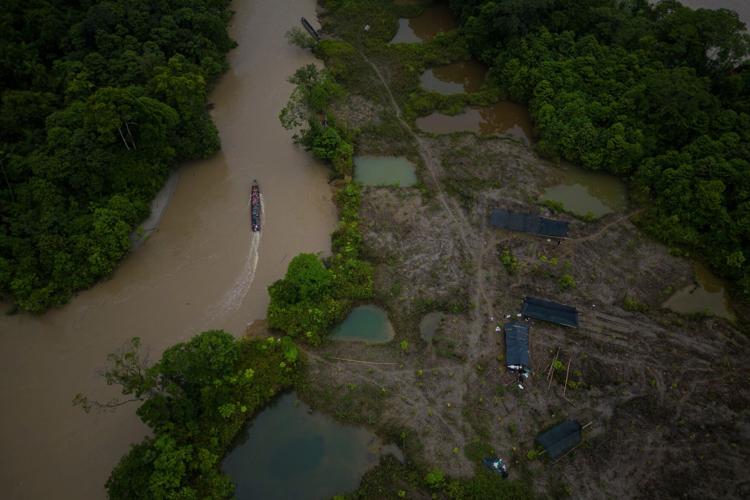
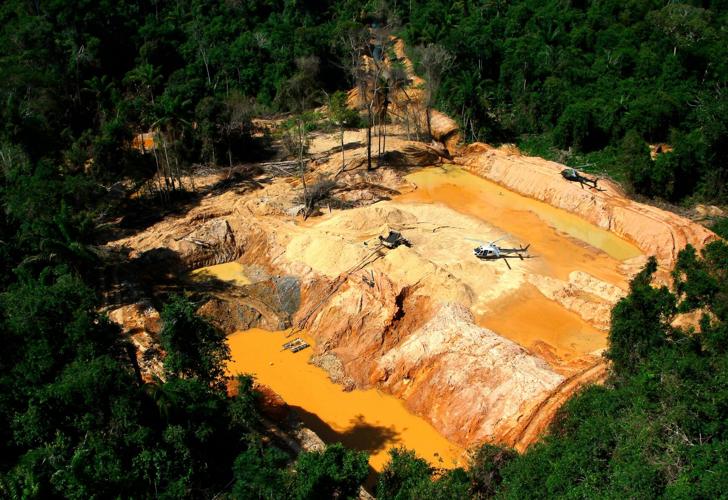
Illegal gold mining has become one of the largest drivers of environmental destruction in parts of the Amazon, contaminating rivers with mercury, clearing forests and generating billions of dollars for criminal groups.
Dickinson said many governments have embraced tougher responses to illegal mining, an issue that has become increasingly central to environmental policy across the region.
“It’s very hard to disagree with the idea of going after illegal mining, one of the most detrimental industries for the Amazon basin,” she said, adding that governments have often focused on seizing equipment or removing miners from individual sites rather than dismantling the criminal and financial networks behind them.
“What we really haven’t reached is an ability to tackle the intellectual authors of these operations,” said Dickinson.
Decisions affecting Indigenous territories
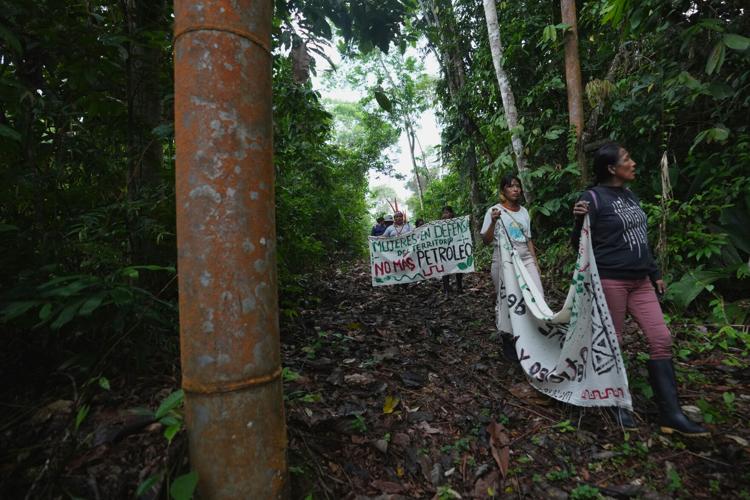
Julio Cusurichi, a prominent Indigenous leader from Peru’s Amazon region, said Indigenous communities would continue organizing and advocating for a greater role in decisions affecting their territories.
“Our biodiversity, our territories, our knowledge and our wisdom can contribute greatly to addressing climate change,” he said. “In our territories, we have shown that we can provide governance not only for our peoples, but for the planet.”
Across the Amazon, Indigenous lands frequently overlap with areas targeted for mining, oil development and infrastructure projects. Indigenous organizations have long argued that governments often fail to adequately consult communities before approving projects.
Dickinson said tensions over Indigenous autonomy and extractive projects have become increasingly visible in countries including Peru and Ecuador.
Analysts say some of the clearest indicators of de la Espriella administration’s environmental approach will be how it handles Indigenous consultation processes, environmental licensing and decisions on new oil, gas and mining projects in sensitive ecosystems.
‘Allow humanity to breathe’
Guzmán said de la Espriella’s plans to increase military pressure on criminal groups and potentially resume aerial fumigation of coca crops — the plant used to produce cocaine — could also have consequences for Amazon communities.
Aerial fumigation has long been controversial in Colombia. Supporters view it as a tool to combat drug trafficking, while critics say it can damage surrounding vegetation, affect water sources and encourage coca growers to clear new areas of forest and move deeper into remote parts of the Amazon.
Others caution against assuming environmental protections will inevitably weaken.
Colombia's courts, Congress, Indigenous organizations and environmental institutions all remain influential, while advances in satellite monitoring make it increasingly difficult to hide deforestation and environmental damage, analysts said.
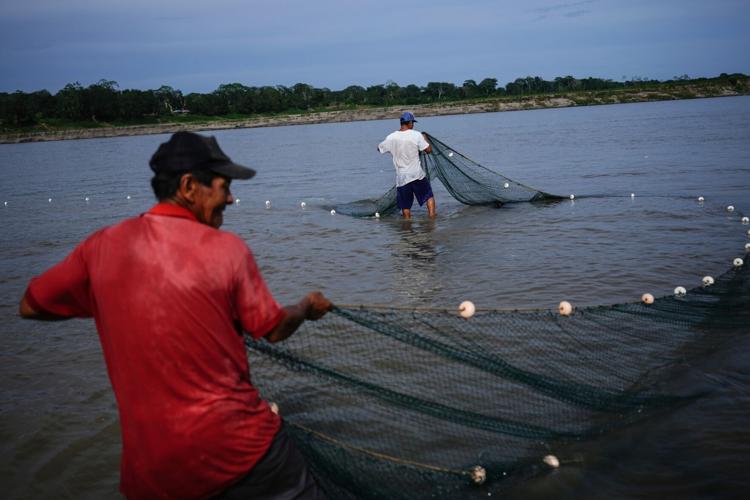
In Colombia’s Amazon city of Leticia, Indigenous Ticuna resident Arnaldo Rufino said many residents fear policies that encourage more extraction in the rainforest could come at the expense of the forest itself.
He said political leaders should focus on protecting biodiversity and the Amazon rather than pursuing projects that risk increasing environmental pressures.
“It means cutting down the trees that allow humanity to breathe,” Rufino said.
The Associated Press’ climate and environmental coverage receives financial support from multiple private foundations. AP is solely responsible for all content. Find AP’s standards for working with philanthropies, a list of supporters and funded coverage areas at AP.org.
