



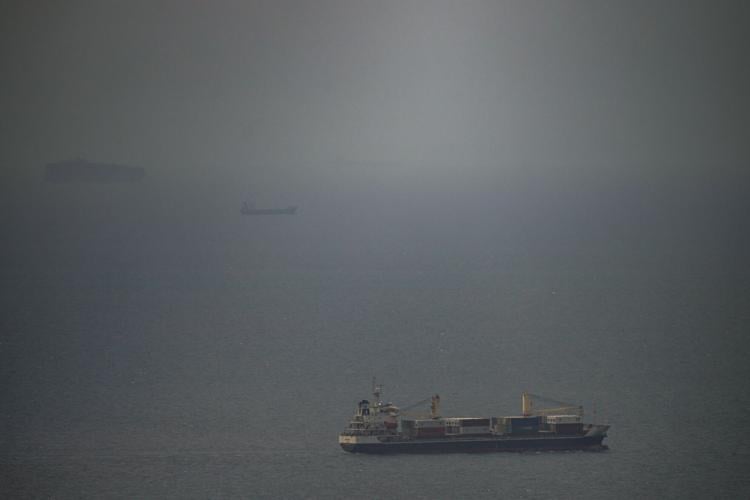


DUBAI, United Arab Emirates (AP) — The U.S. military on Thursday seized another tanker associated with the smuggling of Iranian oil, ratcheting up a standoff with Iran a day after its paramilitary Revolutionary Guards took control of two vessels in the crucial Strait of Hormuz.
The Defense Department released video footage of U.S. forces on the deck of the oil tanker Majestic X, which was seized in the Indian Ocean.
“We will continue global maritime enforcement to disrupt illicit networks and interdict vessels providing material support to Iran, wherever they operate,” a Pentagon statement said.
Ship-tracking data showed the Majestic X in the Indian Ocean between Sri Lanka and Indonesia, roughly the same location as the oil tanker Tifani, earlier seized by American forces. It had been bound for Zhoushan, China.
There was no immediate response from Iran on the news of the seizure.
The seizure comes a day after Iran attacked three cargo ships in the strait, capturing two of them, in a move that intensified its assault on shipping in the key waterway through which 20% of the world’s traded oil passes in peacetime.
The Majestic X is a Guyana-flagged oil tanker. It previously had been named Phonix and had been sanctioned by the U.S. Treasury Department in 2024 for smuggling Iranian crude oil in contravention of U.S. sanctions on the Islamic Republic.
On Tuesday, U.S. President Donald Trump extended a ceasefire while maintaining an American blockade of Iranian ports.
The standoff between the U.S. and Iran has effectively choked off nearly all exports through the strait with no end in sight.
The conflict has already sent gas prices skyrocketing far beyond the region and raised the cost of food and a wide array of other products. The price of Brent crude oil, the international standard, nosed over $100 per barrel, marking a 35% increase from prewar levels, but stock markets still appear to be shrugging it off.
The European Union energy commissioner, Dan Jørgensen, warned Wednesday of lasting impact for consumers and businesses, likening it to other major energy crises over the last half-century. He said the disruption is costing Europe around 500 million euros ($600 million) each day.
Keaten reported from Geneva.
