




WASHINGTON (AP) — The criminal indictment of the Southern Poverty Law Center this week was met with much outrage but little surprise from civil rights leaders, who have for more than a year prepared for heightened legal scrutiny from the Trump administration, and how to mount a coordinated response.
In rounds of calls immediately following the indictment, civil rights leaders discussed how to support the SPLC, a Montgomery, Alabama-based civil rights group founded in 1971 that has tracked white supremacist groups and been outspoken on voting rights, immigration and policing. Organizers on one call agreed that winning in the court of public opinion would be crucial as judicial proceedings began, leading to dozens of public statements of support and planned rallies.
And legal advisors to civil rights groups urged organizers to prepare themselves for similar criminal indictments, protracted legal action that may exhaust their resources and audits of their staff and internal documents.
The flurry of behind-the-scenes coordination represented a marked escalation and mobilization of plans for activist groups that have been at odds with the Justice Department since President Donald Trump's return to the White House last year. Organizers say they are prepared to back the SPLC in its legal fight.
“It’s a blatantly obvious attack on civil rights and civil liberties to whitewash the foot soldiers of the great replacement theory and other extremists. This coalition isn’t going silent,” said Maya Wiley, president and CEO of the Leadership Conference on Civil and Human Rights, an umbrella organization of hundreds of civil rights groups.
Without addressing the indictment, a coalition of more than 100 activist groups on Tuesday published a letter vowing solidarity with groups that are “unjustly targeted” by the federal government. SPLC was a signatory to the pact.
“An attack on one is an attack on all,” the coalition declared. “We will share knowledge, resources, and support with any organization threatened by abuses of power.”
DOJ alleges criminal conduct in SPLC's longtime informant network
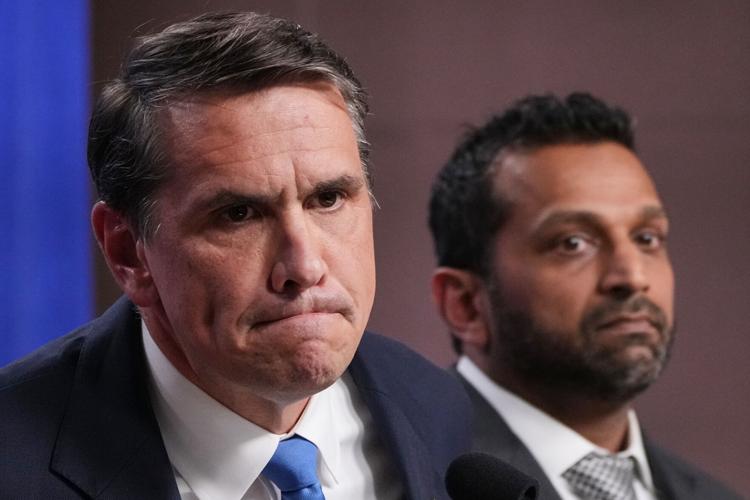
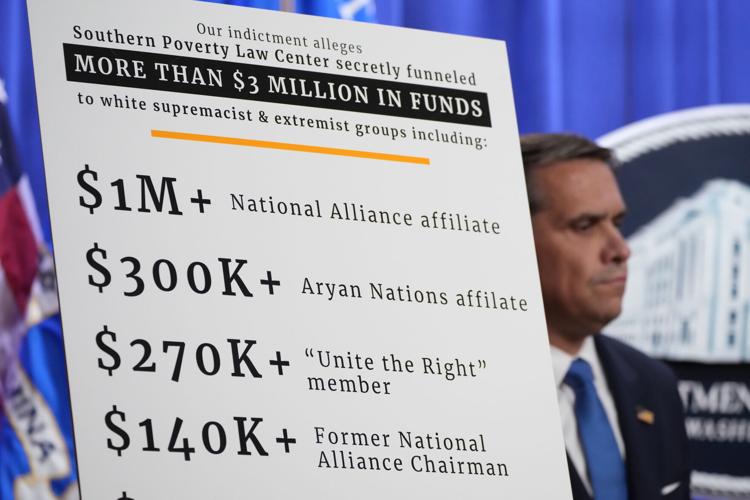
The Justice Department alleges that the SPLC, which rose to prominence for its work prosecuting and tracking hate groups like the Ku Klux Klan, violated federal law through its network of paid informants in extremist groups. The DOJ claims the payments funded hate groups and misled the SPLC’s donors.
The SPLC now faces charges of wire fraud, bank fraud and conspiracy to commit money laundering in the case brought in the federal court in Alabama, where the organization is based.
“The SPLC is manufacturing racism to justify its existence,” said Acting Attorney General Todd Blanche at a press conference announcing the charges. Blanche promised the department “will hold the SPLC and every other fraudulent organization operating with the same deceptive playbook accountable.”
Longtime civil rights activists found the claims to be a disingenuous and partisan move that may empower extremist groups.
“The indictment is nakedly political and represents the Justice Department turning on itself,” said Marc Morial, president of the National Urban League. “It places the Justice Department in the posture of, in effect, defending white supremacist groups like the Ku Klux Klan and others.”
Advocates also view the indictment as part of the administration's broader upending of civil rights law and the Justice Department's prosecution of Trump's political opponents.
The SPLC in recent years became a bogeyman among conservatives who resented that the watchdog designated several rightwing organizations that engage in Republican politics as hateful or extremist.
In October, FBI Director Kash Patel cancelled the agency’s longtime anti-extremism partnerships with the SPLC and the Anti-Defamation League, which combats antisemitism. Patel at the time called the SPLC a “partisan smear machine.”
The Justice Department and SPLC did not respond to requests for comment.
Indictment represents marked shift for civil rights work
Advocates dispute the DOJ's characterization of the SPLC's work, which civil rights activists credit to combating extremist groups across the country.
“The problem is that the indictment essentially claims that it was a fraud on SPLC’s donors to use their funds to fight the Klan, the Neo Nazis and other white supremacist groups, when that is exactly why people gave to the organization,” said Norm Eisen, founder of Democracy Defenders Action, a legal group that works with organizations in legal disputes with the Trump administration.
Eisen added: “The notion that there’s something wrong with using informants and protecting their identities to prevent white supremacist violence is belied by the fact that that is not only what the SPLC did, but it is also the stock and trade of the FBI itself.”
Civil rights organizations are now preparing for further legal action against other organizations that disagree with or actively oppose the Trump administration. Organizations have reviewed their document retention, tax compliance and auditing policies over the last year to safeguard against any probes or lawsuits.
Some civil rights organizations have also floated creating new organizational structures that may better withstand legal scrutiny. On another recent call, activists floated restructuring some groups into for-profit entities, or potentially crafting new financial conduits for donors to give through to ensure that staff could receive pay if an organization's assets were seized or frozen.
The preparations represent a marked shift for many civil rights leaders, who in recent years counted the Justice Department under both Democratic and Republican administrations as a reliable ally in key civil rights battles.
“What we are seeing in real time is an administration seeking to leverage its position to target individuals and organizations that do not agree with its political thought,” said NAACP President Derrick Johnson, who said the Justice Department has been “weaponized by dangerous forces."
But for other leaders, the SPLC indictment raised the specter of a return to a previous era, when the Justice Department monitored — and at times prosecuted — civil rights leaders to disrupt their activities.
“We're not backing down, but we are clear-eyed. Everyone could be in some form of jeopardy if you're in the crosshairs of this administration,” said Juan Proaño, CEO of the League of United Latin American Citizens, a civil rights group suing the Trump administration over executive orders addressing birthright citizenship and mail-in voting.
“That's what they’re looking for; they want this to have a chilling effect," Proaño said.
