



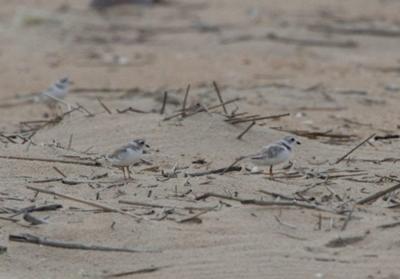

LEWES, Del. — Delaware's endangered and threatened beach-nesting birds saw significant breeding success in 2026, with record piping plover nesting at Cape Henlopen State Park and a dramatic increase in least tern populations, according to the Delaware Department of Natural Resources and Environmental Control.
Despite fewer adult piping plover pairs statewide, the birds continued to show encouraging nesting results, while new predator fencing helped least terns reach population levels not seen since the late 1990s.
Piping plovers set nesting record at Cape Henlopen
The DNREC Division of Fish and Wildlife documented 10 pairs of piping plovers nesting at The Point at Cape Henlopen State Park in 2026, the highest number recorded at the site since intensive monitoring began in 1989.
Another 15 nesting pairs were recorded at Fowler Beach in Prime Hook National Wildlife Refuge, bringing Delaware's statewide total to 25 pairs, down from 30 in 2025.
The federally threatened and state-endangered birds produced 25 chicks that survived to flying age, compared with 27 in 2025. However, that success came with five fewer breeding pairs.
Statewide productivity was reported at 1.08 fledglings per breeding pair, slightly below the average of 1.29 since 2020.
Piping plovers continue to face threats from predators, including red foxes, coyotes and ghost crabs. Severe storms, prolonged heat waves and drought also contributed to the loss of nests and chicks during the breeding season.
DNREC works with the U.S. Fish and Wildlife Service and the U.S. Department of Agriculture's Wildlife Services to support piping plover recovery along Delaware's beaches and the East Coast.
Least tern population surges following new predator fencing
Delaware's endangered least terns experienced an even greater improvement in breeding success during 2026.
New predator fencing installed at Cape Henlopen State Park and Fowler Beach helped protect nesting areas, contributing to a substantial increase in breeding pairs and chicks surviving to flying age.
The number of adult least tern pairs jumped from 127 in 2025 to 208 in 2026, reaching levels last seen in Delaware during the late 1990s.
The number of chicks surviving to flying age also increased significantly, climbing from 45 in 2025 to 138 in 2026.
DNREC credited the fencing with improving nest protection and helping more chicks survive.
The larger least tern colony also attracted a pair of common terns to Cape Henlopen State Park, where the species nested for the first time since the 1990s.
DNREC plans to build on that success by attempting to attract additional common terns and black skimmers to protected nesting areas at Cape Henlopen.
American oystercatchers show encouraging signs
American oystercatchers also experienced a notable nesting milestone in Delaware this year.
Seven breeding pairs were monitored at Cape Henlopen State Park, Delaware Seashore State Park and Prime Hook National Wildlife Refuge.
Those pairs successfully hatched five chicks from three nests.
For the first time since 2019, DNREC staff observed an American oystercatcher chick reaching flying age on a mainland beach.
Predators remain a major challenge for the species, particularly along mainland beaches. According to DNREC, oystercatcher pairs nesting in Delaware's Inland Bays typically produce more chicks that survive to flying age because they face fewer threats from mammalian predators.
Conservation efforts continue along Delaware beaches
The 2026 nesting season highlights both the progress and ongoing challenges involved in protecting Delaware's vulnerable shorebirds.
While piping plover numbers declined slightly, record nesting activity at Cape Henlopen, increased least tern productivity and a rare mainland beach success for American oystercatchers point to encouraging results from conservation efforts.
DNREC continues working with state and federal partners to protect nesting habitat, manage predators and support the long-term recovery of Delaware's endangered and threatened beach-nesting birds.
