



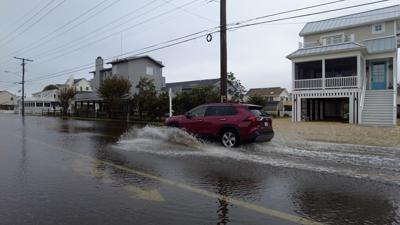

DELAWARE - FEMA Region 3, along with the state of Delaware, have announced the approval of Delaware's 2023-2028 Hazard Mitigation Plan. FEMA says the plan outlines risks and vulnerabilities posed to Delawareans, as well as offering ideas and recommendations for protecting and improving resilience in the state.
FEMA says that by adopting the plan, the state is now eligible to receive certain types of FEMA assistance, such as Hazard Mitigation Assistance (HMA) grants, Public Assistance funds, and High Hazard Potential Dam (HHPD) funding. According to FEMA, this allows federal funds to go directly to Delaware to protect people, their property, and the environment. They say the plan was developed by the State Hazard Mitigation Council. The Council includes staff from state agencies, the University of Delaware, and representatives from Delaware counties and municipalities.
FEMA says they have outlined twelve hazards that could impact the state within the next five years:
- Coastal Erosion
- Coastal Flooding
- Dam/Levee Failure Flooding
- Drought
- Earthquakes
- Extreme Temperatures
- Inland Flooding
- Local Earth Movement
- Severe Thunderstorms & Tornadoes
- Severe Winter Weather
- Tropical Cyclones
- Wildfire and Smoldering Fires
The organization says these were identified through the state's history, existing conditions, and future climate conditions. They say it also takes in to account vulnerable populations in Delaware and discusses how climate change will exacerbate social vulnerabilities.
The plan also comes up with some solutions, says FEMA, that could lessen the impact from a natural hazard or disaster. They say some of the high-priority projects included in the plan are:
- Protect and secure critical infrastructure and community lifelines to mitigate impacts from natural and manmade threats and make more resilient.
- Create and promote a statewide climate resiliency educational campaign.
- Assist local governments in developing strategies to protect wastewater treatment facilities from flooding.
- Designate shoreline zones for adaptation action.
- Fund projects to make hazardous dams safer.
- Enhance the power grid and energy infrastructure to accommodate the national push for electrical vehicles (EVs) and the possible charging surge during an evacuation.
- Identify sites that could serve as heating and cooling centers during extreme heat and cold events.
“I commend the state of Delaware and the many partners who came together to update this Hazard Mitigation Plan,” said FEMA Region 3 Regional Administrator MaryAnn Tierney. “The holistic approach to evaluating risks and vulnerabilities puts the state on a path to a more resilient future and puts them in position to receive future funding from FEMA.”
“This State Hazard Mitigation Plan update is one of the many steps our State is taking to reduce risk across Delaware,” said Delaware Emergency Management Agency Director A.J. Schall. “We are proud of the work that our team and partner agencies put into this plan to ensure we continue working together to tackle these complex issues.”
FEMA says these plans are updated every five years, meaning that the plan will be updated once again in 2028.
