




This article has been updated with background on the ongoing litigation referred to in the synopsis of House Bill 418.
DELAWARE - Delaware lawmakers have introduced legislation aimed at updating the state’s ghost gun law and creating a path for people who legally own them.
An unserialized gun or a "ghost gun" is a gun that does not have a serial number. That number is what makes the gun traceable by law enforcement. House Bill 418, sponsored by Rep. K. Johnson and Sen. Sturgeon, was released on Tuesday in the Delaware General Assembly.
The bill would amend Delaware law to allow people who legally possessed an unfinished gun frame, receiver or unserialized gun before the law’s enactment to either have the gun serialized by a federally licensed gun dealer or manufacturer, or render it permanently inoperable within six months.
The legislation also creates a legal definition for “permanently inoperable,” stating the gun must be altered in a way that cannot be reversed using ordinary tools or commonly available equipment. The bill outlines several qualifying methods, including welding the barrel closed or destroying the frame in line with federal gun destruction standards.
Under the proposal, federally licensed gun dealers and manufacturers could imprint serial numbers onto qualifying guns and unfinished frames or receivers. Any gun returned after serialization would require a background check under existing Delaware law. If the transfer is denied, the gun would have to be surrendered to law enforcement.
Lawmakers said the legislation also aligns Delaware law with federal serialization standards while maintaining the prohibition on untraceable guns. If approved, the law would take effect immediately upon enactment.
This comes after the case, Rigby v. Jennings, has challenged portions of House Bill 125 under the First, Second and Fifth amendments to the U.S. Constitution, according to the Delaware Department of Justice. Plaintiffs in the case sought a preliminary injunction against several sections of the law, and U.S. District Judge Maryellen Noreika granted the request in part in September 2022.
The court blocked Delaware from enforcing portions of the law dealing with unfinished gun frames, receivers and untraceable guns while the case continues.
Sections 1459A(b) and 1463(a) prohibit the possession of unfinished frames or receivers that are not serialized under federal law and criminalize the possession of untraceable guns. According to the DOJ, the plaintiffs argued those provisions violated the Second Amendment and amounted to an unconstitutional taking of private property under the Fifth Amendment. Judge Noreika ruled the plaintiffs were likely to succeed on their Second Amendment claims and temporarily stopped the state from enforcing those sections.
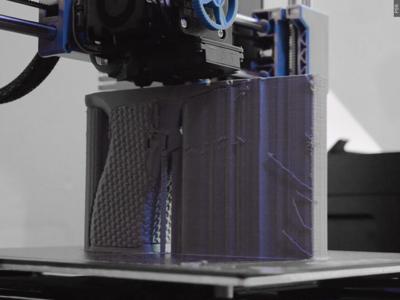
The court also blocked the enforcement of Sections 1463(b) and 1463(c)(1), which prohibit manufacturing untraceable guns and restrict the use of three-dimensional printers to manufacture guns , gun receivers or major gun components unless done by licensed manufacturers, said the DOJ.
However, the judge did not stop Delaware from enforcing restrictions on distributing computer-aided design files used as blueprints for making ghost guns with 3D printers. Briefing on summary judgment has been completed, and the parties are awaiting a final ruling from the court.
