



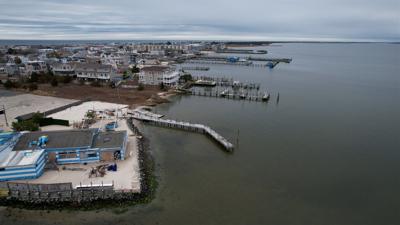

DELAWARE - The most recent State of the Bays report from the Delaware Center for the inland Bays has revealed that the waters of the inland bays have a poor rating-- exactly the same rating they received five years ago.
The center says that the Inland Bays provide several environmental, economic, and human health benefits to Delaware, as well as providing $4.5 billion in economic activity every year. They say Bay ecosystems support fish and wildlife, filter pollutants, and protect upland areas from storm damage. Ensuring the bays are healthy is critical to ensure the long-term vitality of the both the shared resources and quality of life, says the center.
According to the center, progress has been made since the previous report. For one, the conversion of discharge from the City of Rehoboth Beach’s wastewater treatment system to an ocean outfall in 2018 means that all major point sources of nutrient pollution, particularly nitrogen and phosphorus, have now been removed from the Inland Bays. Additionally, Sussex county facilitated the conversion of an estimated 52,884 septic systems to central sewer, far exceeding the 45,000 goal set in the Pollution Control Strategy.
The water quality in Little Assawoman Bay has also shown some improvements, says the center, with scattered beds of widgeon grass popping up likely due to lower nutrient concentrations and clearer water there.
The center also notes a growing shellfish farming industry, which they say is a win for both water quality and the local economy.
However, the center says these small wins do not change the bays "poor" or "D" rating.
Inputs of nitrogen from nonpoint sources continue to far exceed healthy limits in all three Bays, with no improving trend, says the center, and while well-flushed, open areas of the Bays have relatively good water quality, the water quality in most tributaries and canal systems remains poor. They say these areas consistently see unhealthy amounts of nutrient pollution and frequent summer algae blooms that sap oxygen from the water. Nitrogen levels are particularly high in Indian River and Guinea Creek. The report notes that baygrasses are extremely rare in the bays, with eelgrass completely nonexistent.
The report also discussed land use in the watershed, and how it is changing due to rapid population growth. They note how residential and commercial development has replaced large areas of forest and agricultural land, and how with these comes more roadways and other impervious surfaces, which creates increased demand on wastewater treatment systems. The center says that conservation and restoration of natural habitats and shorelines has not kept up with these changes.
According to the center, though waters are generally safe for activities like boating or wading, fecal bacteria levels in upper tributaries and canals may pose a risk for swimming. Additionally, they say that slightly fewer monitoring stations met the swimming standard during the past five-year period.
The report also stresses the threat of climate change to the inland bays, with increasing concentrations of greenhouse gasses in the atmosphere are causing big changes to the local weather and climate. The center says the past decade was the hottest on record in southern Delaware, and heavy rainfall associated with severe storms is happening more often. Sea levels are rising at an accelerated rate, they say, flooding is more frequent, and higher waters are degrading the health of salt marshes.
The center says that the Inland Bays are changing in direct response to a changing climate and so too will the habitats, wildlife, and communities that depend on this delicate system.
According to the center, the health of the Bays, their living resources, and people are inextricably linked. The center says that they and their partners are committed to working together to clean Bay waters and preserve and restore natural habitats across the watershed.
The center says that proactive planning and new environmental policies that implement the Inland Bays Comprehensive Conservation and Management Plan is are key. They note a recent Sussex County ordinance that is intended to better protect wetlands and waterways by enhancing buffers, saying that it's a step in the right direction.
Lead Author for the report, Marianna Walch, said she's optimistic about the future.
"We know what needs to be done. We have a comprehensive conservation and management plan for the bays that was recently enacted with agreement from all of our partners, including the county and the state, that has specific actions that we know will result in healthier bays, she said.
Despite that, they say stronger protections are needed. At a pivotal moment for the Bays’ health, the Center says that it and its partners also are engaged in actions to mitigate and adapt to the impacts of a warming climate and rising seas on the Inland Bays and their watershed.
