



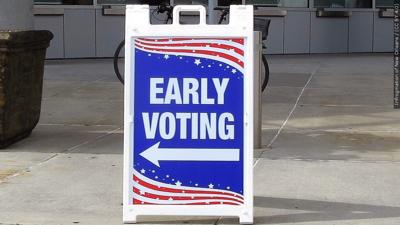

DOVER, Del. - A surprise ruling issued at the end of February has been vacated by the Delaware Supreme Court.
On Feb. 23, a Superior Court judge issued a ruling that struck down early voting and the state's 14-year-old permanent absentee law. Attorney General Kathy Jennings immediately moved to appeal that ruling.
The Delaware General Assembly enacted early voting in 2019 and permanent absentee voting in 2010, both receiving bipartisan support. Former Rep. and current Sen. Gerald Hocker co-sponsored the legislation that created permanent absentee voting 14 years ago. Hocker is the plaintiff in the Superior Court case.
Today, the Court found that Hocker and co-plaintiff Michael Mennella, represented by former Delaware GOP Chair Jane Brady, lacked standing to bring the case.
"Enough of these thinly veiled partisan attempts to suppress votes, especially of our most vulnerable citizens," said Jennings.
Gov. John Carney issued a statement following the Court's ruling, saying, "I've always believed that we should make it easier, not harder, for Delawareans to exercise their fundamental right to vote."
House Minority Whip Lyndon Yearick sounded off after the Court released its decision. "We support early voting," said Yearick. He went on to mention that he introduced House Bill 320 after the February ruling.
The bill authorized 10 days of early in person voting in the state, along with at least 21 in person voting locations with one being located in each State Senate District. Yearick claims the Democratic-controlled House Administration Committee stalled the bill for nearly four months without a hearing. He went on to express his frustration with today's reversal.
"The High Court sidestepped the core question of constitutionality by throwing out the lower court's ruling on 'standing,'" said Yearick. "This is frustrating because the constitutionality issue was our sole concern."
According to a statement released by Attorney General Jennings, in the last election, 56,000 Delawareans used early voting and roughly 21,000 used permanent absentee ballots. That includes veterans, disabled individuals, and caregivers.
