





LEWES, Del.- Flooding has become an increasingly prevalent concern for coastal communities on Delmarva.
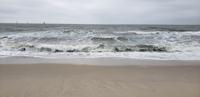
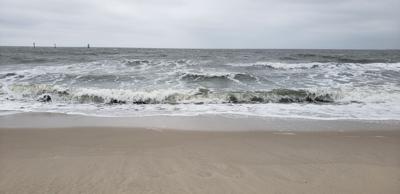
In the past week, flooding has resulted in coastal erosion along our beaches. While a significant portion of recent tidal flooding can be attributed to Tropical Storm Ophelia, coastal flooding can occur even in the absence of a storm. A recent report by Climate Central has linked frequent tidal flooding to rising sea levels.
High tide flooding occurs when water levels surpass 1-2 feet above the daily average high tide. According to the National Oceanic and Atmospheric Administration (NOAA), sea levels along U.S. coasts are projected to rise by an average of 10-12 inches over the next 30 years, equivalent to the increase observed over the past century.
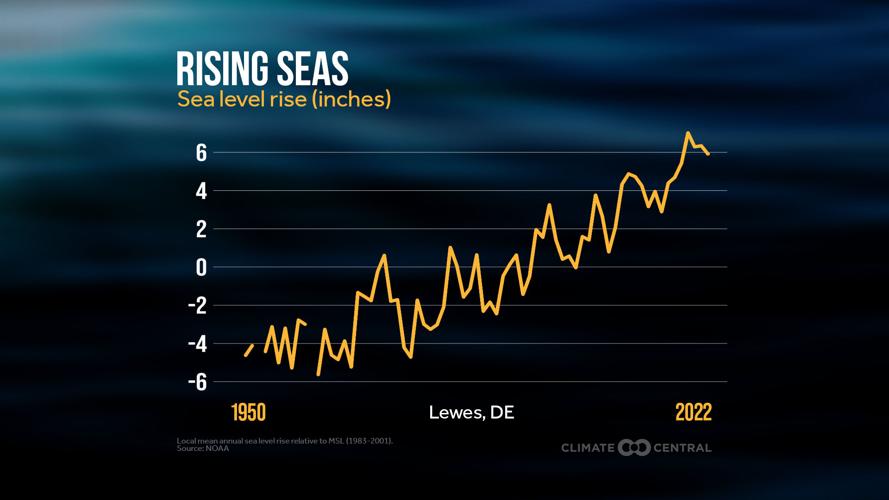
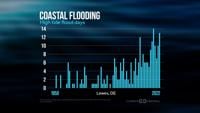
NOAA's research indicates a substantial rise in sea levels in Lewes over the last two decades.

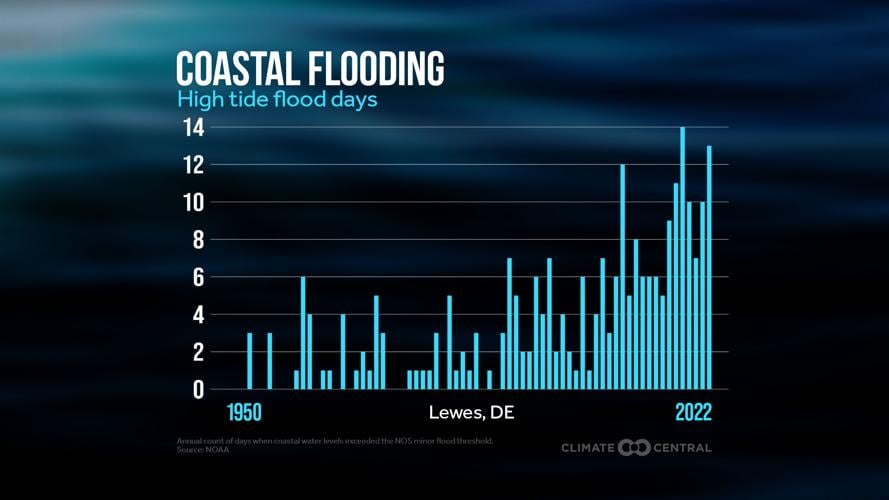
During the same time frame, Lewes has experienced a significant surge in high tide flood days, increasing from under 3 per year before 2000 to 13 just last year.

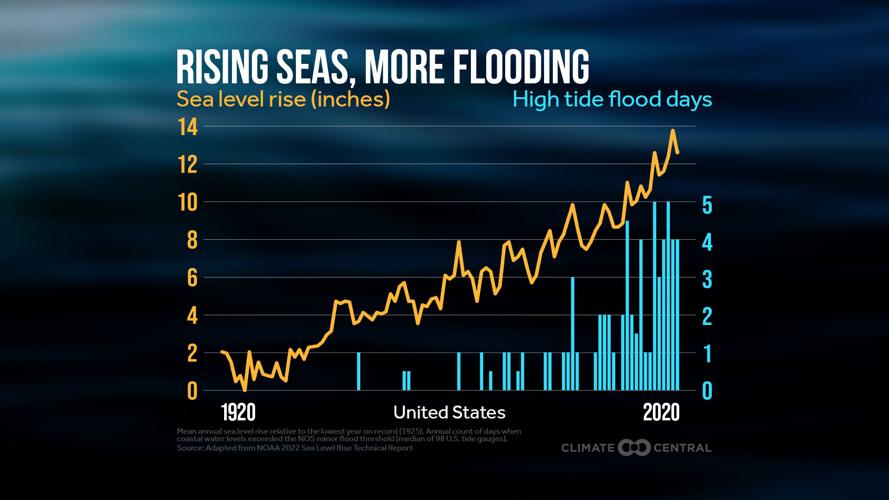
This trend is not isolated; it is a nationwide phenomenon.

As global sea levels rise, water levels along the coast rise too. As daily tides cycle over higher baseline water levels, high tide lines migrate farther inland or upslope — regularly flooding coastal areas that previously would have flooded only during storms or extreme rainfall events. Coastal erosion becomes more prevalent too.
The upcoming Harvest Moon on Friday will further elevate high tides due to its gravitational pull. Flood risks compound if extreme high tides also overlap with heavy rain or storms, like we saw with Tropical Storm Ophelia over the weekend.
According to the Climate Central report, the annual frequency of high tide flooding in the United States has more than doubled since 2000. Projections indicate that flood frequency will more than triple by 2050, relative to 2020, resulting in a national average of 45 to 85 flood days per year as sea levels continue to rise.
Coastal communities can mitigate flood risks and enhance resilience by raising roads, stabilizing shorelines, relocating low-lying buildings, and restoring coastal ecosystems.
