



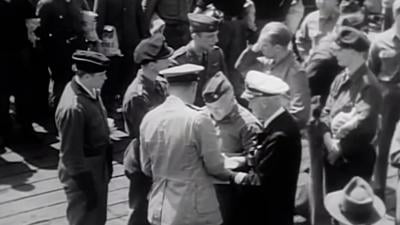

LEWES, Del — 80 years ago, in the days following the end of World War II in Europe, the waters off Cape Henlopen witnessed a historic moment: the surrender of German submarine U-858, the first enemy warship to surrender in U.S. waters since the War of 1812.
As Allied forces closed in on Berlin in 1945, Nazi Germany made one final push at sea. Six submarines operating under were sent to strike shipping off the U.S. East Coast, hoping to catch the Allies off guard and force a negotiated truce.
Four of those U-boats were sunk early in their mission. But two, U-853 and U-858, reached the North American coast.
U-853 continued to fight even after the official German Navy surrender on May 5, and was sunk off Rhode Island’s Point Judith, U-858 opted to surrender.
According to Fort Miles Museum board member Ed Paterline, U-858 first surrendered to two American destroyers off the coast of Labrador and Newfoundland on May 10, 1945. From there, the submarine was ordered to head south and formally surrender again off the Delaware coast.
“They came off the coast at Fort Miles, about 15 to 20 miles out, and indicated that they were ready to surrender,” said Paterline. “A whole bevy of ships, American blimps, and even a helicopter went out to take it over and bring it in.”
The submarine ultimately docked at what is now the Cape Henlopen State Park fishing pier in Lewes. Still fully armed with torpedoes, U-858 was tied to the Lewes breakwater to prevent sabotage while the weapons were disarmed by U.S. Marine armorers.
The German crew was taken to a prisoner-of-war camp in the United States. "It's why they surrendered to the Americans," Paterline said. "They wanted to go to an American prisoner of war camp and not be sent back to Germany by the Canadians."
After a few months docked in Lewes, U-858 was sent on a war bond tour up and down the East Coast in 1946, becoming a traveling exhibit to promote postwar fundraising efforts.
