



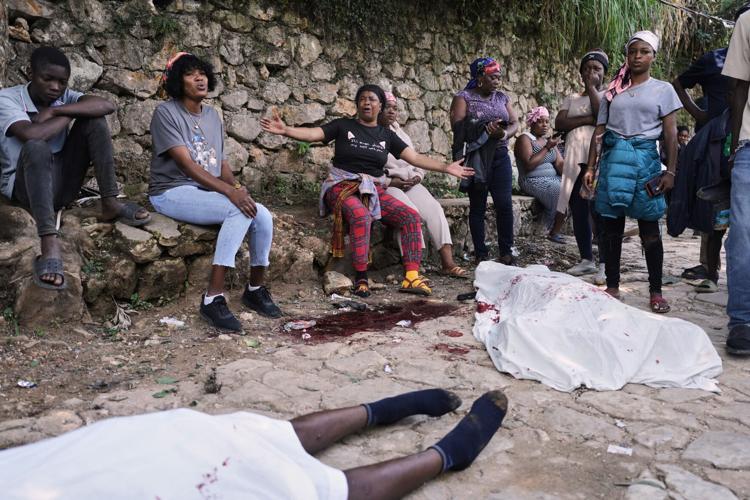
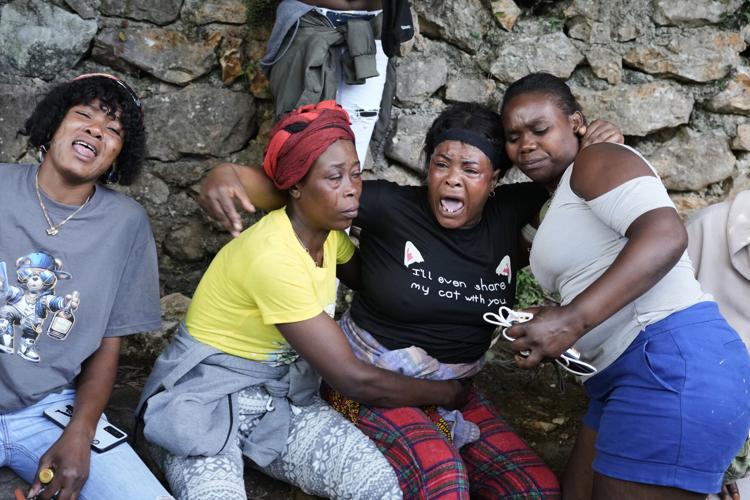
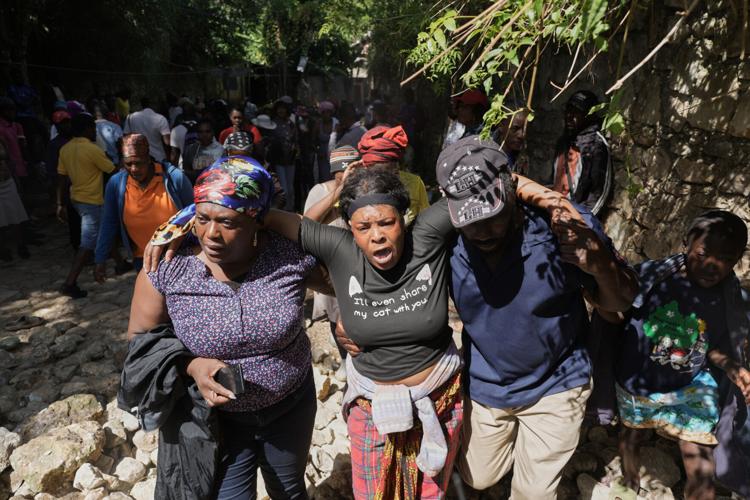
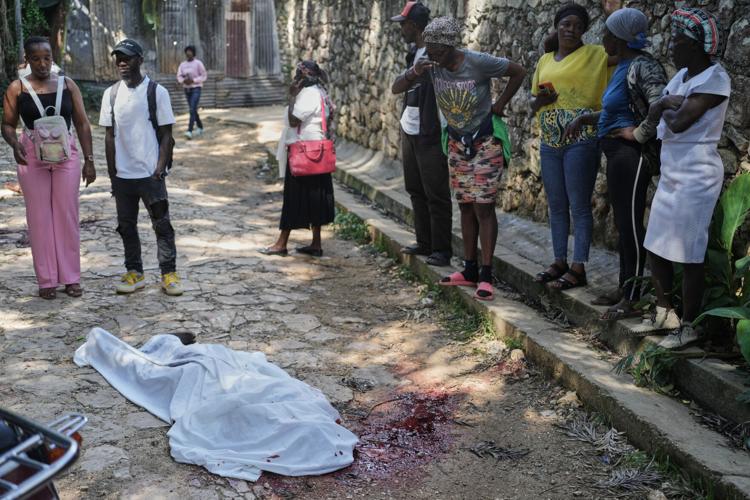
PORT-AU-PRINCE, Haiti (AP) — At least 47 people were killed and more than 50 others kidnapped after armed men attacked a once-peaceful community near Haiti’s capital earlier this week, the United Nations said Tuesday.
It is believed to be one of the largest mass kidnappings in Haiti in recent years, and one gang leader is threatening to kill the hostages if authorities kill any gang members as they try to secure the community nestled in the hills above Port-au-Prince.
Sunday’s attack on Kenscoff pierced the belief that security in the troubled Caribbean country was improving.
“This is a major political and security test, for the government, for the police and for the international mission alike,” said Romain Le Cour, head of Haiti Observatory at the Global Initiative Against Transnational Organized Crime.
He said the threat of executing hostages is a trap: If forces don’t act, they’ve failed to protect them; if they do and hostages die, the gangs will blame the state.
A threat posted on social media
In a video posted on social media, the gang leader threatened Vladimir Paraison, director of Haiti’s National Police, warning that he should refrain from using drones to repel gangs in the area.
“Paraison, if any of our soldiers are hurt, I will kill all of them,” he said, referring to the hostages.
The gang member only identified himself as Izo 2, a reference to Izo, or Johnson André, one of Haiti’s most powerful gang leaders.
Le Cour said Izo 2 is also known as “Didi” and leads the armed group in Kenscoff on behalf of and in coordination with Izo and other gang leaders.
“He’s running a kind of franchise cell for other gangs,” Le Cour said.
He said the aim of Sunday’s attack could be to force Haiti’s police and the U.N.-backed gang suppression force to disperse even more of their limited resources.
“They don’t have enough personnel,” Le Cour said. “If you force them to deploy more troops, it would inevitably be at the expense of other areas.”
The attack might also just be a show of force and a message to Haiti’s government and police as the country prepares to hold general elections on Dec. 13 for the first time in more than a decade.
“This is a message to the government and the police that their claims of protection do not match reality,” Le Cour said. “The gangs are saying: when we choose to attack, we can, and we will succeed.”
Attacks on Kenscoff have escalated
The first major attack on Kenscoff occurred in January 2025, and since then, there have been sporadic attacks in the mountains surrounding the city center.
But Sunday’s attack was the largest yet. At least five of the 47 people killed were children, according to the United Nations Integrated Office in Haiti, known as BINUH.
Kenscoff Mayor Jean Massillon told The Associated Press on Tuesday that two government employees were among those killed, including his cousin, who served as his security detail.
He said that members of Viv Ansanm, a powerful gang coalition that the United States has designated as a foreign terrorist organization, also set fire to 25 homes.
Information about the attack is still trickling out, with Massillon warning that gangs were still roaming Kenscoff’s periphery.
“The atrocity of this crime reminds us that we have to continue working stronger every day to bring peace to the community,” Massillon said. “I’m optimistic that the state will continue working to eradicate the gangs in Kenscoff.”
Haitians demand police protection
Some survivors accused the government of not providing enough protection prior to the attack, with Haiti’s National Police rejecting those accusations.
Le Cour said that if police and armored vehicles were indeed stationed in Kenscoff prior to the attack, then the assertion is concerning: “You let the gangs come in even if you had everything in place?”
Armed men control an estimated 70% of Port-au-Prince and swaths of land in Haiti’s central region and beyond.
Gang violence has displaced a record 1.5 million people across Haiti, where more than 3,050 people were reported killed from January to June and another 1,400 injured, according to U.N. statistics released Tuesday.
The U.N. noted that nearly 800 rapes were reported from April to June, with 87% of those cases representing collective rapes.
At least 81 people also were reported kidnapped during that time period, according to a new U.N. report.
“These figures represent only a portion of the total number of people kidnapped,” it stated. “In many cases, victims’ relatives do not report kidnappings to the police or service providers and choose to negotiate directly with the kidnappers, believing that this approach allows for a quicker release and avoids possible reprisals.”
The number of kidnappings reported from April to June represents a more than 40% increase compared with the previous quarter.
Coto reported from San Juan, Puerto Rico.
Follow AP’s coverage of Latin America and the Caribbean at https://apnews.com/hub/latin-america
