



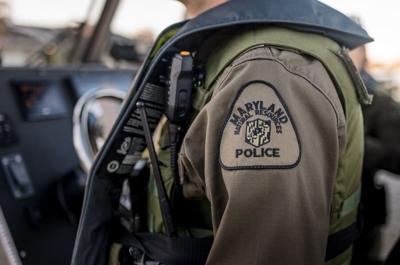


MARYLAND- The Maryland Natural Resources Police is seeking accreditation through the Commission on Accreditation for Law Enforcement Agencies, launching an effort expected to take about three years.
The CALEA Law Enforcement Accreditation Program will examine the agency’s policies, procedures, training, daily operations and management practices. The review is designed to measure the agency’s work against internationally recognized standards for public safety agencies.
CALEA describes its accreditation program as a rigorous, standards-based process intended to improve organizational effectiveness, accountability, risk management and public trust. The program is voluntary, and the police’s enrollment does not mean the agency has been accredited.
As part of the process, Maryland Natural Resources Police will conduct a broad review of its operations and work to demonstrate that it meets CALEA standards. Those standards cover areas including management practices, reporting and analysis, preparation for critical incidents and relationships with the community.
NRP is the second state conservation law enforcement agency to pursue CALEA accreditation, according to the agency. Several Maryland law enforcement agencies already have CALEA accreditation, including the Maryland State Police, Maryland Transportation Authority Police, Montgomery County Police Department, Anne Arundel County Police Department, Howard County Police Department and Baltimore County Police Department.
“Pursuing CALEA accreditation is an important step in our continued commitment to professionalism and service to the people of Maryland,” said NRP Superintendent Col. Orlando D. Lilly. “This process gives us an opportunity to sharpen our procedures agency-wide in an effort to better protect people, communities, and the natural resources of Maryland. Following this process, NRP will be better suited to meet modern policing benchmarks while ensuring long-term organizational health and effectiveness.”
CALEA accreditation is available to a variety of law enforcement agencies, including specialized organizations that enforce fish and game and park laws.
“Maryland Natural Resources Police’s decision to pursue CALEA Accreditation demonstrates its commitment to professional excellence and continuous improvement,” said CALEA President Col. Matthew Packard. “Enrollment is the first step in a rigorous process that requires agencies to evaluate their operations, strengthen policies and procedures, and align their practices with recognized public safety standards. By voluntarily pursuing accreditation, the Maryland Natural Resources Police is making a clear investment in accountability, transparency, employee safety, and quality service to the communities and natural resources it is entrusted to protect.”
Maryland state leaders say the agency will undergo yearly appraisals and assessments throughout the process. Accreditation will be awarded only after the agency completes the required evaluation and meets CALEA standards.
The CALEA program accredits about 5% of police agencies nationwide, according to the information provided by Natural Resources Police, representing roughly 1,000 of approximately 18,000 agencies.
