









Multiday warnings of extreme heat landed in New York, Boston and Philadelphia on Wednesday as sultry weather pushed east just ahead of weekend Fourth of July celebrations in a region that revels in its role as a historic hub of U.S. independence.
Temperatures in the high 90s Fahrenheit (30 degrees Celsius) were forecast for the Northeast; Philadelphia and Boston could top 100 by Thursday. Throw in humidity, and the real-feel heat index will be even higher at times, the National Weather Service said.
A heat dome — high-pressure systems above a region that trap heat and humidity — has been smothering parts of the U.S., from the Midwest to the East Coast. It will add much discomfort amid 250th birthday parades, ship flotillas, outdoor concerts and, in Boston, a popular annual reading of the Declaration of Independence from a historic balcony.
New York Mayor Zohran Mamdani advised residents to stay cool inside and avoid “extraordinary temperatures.”
“To be breaking into triple digits over the course of these many next days — it is of immense concern given that too often the heat is something that is underestimated,” Mamdani said.
Concrete and steel aggravate hot weather
Humidity is not uncommon in the Northeast. But Dr. Alexander Azan of NYU Langone Health in New York said high air temperatures and humidity are a dangerous combination.
“Their body doesn’t have that level of acclimatization to respond appropriately to the heat, and so heat stress in the form of what we call heat exhaustion, and in more severe cases, heat stroke, can occur at much lower temperatures than we see in people who live in the South,” Azan said.
Cities in particular are at greater risk, experts say.
"The concentration of concrete, asphalt, steel, all of those materials help to retain heat,” said Vijay Limaye, a climate scientist at the Natural Resources Defense Council. “The number on your phone may actually not reflect the true temperature profile that you’re going out into.”
New York City said more than 200 teams of government workers and volunteers will check on homeless people and encourage them to get inside. There will be hundreds of cooling centers, from the Javits Center convention hall to vans to outdoor spots with misting fans.
Relief for kids — and pets
The American Kennel Club’s Museum of the Dog in New York is allowing visitors to bring their dogs to cool off, through Sunday. Executive Director Christopher Bromson said he got the idea from seeing his own Newfoundland sprawled on the museum’s cool floor.
“I thought every dog should have access to this,” he said.
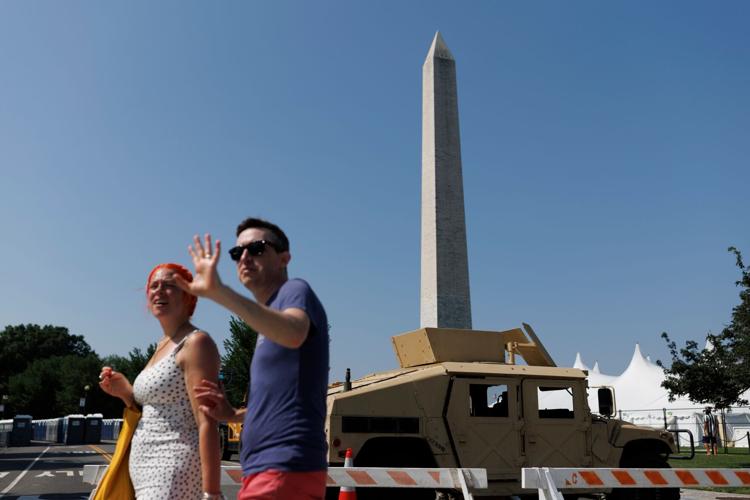
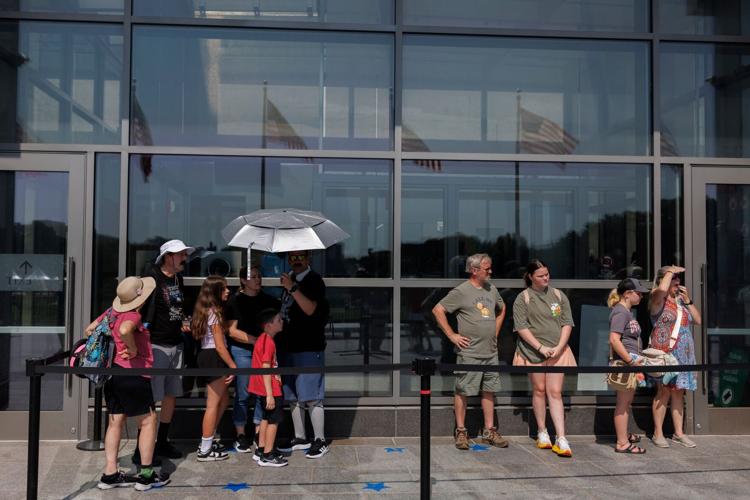
In Washington, D.C. where the high temperature was 95 F (35 C), thirsty children reached for cold bottles of water from U.S. Park Police as they waited in line for the Ferris wheel on the National Mall.
Jeff Schlegelmilch, associate professor at Columbia University Climate School, said heat is one of the easiest things to attribute to climate change.
“We have seen a continued increase in longer summers, hotter temperatures, hotter temperatures earlier on, more evaporation of moisture, higher humidity — effects like that,” he said.
Associated Press writer Jennifer Peltz in New York contributed to this report.
