



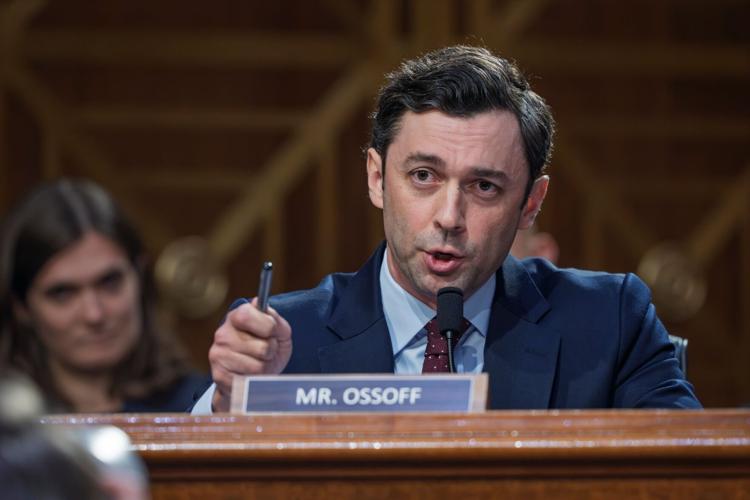



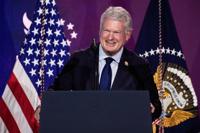
ATLANTA (AP) — Nearly a decade ago, Jon Ossoff was a 30-year-old Democratic congressional candidate promising Georgia suburban voters he would “cut wasteful spending” and make “both parties in Washington” be “accountable to you.” His Republican opponent even complained that Ossoff “talks like a Republican.”
Nobody would make that mistake today. After losing that race in 2017 and narrowly winning a U.S. Senate seat during a runoff in 2021, Ossoff is running for reelection with a full-throated broadside on President Donald Trump as a “national disgrace” leading a “Mar-a-Lago mafia” and “the most corrupt administration of all time.”
The 39-year-old senator has always been a vessel for Trump opposition, no matter his message on the campaign trail. But not until now has Ossoff openly embraced the role. His approach is being noticed across the Democratic spectrum, from activists hungry for the right message in the 2026 midterms to those pining for viable presidential candidates in 2028.
This week, as Trump renewed his fixation on false claims of voter fraud in the 2020 election that brought Ossoff to Washington, the senator never missed an opportunity to denounce the “world’s most famous sore loser.”
“The senator is definitely having a moment, and these breakout moments can certainly become a launching pad for something bigger,” said Lis Smith, a Democratic strategist who helped Pete Buttigieg go from being an unknown Indiana mayor to a presidential contender in 2020. She said Ossoff's approach — tying Trump’s personal financial gain to his performance on the economy — is "one that more Democrats should adopt.”
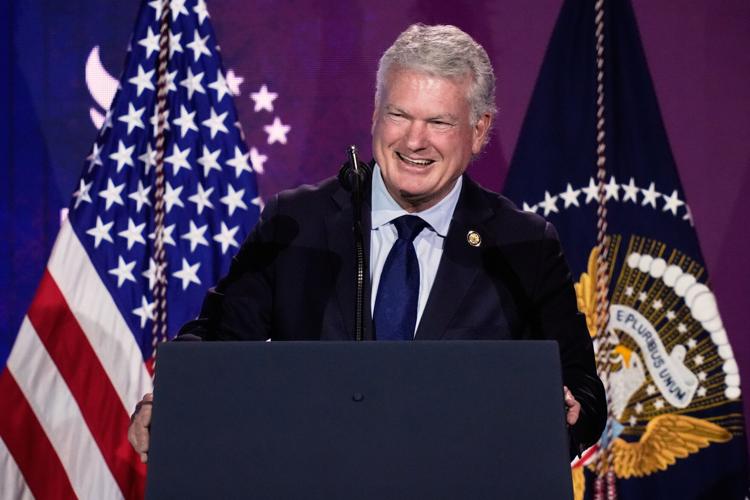
Ossoff insists he’s focused only on “providing Georgians with the best possible service, investigating and exposing corruption and abuse, and winning this pivotal Senate race” over Rep. Mike Collins, who won a Republican primary runoff after Trump’s last-minute endorsement.
Collins argues that Ossoff is just another “out-of-touch, far-left liberal," and he has criticized him as “weak” and “woke.”
But Ossoff’s turn in the spotlight, coupled with prodigious fundraising, puts him in a stronger position for a second term than most political observers expected when Trump returned to the White House less than two years ago. And with Ossoff being the only Democratic senator facing reelection in a state Trump won in 2024, defending his seat is critical for Democrats as they try to gain at least four seats elsewhere to reclaim a Senate majority.
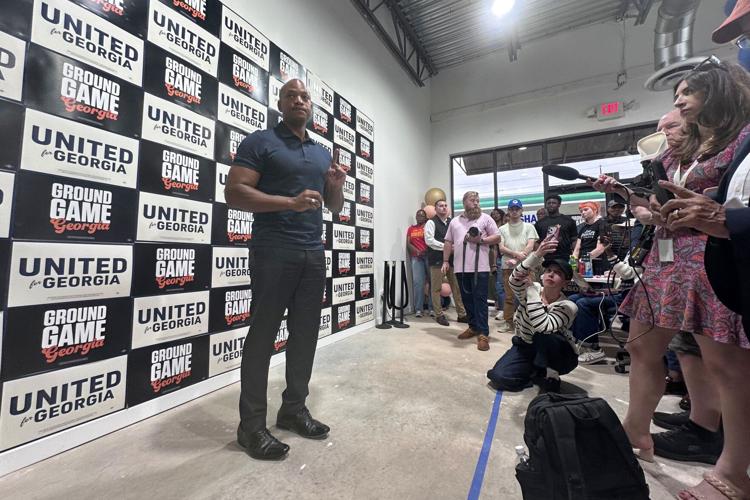
Maryland Gov. Wes Moore, who is also seeking reelection and is mentioned as a potential 2028 candidate, was in Georgia recently campaigning for Ossoff and Democratic nominee for governor Keisha Lance Bottoms.
He described them both as “fighters” and said Ossoff is making the right pitch for voters who "want someone that will disrupt the status quo and do what’s necessary to make their lives easier as the Trump administration raises prices on everything from gas to groceries.”
In 2017, Trump wasn't Ossoff’s initial focus
Ossoff was a political unknown when he decided to run for Congress in 2017. It was the first special congressional election of Trump’s presidency, an open seat because Trump nominated Tom Price as health secretary thinking the district that once sent House Speaker Newt Gingrich to Washington was safe for Republicans.
The young Democrat had been a congressional aide and started a production company focused on investigative documentaries. But Ossoff became a fundraising sensation as rank-and-file Democrats looked for a way to counter Trump. He led an initial all-party primary, supercharging the national attention on a runoff campaign.
“The atmosphere of disarray and gridlock and dysfunction and chaos in Washington doesn’t serve the American people, and it’s not just this administration or this White House — it’s career politicians in Congress,” he said.
Ossoff lost to Karen Handel, a Republican who previously served as Georgia secretary of state.
In 2020, a careful candidate and senator emerged
Running against Republican Sen. David Perdue in 2020, Ossoff continued a disciplined, wonkish approach. Georgia was not considered to be a top battleground, and what early attention it got was focused more on Democrat Raphael Warnock, running in a special Senate election against Sen. Kelly Loeffler. She was considered more vulnerable than Perdue after being appointed to replace Johnny Isakson, who retired because of health issues.
The dynamics changed when Democratic presidential nominee Joe Biden carried Georgia and both Georgia Senate contests went to runoffs — with control of the chamber hanging in the balance. Trump tried to overturn Biden’s victory and began his yearslong fixation with falsely claiming U.S. elections are rigged, with Georgia as his prime example.
Still, throughout his 2020 campaign, Ossoff kept his focus on Perdue’s personal business dealings and the Republican reaction to the COVID-19 pandemic. In one debate, Ossoff did not mention the president at all. In another, when asked about Trump, he answered broadly.
“That kind of leadership really only grows when there’s already been a destruction of faith in our political institutions," he said.
In 2026, an aggressive stump speech goes viral
As a senator, Ossoff has built relationships and a constituent services operation that span Georgia. He regularly announces appropriations for infrastructure, hospitals and other programs — including in heavily Republican areas. He led a congressional investigation into problems in Georgia’s child services programs, and he’s focused heavily on veterans’ care.
But his 2026 breakout has been anchored by a stump speech built around a withering take down of the president. He mocks Trump’s social media blitzes on Truth Social and proposals to put his face on U.S. money.
“When he’s not posting, he’s been trying to rob us. Have you seen it?” Ossoff asks, shifting to allegations of corruption and incompetence.
He ticks through Trumps’ lawsuit against the Internal Revenue Service, his idea for a restitution fund that could compensate Jan. 6 rioters and foreign business deals by his sons. “Prince Don and Prince Eric,” Ossoff calls them.
He blasts Trump’s tax cuts as tilted to the rich, his effort to shield the Jeffrey Epstein case files, and an Iran war that “no one voted for and no one can explain.”
“All this while you pay more for gas, for groceries, for healthcare,” he says.
Ossoff still nods to an overall “rot” in a “coin-operated” political system that goes beyond Trump. But the applause lines, which campaign aides cut and distribute across social media platforms in real time, are trained on Trump.
“He's a failed president and a national disgrace," Ossoff repeatedly says.
Election denial has been a backdrop for Ossoff's political career
Ossoff won his Senate seat in the midst of Trump's election denial in Georgia, and the president has revived the topic as he runs for reelection. Trump has directed his administration to investigate the 2020 election, and federal agents seized hundreds of boxes of ballots from Fulton County, a Democratic stronghold that includes Atlanta.
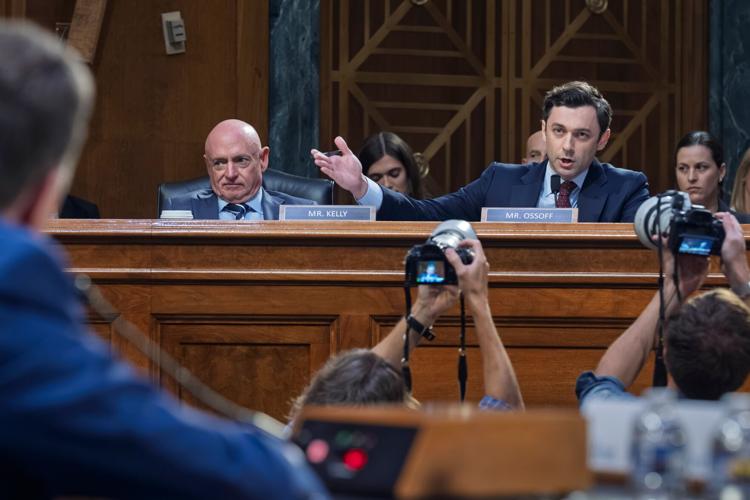
Refusing to acknowledge that Biden legitimately defeated Trump has become a litmus test for serving in the administration, one that Ossoff highlighted when questioning Jay Clayton, Trump's nominee for national intelligence director.
“Who won the 2020 election?” Ossoff said.
“I’m not going to get into that with you,” Clayton responded.
As Clayton continued to dodge, Ossoff said, “isn’t it humiliating to be unable to answer this question, to have to indulge the president’s delusions?”
Ossoff raised $20 million during the second quarter of 2026 and had $42 million left to spend. Collins raised about $2.1 million and had about the same amount in his coffers. And a 20-to-1 money advantage certainly helps a politician trying to stay in office, and in the spotlight.
Smith offered one caution about Ossoff.
“You can’t live off one great speech or one viral exchange,” she said. “You have to prove you can perform in every format." The question, she said, is how someone goes "from flavor of the month to a more serious national political figure.”
