




DELMARVA - The Delaware Department of Natural Resources and Environmental Control recently introduced two new conservation incentive programs to improve water quality and create wildlife habitat in the Chesapeake Bay watershed. Both programs, the Delaware Community Conservation Assistance Program and the Forest Buffer Incentive Program, will pay homeowners and landowners for implementing conservation management practices that support these goals.
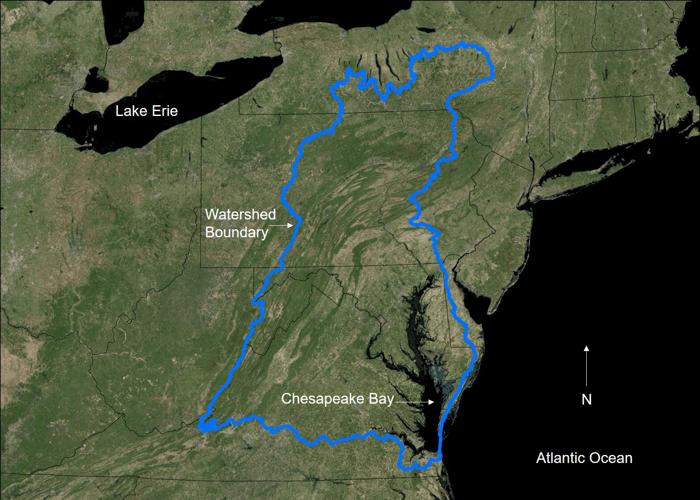
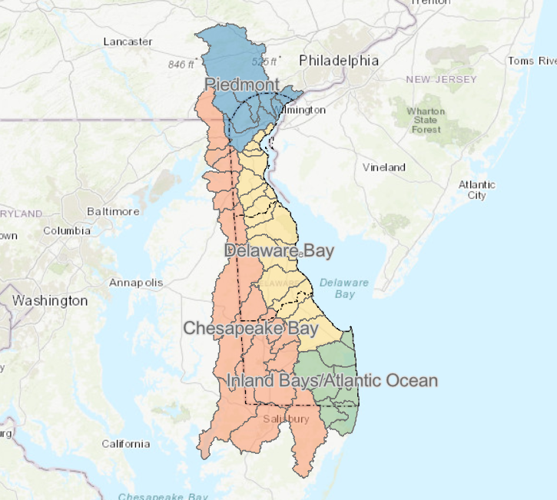
According to the United States Geological Survey, the Chesapeake Bay watershed encompasses portions Delaware, Maryland, Pennsylvania, New York, Virginia, West Virginia, and Washington.

Courtesy United States Geological Survey.
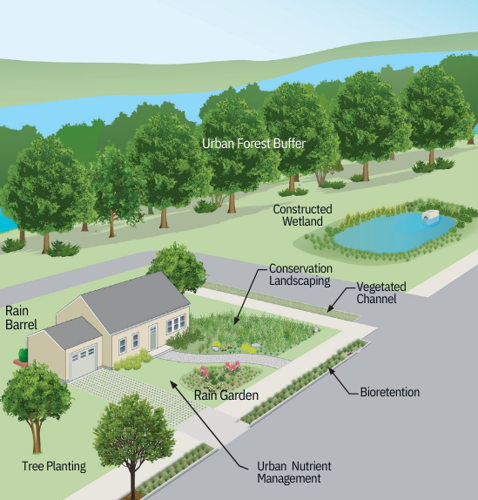
Through the Delaware Community Conservation Assistance Program, homeowners can qualify for partial reimbursement of their installation expenses for best management practices. Examples include constructed wetlands, rain gardens, tree planting, urban nutrient management, conservation landscaping, and more. These are designed to reduce runoff from residential properties and additionally solve common backyard issues like erosion and poor drainage.
The Forest Buffer Incentive program provides free tree plantings for qualified landowners with an additional one-time incentive payment. These buffers are strips of wooded areas that filter sediment and nutrient pollutants like phosphorous from water runoff, which can cause the growth of algae and other aquatic plants when in high levels.
Forest buffers are part of Phase III of Delaware's Watershed Implementation Plan to reduce nutrient and sediment loads entering the Chesapeake Bay. The goal is to create an additional 65 acres of forest buffers by 2025.
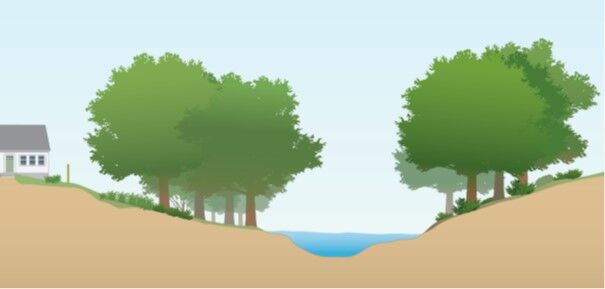
Tree buffers are adjacent to waterways and help contain high stream flows, provide wildlife habitat, and provide protection from flooding and erosion. Courtesy Delaware Department of Natural Resources and Environmental Control.
Dr. Holly Walker, the Chesapeake Bay program coordinator within the Division of Watershed Stewardship, said the programs are crucial to Delaware meeting water quality and pollution reduction goals in the watershed, which covers 64,000 square miles including a portion of western Delaware.
"The Chesapeake Bay is the largest estuary in the Unites States and is home to 18 million people. Any protection we can provide for it, any continued upgrading of its condition, is crucial for the bay's unique ecosystem and it's inhabitants," Walker said. "These practices help reduce stormwater runoff, an important factor when it comes to improving water quality. At the same time, participants in the community conservation assistance program also get the benefit of a more beautiful, eco-friendly landscape that will attract songbirds, butterflies, and other beneficial insects."

For landowners to qualify for either program, their property must be in Delaware and within the Chesapeake Bay watershed. Courtesy Delaware Department of Natural Resources and Environmental Control.
For landowners to qualify for either program, their property must be in Delaware and within the Chesapeake Bay watershed. The best management practices implemented must remain in place for at least five years. Information on finding watershed boundaries and more is available at delawarewatersheds.org.
