



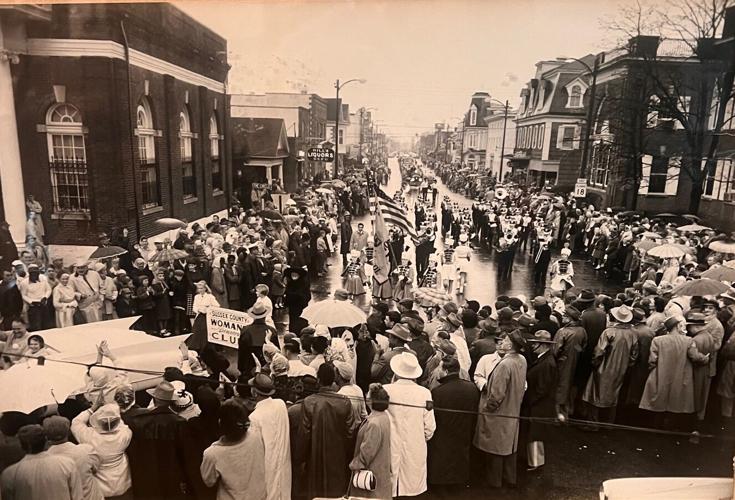



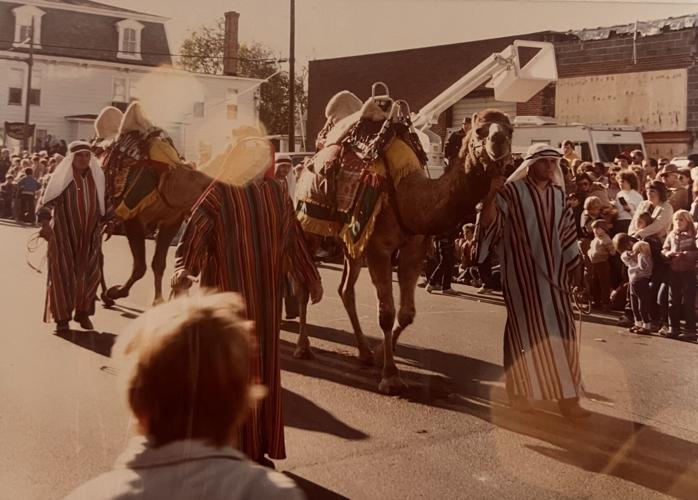



GEORGETOWN, Del. — Every two years, the streets of Georgetown come alive with an event unlike any other in the United States: Return Day. Held on the Thursday after Election Day, this state holiday blends history, tradition, and a message of bipartisanship as Delawareans gather to mark the end of campaign season.

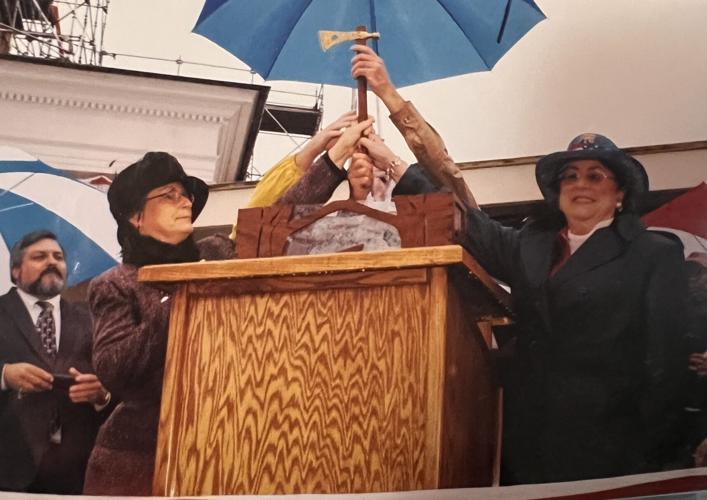
One of the biggest parts of Return Day is the burying of the hatchet. Leaders from Sussex County's political parties literally bury the hatchet in sand, signifying the end of the political season.
From its 18th-century roots to its modern-day celebration, Return Day is a beloved event that embodies community spirit, political unity, and remembering that we have much more in common than we do different.

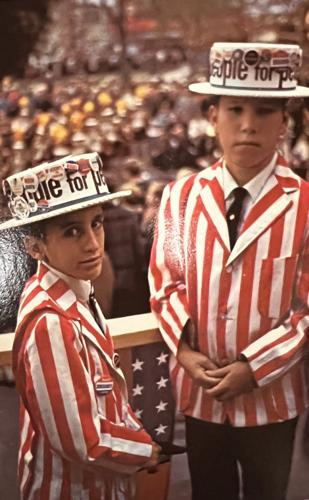
Two young men attend Return Day.
Return Day consists of hearing the returns of the election read out loud by the Town Crier, a festival and parade, and literal burying of the hatchet by political parties.
A Tradition Born in Georgetown
The origins of Return Day can be traced back to 1792, shortly after Georgetown was designated the county seat of Sussex County. At the time, state law required all votes to be cast in Georgetown. People would return two days later to hear the election results read aloud by the Town Crier, giving the event its name.

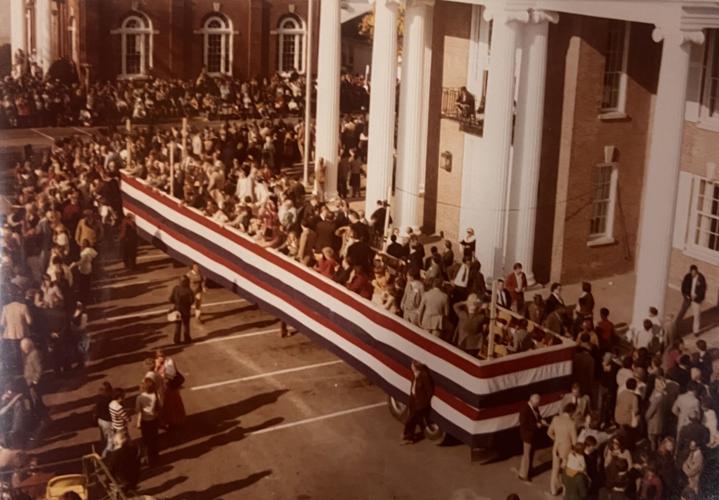
The returns are read out by the Town Crier from the Courthouse balcony.
“Let’s go back to 1812,” explained Jim Bowden of the Georgetown Historical Society. “The state legislature changed the election laws in 1811, so that changed the dynamics of where you voted and where you came back to to get the results of the election.”
Bowden added that because votes were hand-counted and not mechanized, people who traveled to Georgetown to cast their ballots were required to return to hear the results.
“The populace started saying, ‘Well, wait a minute. Instead of riding in a wagon two days back to Georgetown, why not stay in Georgetown?’” he said. This led to street vendors selling everything from beer to roast ox, creating a celebratory atmosphere that remains today.
Even in its earliest days, Return Day captured attention far beyond Delaware. According to Bowden, John M. Clayton, a 19th-century U.S. senator and member of President Zachary Taylor's cabinet once remarked that the most wondrous sights in the world were “a political meeting in Dagsboro, Paris, France, and Return Day.”
National Attention

A crew from Good Morning America broadcast at Return Day
Return Day attracted journalists from across the country over the years. An excerpt from the New York Tribune in 1860 noted the baked possum, stewed oysters and more delicacies. But despite the unique qualities there, it was the emotional tone that struck a chord even in 1860.
“The carnival obtains a degree of importance in Catholic countries, and festivals, anniversaries and gala-days, invested with interest, are celebrated in nearly all regions with distinctive features, to give character to the display in each locality; but none of these commemorative occasions, probably, are more eminently marked with a peculiar cast than is “Return Day” in old Sussex," the article reads. "Known only here, it has become an institution of the county, and is inseparably connected with its history; it is essentially the big day, and cannot be approximated, in point of interest for numbers and notoriety, by any other [...] The impression left upon the mind of one who had for the first time witnessed Return Day in Sussex, if not unqualifiedly agreeable in every particular, would be enduring.”

The photographer, famed for his picture of a Navy sailor kissing a nurse during V-J celebrations, covered Return Day for Life Magazine in 1960.
In 1960, famed photographer Alfred Eisenstaedt photographed Return Day for Life Magazine. This is the same man who took the famous photo of the Navy sailor kissing a nurse during V-J celebrations in New York City.
Return Day has only paused twice in its history: for World War Two and the COVID-19 Pandemic.
The Modern-Day Celebration
Although election results are now instantly accessible, Return Day has endured as a community event celebrating political reconciliation. The hallmark of the day is the symbolic “burying of the hatchet,” where leaders from each political party come together to literally bury a hatchet in sand, signifying the end of campaign season and promoting unity.

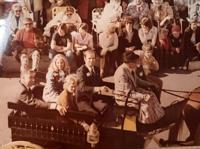
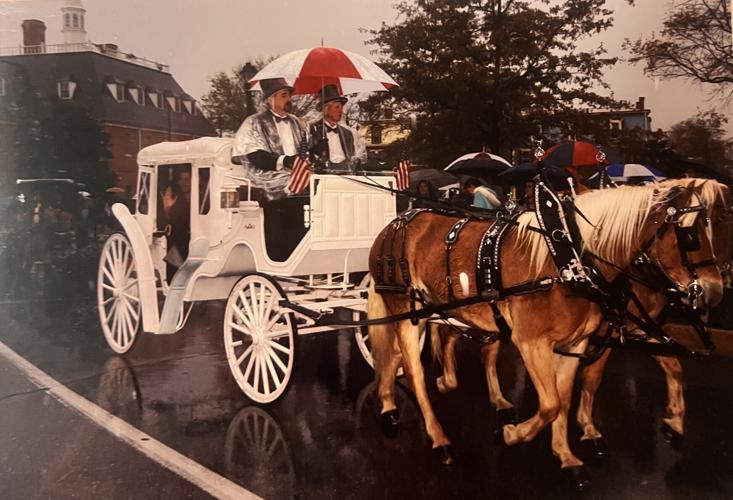
Political opponents ride side-by-side in horse-drawn carriages. In recent years, organizers say it's been hard to attract carriages, so many politicians ride in cars.
Return Day also features a parade where political opponents ride side by side in horse-drawn carriages or cars, a practice that Sheriff Robert Lee says amazes outsiders.

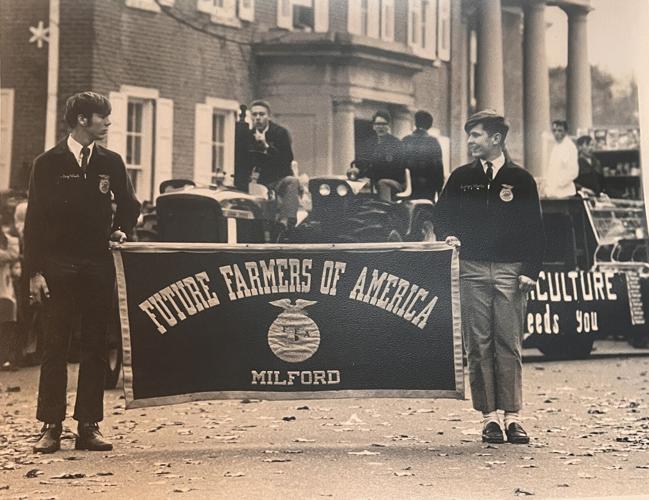
FFA members from Milford at Return Day

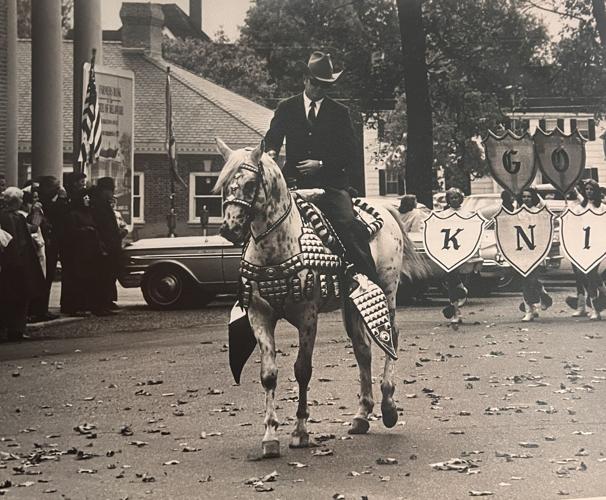
A man rides a horse in an undated photo of Return Day
“I have talked to many people all across the country and they say, ‘What is Return Day?’ And when I explain to them, that’s when we all get together, they say that’s an unbelievable experience.”
Despite modern political tensions, Bowden noted, “We still require both parties to come together, at least for this one day, to make amends.”
Burying the Hatchet
Representatives from each of Sussex County's political parties literally bury a hatchet in a box of sand from Lewes Beach. That, Jones tells CoastTV, is an homage to when Lewes was the county seat. The hatchet burying, just one part of the ceremony post-parade, signifies the end of the political season.
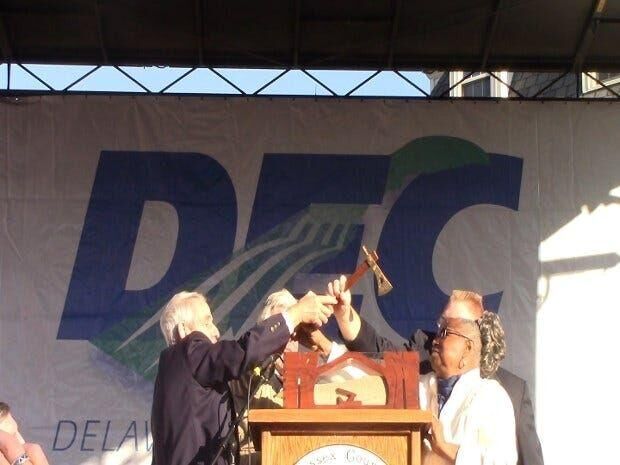
The hatchet is buried in a box with sand from Lewes Beach, the original County Seat in Sussex County.
Local Traditions and Nostalgia
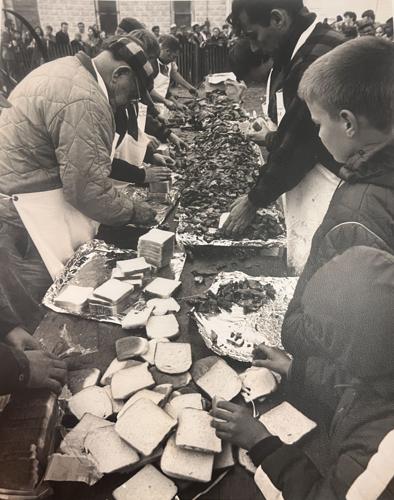
Return Day is a celebration steeped in tradition, including its famous ox roast. Mark Pettyjohn, who helps prepare the ox roast sandwiches, shared the historical roots of the practice.
“You know, they didn’t have any cars or tractors on the farm—a lot of them had ox. So they drove oxen up here, butchered them, and that’s how they started serving sandwiches,” he said. “It’s just a good tradition that brings back the old days. It’s nice to remember how things used to be.”

Ox roast sandwiches have been served at Return Day for centuries. They are free to the public.
Debbie Jones, president of the Return Day Committee, emphasized the importance of preserving these traditions.
“Hopefully not much has changed because we want to keep the traditions alive,” she said. Jones noted how deeply the event resonates with locals, from parents introducing their newborns to their first Return Day to the community bands and marching units that make the parade special.
“It’s one of a kind. I would say a very emotional type of experience, but fun,” she added.
Jones also reflected on the broader message of Return Day.
“I think all of the United States needs to follow those practices of bipartisanship, loving your community, reaching out their hand to support one another," she tells CoastTV. "The healing process needs to be done everywhere.”
Presidential Connections

Then-Senator Joe Biden and his family ride in a carriage for Return Day. Biden has attended nearly every Return Day before he became President, and even once attended as Vice President.
Even national figures have felt the pull of Return Day. President Joe Biden, a Delaware native, has attended the event numerous times. “Very, very [early on], almost all through his vice presidency,” said Bowden. “We’ve never had a sitting president ever come to Return Day that we know, but Joe Biden came very often.”
A Uniquely Delaware Experience
Organizers hope Return Day looks the same for decades to come, though chief among their priorities are attracting more horse-drawn carriages. Jones and Bowden say it's getting harder to find people who can do that and it comes at a great cost.
Regardless of the circumstances, Return Day remains a testament to Delaware’s rich history and commitment to fostering community.
