



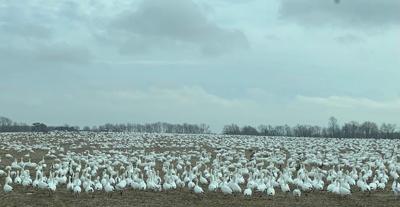

DOVER, Del. — With Delaware’s waterfowl hunting season reopening this week, the Department of Natural Resources and Environmental Control is urging hunters and wildlife watchers to report any sightings of sick or dead wild birds following the detection of a highly pathogenic avian influenza strain in a snow goose found in Kent County.
The sick snow goose was discovered Dec. 8 in eastern Kent County and tested presumptive positive for H5 avian influenza. DNREC says further testing by the U.S. Department of Agriculture’s National Veterinary Services Laboratory confirmed the virus as H5N1 on Dec. 15.
The third segment of duck season opens Wednesday, Dec. 17, followed by the start of the migratory Canada goose season on Dec. 20. DNREC is reminding hunters to safely handle harvested waterfowl and report sightings of any wild birds that appear ill or show signs such as uncoordinated movement or inability to fly.
According to DNREC, snow geese are especially vulnerable to avian flu due to the large flocks in which they feed and roost. The virus is airborne and highly contagious, spreading through nasal and eye secretions and manure. It is currently unknown how or where the infected goose contracted the virus, as snow geese travel along the Atlantic Flyway.
Hunters and others who encounter sick or dead wild birds should use DNREC’s sick and injured wildlife reporting form online. The public is strongly advised not to touch birds with bare hands. If handling a dead bird is necessary, proper protective equipment, including gloves, a mask, and safety glasses, should be used. The bird should be double-bagged, zip-tied, and disposed of in a secure trash container headed to a Delaware Solid Waste Authority landfill.
For waterfowl hunters, DNREC has issued the following precautions:
Dress game birds in the field when possible, away from poultry or pets.
Use separate tools and shoes for cleaning game, and disinfect them afterward.
Always wear rubber gloves when cleaning birds.
Double-bag remains and dispose of gloves inside the outer bag.
Clean all tools and surfaces thoroughly and wash hands immediately after.
While rare, H5N1 has infected a small number of people in the U.S., though there has been no confirmed person-to-person transmission. Health officials say the risk to the general public remains low. Children and pets should be kept away from bird droppings and wild birds.
Anyone who has had close contact with wild birds or poultry and later develops flu-like symptoms should call the Delaware Division of Public Health Office of Infectious Disease Epidemiology at 888-295-5156 (after hours) or 302-744-4990 (business hours). Severe symptoms should be treated as a medical emergency.
More information about avian influenza in wildlife can be found at the DNREC website. Details about HPAI and its impact on Delaware’s poultry industry are available at de.gov/poultry.
