



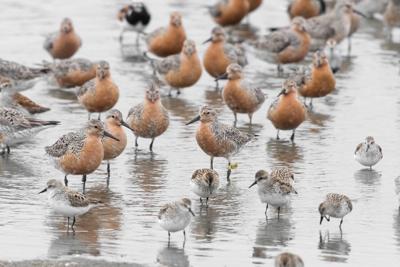

DELAWARE - Thousands of migrating shorebirds are stopping along the Delaware Bayshore this month as part of an annual journey from South America to Arctic breeding grounds, creating one of the region’s most significant wildlife spectacles.
DNREC said the migration coincides with the spawning season for horseshoe crabs, whose eggs provide a critical food source for shorebirds including federally threatened and state endangered red knots, ruddy turnstones, sanderlings and semipalmated sandpipers.
DNREC and the Delaware Shorebird Project are monitoring the birds throughout their stopover, which typically lasts several weeks each May.
“Since some of these species have been in decline in recent years, it’s very important for visitors and residents alike to make sure the birds have the space they need to forage, fatten up, and depart in time to breed successfully,” said Christie, DNREC’s coastal waterbird biologist. “Delaware has an outsized impact on these species, some of which range from Argentina to the far north Arctic regions, and we all have an opportunity to do our part in strengthening their declining populations.”
DNREC is encouraging beachgoers to “Share the ‘Shore” by giving feeding flocks plenty of space and avoiding actions that could disturb the birds while they rest and feed.
As more birds arrive over the next two weeks, Anthony Gonzon, DNREC Environmental Program Manager for Wildlife Diversity, said even small actions can make a difference.
“These small individual actions can help the birds preserve the energy they need for surviving the homeward flight without wasting it on unnecessary running, flying, and stress,” Gonzon said.
Visitors may encounter volunteer beach stewards and survey teams at beaches including Slaughter Beach and Bowers Beach. The volunteers are helping educate the public about the migration and the importance of reducing disturbances during the birds’ stop in the Delaware Bay.
DNREC’s Delaware Shorebird Project has tracked migrating shorebirds for decades through the Division of Fish and Wildlife. From May 1 through June 3, teams count flocks, place identifying leg flags on birds and conduct monitoring surveys along the Delaware Bayshore.
Earlier this month, the project completed its first shorebird capture of the season using cannon nets to safely catch, band and flag birds for research. Six captures had been completed.
DNREC said this effort helps researchers better understand migration timing, stopover length and the birds’ physical condition before they continue north.
Early findings this year suggest higher numbers of red knots may be returning to Delaware compared with the past two years. During one day of fieldwork, researchers caught, banded and flagged 45 red knots along with about 250 additional shorebirds. More than 200 red knots have since been identified through surveys.
People interested in viewing the migration can visit DNREC’s DuPont Nature Center at the Mispillion Harbor Reserve in Slaughter Beach, which offers viewing opportunities from a safe distance and educational exhibits about shorebirds and horseshoe crabs.
