



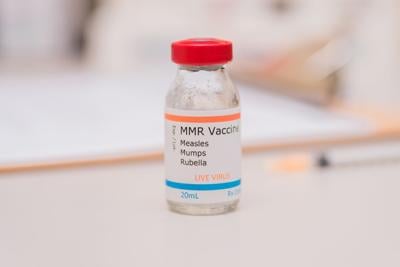

DELAWARE - Delaware families are being encouraged to review their children's vaccination records as the state responds to a measles outbreak, according to Beebe Healthcare.
The Delaware Division of Public Health has confirmed five measles cases as of July 27. According to Beebe Healthcare, the outbreak began with an unvaccinated male in Kent County, and public health officials are conducting contact tracing to identify people who may have been exposed.
The Centers for Disease Control and Prevention defines a measles outbreak as three or more related cases connected by time and location.
"While this news can feel alarming, parents can be reassured that the measles, mumps and rubella (MMR) vaccine provides strong protection against the virus," Dr. Bill Chasanov, a board-certified infectious disease physician at Beebe Healthcare, and Dr. Erin Fletcher, a board-certified pediatrician, said in guidance released Thursday by Beebe Healthcare.
According to Beebe Healthcare, one dose of the MMR vaccine is about 93% effective at preventing measles, while two doses are about 97% effective. Children who have received both recommended doses are "very unlikely" to become infected.
Beebe Healthcare said there is currently no indication of widespread community transmission in Delaware despite the outbreak declaration.
According to Beebe Healthcare, those at the highest risk include unvaccinated children, infants younger than 12 months who are too young to receive the MMR vaccine, pregnant people without immunity and people with weakened immune systems.
According to Beebe Healthcare, measles symptoms typically develop seven to 14 days after exposure but can appear up to 21 days later. Early symptoms include a high fever, cough, runny nose, red and watery eyes, and Koplik spots, or small white spots inside the mouth. A rash usually develops several days later, beginning on the face before spreading to the rest of the body.
Parents who believe their child has been exposed to measles should contact their health care provider to review their child's vaccination status and determine whether vaccination is needed, according to Beebe Healthcare. Families should also monitor for symptoms for up to 21 days and call a doctor's office before arriving so precautions can be taken to reduce the risk of exposing other patients and staff.
The CDC recommends children receive their first MMR vaccine between 12 and 15 months of age and a second dose between ages 4 and 6. Older children, teens and adults who are unsure of their vaccination status should speak with their health care provider about whether they need the vaccine, according to Beebe Healthcare.
For infants who are too young to receive the vaccine, Beebe Healthcare recommends avoiding exposure to anyone who may have measles and ensuring family members and caregivers are up to date on their vaccinations. During an outbreak, some infants may be eligible to receive the MMR vaccine as early as 6 months of age after consulting their pediatrician.
According to Beebe Healthcare, MMR vaccines may be available through primary care providers, pediatricians, Cape Pharmacy and other local pharmacies. Families are encouraged to call ahead to confirm availability. If a vaccine is unavailable, families can contact a Delaware Public Health Clinic.
