



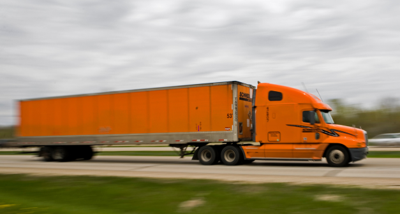

DOVER, Del -The Delaware Office of Highway Safety (OHS) is teaming up with state and local police agencies to conduct a new high visibility enforcement focused on the traffic safety of motorists around commercial motor vehicles. There will be two enforcement periods this year with the first running from April 28 to May 11, and the second one will be from June 15 to June 29.
OHS received its first grant from the Federal Motor Carrier Safety Administration (FMCSA). The objective for this year is to run two enforcement periods and to spread awareness and education on social media for motorists when driving around commercial motor vehicles. In 2023, more than half of the fatal crashes involving commercial motor vehicles recorded that the operator of the commercial motor vehicle was not cited.
“Driving around vehicles that are much larger than your own can be intimidating. Being aware of the differences between regular vehicles and commercial motor vehicles can help us all make informed decisions out on the road,” said Sharon Bryson, Director, Delaware Office of Highway Safety. “It’s not just the responsibility of the driver of the commercial motor vehicle, it is everyone's responsibility to use our roadways safely. We all have to share the road, and we all have the same goal, to Arrive Alive.”
Commercial Motor Vehicles are more than just tractor-trailers. They include many other vehicles like buses, dump trucks, and vans. These vehicles are heavier than ordinary cars or trucks. The requirement to be considered a commercial motor vehicle is to have a gross vehicle weight rating of 10,001 pounds or more. To put it into perspective, an average sedan weighs approximately 4,000 pounds while some of the largest commercial motor vehicles can weigh up to 80,000 pounds. The extra weight makes it more difficult for them to stop in a short distance and their larger size creates a broader range of blind spots.
According to OHS, here are recommendations when driving around commercial vehicles.
- Leave a following distance of at least 200 ft.
- If you can’t see their side mirrors, they can’t see you.
- Don’t hang out in “no zones”. Try to steadily pass and avoid staying in their blind spots for too long.
- Make sure you can see the whole truck in your rearview mirror before changing lanes.
- Allow enough space for the vehicle to make a turn. Larger vehicles need a larger space to make a turn. Don’t get caught under a truck.
