DOVER, Del. - Delaware lawmakers advanced multiple pieces of legislation Thursday aimed at limiting and increasing oversight of Immigration and Customs Enforcement activity, including a House-passed bill restricting enforcement in sensitive locations and a trio of proposals targeting how ICE operations are handled in the state.
The House approved HS 2 for HB 94, a bill that restricts state and local law enforcement from assisting federal civil immigration actions in sensitive locations such as schools, colleges, places of worship, and health care facilities.
At the same time, lawmakers introduced three additional measures, HB 366, HB 367, and HB 368, all focused on placing new limits and transparency requirements on ICE-related enforcement and cooperation.
Together, the bills aim to reshape how Delaware agencies interact with federal immigration enforcement, particularly in civil cases.
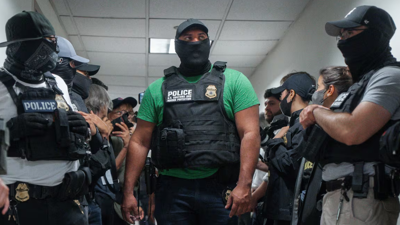
Under HB 366, law enforcement officers, including federal agents, would be barred from wearing masks or face coverings that conceal their identity during most operations, with exceptions for medical needs, undercover work, and high-risk situations.
HB 367 would require all Delaware law enforcement agencies to adopt and publicly post policies ensuring officers clearly display identification, such as their name, badge number, or agency, while on duty.
HB 368 would limit when agencies can comply with federal immigration detainer requests, prohibiting detention based solely on civil immigration warrants unless the individual poses a serious threat to public safety.
"No law-abiding Delawarean should live in fear that they will be taken by a federal officer or someone pretending to be one when they’re doing something as simple as walking down the street, and held in custody for an indeterminate amount of time," said Rep. Mara Gorman.
HS 2 for HB 94 establishes that officers would not be allowed to directly participate in arrests, detentions, searches, or the seizure of property tied to civil immigration enforcement in those locations, except in urgent situations involving immediate safety risks. They would still be allowed to assist in federal criminal immigration cases conducted under a valid court order.
"Our local law enforcement officers are driven by the mission of maintaining peace in our communities, but we have seen time and time again that federal immigration enforcement officers do not share that goal," said Rep. Sean Lynn.
The bill also requires detailed reporting within 48 hours when local agencies assist federal immigration enforcement in these settings, with semiannual reviews submitted to state leaders.
Supporters say the legislation is designed to ensure people can safely access schools, medical care, and religious services without fear.
"No matter where they fall on the political spectrum, the majority of Americans believe that places of worship, places of healing, and places of learning should be off limits for civil immigration enforcement," said House Majority Leader Kerri Evelyn Harris.
"Schools, places of worship, and health care facilities are some of the most intimate places in our state, and no Delawarean – regardless of immigration status – should fear that they will be targeted by immigration enforcement at these locations," said Sen. Kyra Hoffner.
Community advocates also weighed in on the legislation.
"It means a lot that we can work here in Delaware with our legislature to pass some limited protections for immigrants," said Bryant García, executive director of La Esperanza. "It's quite a difficult task to protect completely from everything that's happening federally, so that's tricky, but I'm glad that at the very least, we're thinking about ways here in Delaware to make sure that it's not just protecting immigrants, but making sure that our constitutional rights are protected."
HS 2 for HB 94 now moves to the Senate, while HB 366, HB 367, and HB 368 have been assigned to the House Judiciary Committee.