




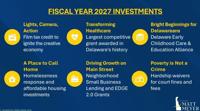
DOVER, Del.- Gov. Meyer released his recommended budget for Fiscal Year 2027, outlining spending plans that focus on education, housing, healthcare and economic development.
According to the administration, the proposal reduces Delaware’s projected structural deficit by more than 70 percent compared to Fiscal Year 2026 estimates and keeps operating budget growth below 5 percent.
The plan also maintains $366.5 million in the Rainy Day Fund and $469.3 million in the Budget Stabilization Fund.
The budget includes $25.3 million for Purchase of Care childcare services and proposes pay increases for state employees. It also incorporates the third year of recommendations from the Public Education Compensation Commission, which includes raising teacher salaries.
Education funding in the proposal includes $8 million for the Literacy Emergency Fund and changes to the “Your Voice, Your Choice” program. The revised program includes $3 million for teacher-driven classroom projects through a partnership with Donors Choose.
In healthcare, the budget proposes targeted Medicaid investments and funding aimed at expanding access to care, particularly in rural areas. The plan also includes funding for food access programs.
The proposal includes increased funding for affordable housing, homelessness prevention and rental assistance programs. It maintains funding for the Housing Development Fund and prioritizes development in existing communities, according to the administration.
The budget also outlines $168.7 million in reductions, reprogramming and one-time spending adjustments, along with more than $65 million in statewide savings through operational efficiencies.
To support the spending plan, the proposal includes changes to business formation fees, updates to tobacco taxes, adjustments to the escheat cap and the creation of a film tax credit.
The recommended budget will now be reviewed by state lawmakers as part of the General Assembly’s budget process.
