



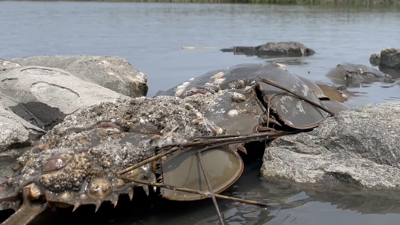

SUSSEX COUNTY, Del. - Spring along the Delaware coastline brings with it the return of millions of horseshoe crabs. Horseshoe crabs are not the only animals returning to the coast at that time though. Migrating shorebirds gather along the coast as they journey from warmer regions where they overwinter to the Arctic where they breed during the summer. One of the species that makes this trek is the threatened rufa red knot.
During the months of May and June, horseshoe crabs gather along the beach fronts and marshlands of the Delaware coastline to begin breeding. The Delaware Bay is home to 40 million horseshoe crabs, the largest population of horseshoe crabs anywhere in the world. One third of those crabs are females and each female will typically lay between 80,000 to 100,000 eggs during the spawning season. Those eggs are a vital food source to the rufa red knot. Around 50% of all migrating red knots will stop along the Delaware shores.
“When they arrive here some of them have flown directly from Brazil, so they are extremely tired and extremely hungry.”, explained Wendy Walsh, a United States Fish and Wildlife Service red knot expert, “They are here a little less than two weeks on average and during that time they need to almost double their weight in order to complete their migration and then go ahead and breed up in the Arctic.”
Unfortunately, climate change is impacting the red knots journey. Here in Delaware, changes to the shoreline structure due to rising sea levels is impacting a horseshoe crabs ability to lay eggs. A change from a sandier beach to a peaty beach is not as conducive for horseshoe crab egg laying.
Efforts are underway to help protect threatened and endangered species in the United States. The United States Senate is working on the Recovering America’s Wildlife Act, a bipartisan bill which would provide funding for restoring habitat, controlling invasive species, reconnecting migration routes, addressing new diseases, and combating other impacts of climate change.
