




MARYLAND- Maryland is continuing a decades-long effort to strengthen largemouth bass populations in its tidal rivers, stocking thousands of young fish each year to improve recreational fishing opportunities across the state.
The Maryland Department of Natural Resources has released more than 6 million largemouth bass into tidal waterways since the early 1980s. The program is funded through state fishing license fees and is designed to supplement existing fish populations, informed by habitat conditions and long-term fisheries monitoring.
The agency says the stocking process begins each spring when fisheries biologists collect adult largemouth bass from the Potomac River using electrofishing boats. Between 20 and 30 broodstock fish, with roughly two to three males for every female, are transported to the Joseph Manning Hatchery at Cedarville State Forest to spawn naturally in hatchery ponds.
After the newly hatched fish consume their yolk sacs, the adult bass are returned to the Potomac River. The number of fry produced each year depends on environmental conditions, including water temperature, spawning timing and the availability of zooplankton for food.
According to the department, near-ideal conditions in 2025 produced more fry than the hatchery could raise to larger sizes. As a result, 40,000 bass fry were stocked in prime juvenile habitat within the Potomac and Patuxent rivers. Those shallow-water areas, rich in submerged aquatic vegetation and woody debris, provide young fish with food and protection from predators.
As the fish continue to grow, the department stocks them at different stages to match habitat conditions across Maryland's tidal fisheries.
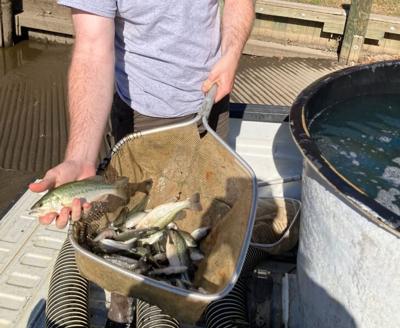
Bass raised in hatchery ponds reach an average length of 2 to 4 inches before being released in June, when aquatic vegetation is more abundant. In 2025, more than 26,000 bass of that size were stocked in the Nanticoke, Choptank, Potomac, Wicomico and Patapsco rivers, along with Marshyhope Creek.
Some fish are transferred to indoor tanks where they grow to at least 4 inches before their release in October or early November. Those tanks use a bead filtration system purchased through donations to the Black Bass Conservation Fund. The filtration system improves water quality and allows the hatchery to raise about 4,000 additional larger bass each year.
According to the department, larger fish have a greater chance of survival and can be stocked in waterways that may not provide ideal habitat for young bass but can support healthy adult populations. In 2025, the department stocked 4,375 bass measuring at least 4 inches in the Middle, Choptank and Patapsco rivers, as well as Marshyhope and Tuckahoe creeks.
Department biologists determine where and when to stock fish based on habitat quality and findings from the annual Tidal Bass Survey, which tracks the long-term health of Maryland's tidal bass fisheries. The survey helps identify waterways that would benefit most from supplemental stocking while matching fish size to available habitat.
The department said balancing the number of fish stocked with their size is an important part of the program because larger fish require more time and food to raise but generally have higher survival rates after release.
Tidal bass fishing plays a significant role in Maryland's outdoor recreation economy. Each year, the department permits more than 400 black bass tournaments across the state.
