



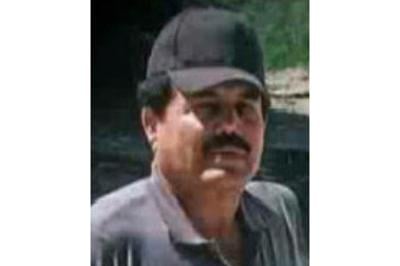
NEW YORK (AP) — Former Mexican drug kingpin Ismael “El Mayo” Zambada is set to be sentenced in a U.S. court Monday to life in prison, a punishment guaranteed by his guilty plea last year to drug trafficking charges.
Zambada’s sentencing in Brooklyn federal court is the culmination of the U.S. government’s yearslong fight to bring the long-elusive Sinaloa cartel co-founder to justice. He was arrested in 2024 after he said he was kidnapped in Mexico and flown to Texas.
Zambada ordered torture and plotted murders as he and co-founder Joaquín “El Chapo” Guzmán grew the Sinaloa cartel into the world’s largest drug trafficking organization and flooded the U.S. with tons of cocaine, fentanyl, methamphetamine and other drugs, prosecutors said.
Zambada was seen as the cartel’s strategist and dealmaker and was more involved in its day-to-day operations than the flamboyant Guzmán, who was convicted in 2019 and is serving a life sentence at the federal Supermax prison in Florence, Colorado.
Zambada pleaded guilty in August 2025 after prosecutors said they wouldn’t seek the death penalty. Speaking through a Spanish-language interpreter, he apologized “to everyone who has suffered or been affected by my actions.”
The 76-year-old Zambada has asked that he serve his sentence at a prison hospital. Zambada “contends with a complex of age-related health issues” and “will need ongoing access to medical care,” defense lawyer Frank Perez said in a sentencing memo.
Federal prosecutors asked Judge Brian M. Cogan to consider “the serious ongoing security risks” Zambada poses, arguing that some facilities “may not be appropriate for the security concerns posed.”
Judges often make recommendations about where inmates should serve time, but it’s up to the federal Bureau of Prisons to decide.
Zambada “was one of the most—if not the most—prolific and powerful narcotraffickers in the world,” prosecutors said in a sentencing memo. “It would be difficult to overstate the magnitude” of his crimes and the scale of the “corruption, violence, and other harm he spread throughout Mexico, the United States, and the world.”
Along with a life sentence, he also faces $15 billion in financial penalties, which prosecutors said reflected proceeds from the cartel's crimes under his leadership.
Zambada pleaded guilty to charges of engaging in a continuing criminal enterprise and racketeering conspiracy, acknowledging culpability for 85 underlying crimes. From 1980 until last year, he and his cartel were responsible for transporting at least 1.5 million kilograms of cocaine, “most of which went to the United States,” he said upon pleading guilty.
He acknowledged the scope of the Sinaloa operation, including underlings who built relationships with cocaine producers in Colombia, oversaw importing cocaine to Mexico by boat and plane and smuggling the drug across the U.S.-Mexico border. He said the cartel raked in hundreds of millions of dollars a year and admitted that people working for him paid hefty bribes to Mexican officials “so they could operate freely.”
Months before his arrest, prosecutors said, Zambada ordered the murder of his nephew Eliseo Imperial Castro, also known as “Cheyo Antrax,” after learning that Castro was claiming to be collecting debts for Zambada and pocketing the money without Zambada’s permission.
In 2023, at least three people were killed in retaliatory violence that Zambada directed after a large cache of fentanyl pills, methamphetamine and cocaine was stolen from the cartel, prosecutors said.
Zambada’s arrest came after, according to his lawyer, he was beaten, tied up, abducted and driven to a private plane by one of Guzmán’s sons, Joaquín Guzmán López. Their arrests touched off deadly fighting in Sinaloa that pitted Zambada's loyalists against backers of Guzmán’s sons, dubbed the Chapitos, or “little Chapos.”
In arguing to have Zambada sent to a prison hospital, Perez sought to contrast Zambada’s guilty plea and Guzmán's decision to go to trial — an 11-week ordeal that involved closing down the Brooklyn Bridge to shuttle him to and from court and jail.
“Mr. Zambada’s unequivocal acceptance of responsibility has been a defining feature of his conduct since his involuntary arrival in the United States,” Perez wrote.
“For Mr. Zambada to end up not only with the same life sentence as Mr. Guzman, but also in the same draconian Supermax prison, would fail to account in any way for the fact that he took the right path in resolving the charges against him,” Perez argued.
