



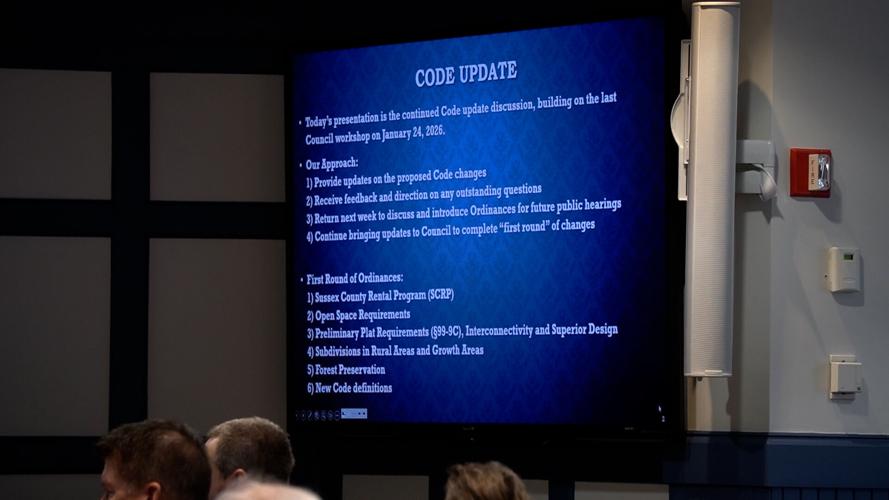

SUSSEX COUNTY, Del. - Six proposed ordinances aimed at reshaping development in Sussex County are expected to be introduced in the coming weeks, following recommendations from the county’s Land Use Reform Working Group.

Each ordinance must go before the Sussex County Planning and Zoning Commission and County Council before it can become law.
Jill Hicks, a member of the working group, played a direct role in bringing the measures before County Council.
“I think we’re off to a really good start,” Hicks said.
The six ordinances stem from a broader package of 20 recommendations developed by the group. The framework was introduced this week, with formal action anticipated next week.
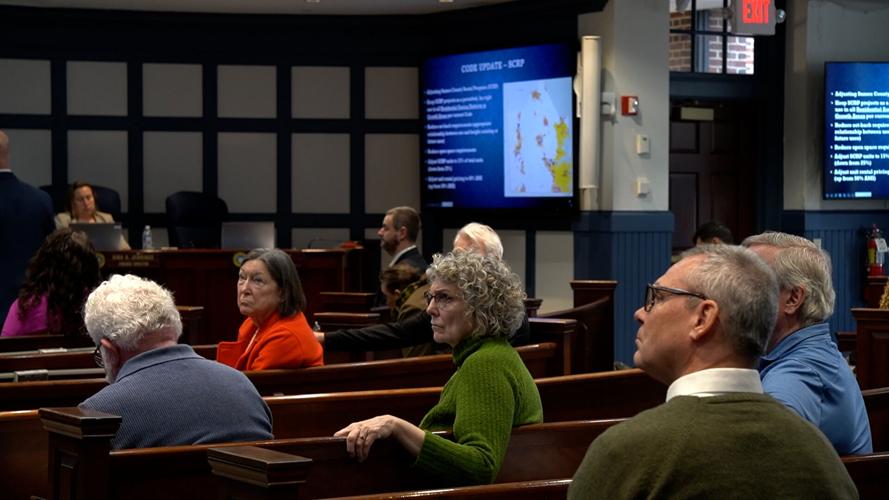
One proposal would overhaul the Sussex County Rental Program, which provides incentives for workforce and affordable housing. The changes are intended to make projects more financially feasible while still serving lower-income workers.
Under the proposal, qualifying rental projects in designated growth areas could be approved administratively, without public hearings. The required affordable set-aside would decrease from 25% to 15% of total units. Rent eligibility would shift from 50% to 60% of Area Median Income, targeting workers such as bus drivers, certified nursing assistants and construction laborers.
The ordinance also proposes reduced setbacks and “step-back” requirements to increase spacing near existing homes, while potentially allowing less distance next to permanent open space or forests. Open space requirements within rental projects would also be lowered to improve feasibility.

Each ordinance must go before the Sussex County Planning and Zoning Commission and County Council before it can become law.
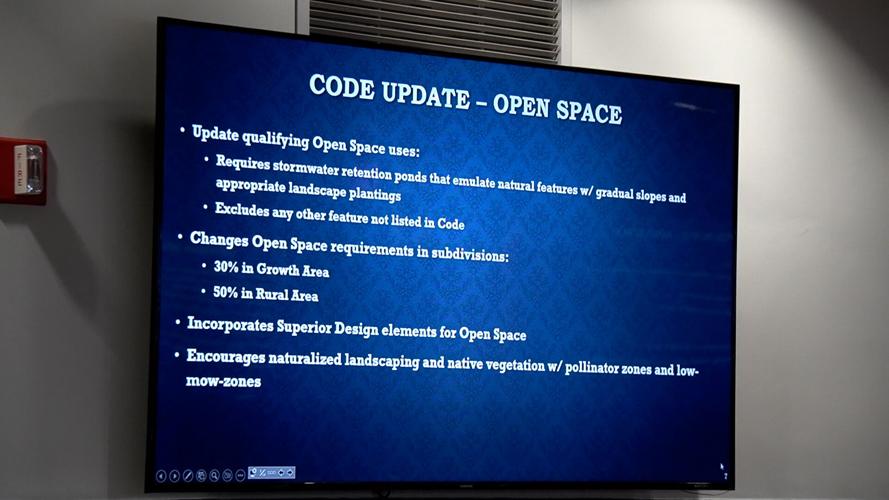
A separate open space ordinance would tighten how open space is defined and counted. Stormwater ponds would qualify only if designed with natural features and gentle slopes. Clubhouses, tot lots, narrow strips of grass between buildings and grass between sidewalks and streets would not count unless specifically listed.

Growth areas would require 30% open space, while rural areas would face 50%. The measure would also incorporate “superior design” standards and encourage native plantings, pollinator areas and low-mow landscaping.
Growth areas would require 30% open space, while rural areas would face 50%. The measure would also incorporate “superior design” standards and encourage native plantings, pollinator areas and low-mow landscaping.
Changes to subdivision rules would distinguish more clearly between rural and growth areas identified on the Future Land Use Map. In rural areas, cluster subdivisions would be eliminated, and only standard subdivisions would be allowed. Minimum lot sizes would remain 20,000 square feet with sewer service and three-quarters of an acre without sewer.
Cluster subdivisions would remain permitted in growth areas but would have to meet updated open space, forest preservation and design standards. Residential Planned Communities would be eliminated in low-density areas.
A forest preservation ordinance, which may be introduced later pending state input, would require professional assessments of forest age, species, health and connectivity to surrounding woodlands. The proposal prioritizes preserving mature forests and would impose significant fines and mitigation requirements for unauthorized clearing, potentially exceeding a one-to-one replanting ratio. County staff said they are working with the State Forester to finalize scoring and penalty standards.
The sixth ordinance would add definitions for “missing middle” housing types to county code, including cottage courts, stacked flats, triplexes and quadplexes. The first phase would establish definitions, while a second phase expected in 2026 would determine where the housing types are allowed and set density and design standards.
Hicks said she looks forward to what’s next for the reforms.
“I really look forward to seeing what those ordinances look like in writing, and I’m also counting on all the stakeholders to have input when it comes to those hearings,” she said, referring to six proposed Sussex County ordinances aimed at reshaping development.
Each ordinance must go before the Sussex County Planning and Zoning Commission and Sussex County Council before it can become law.
