




This Ties That Bind Us is sponsored by Matt The Carpet Guy.
BISHOPVILLE, Md. - What once would have gone into a dumpster is getting a second life in Worcester County, where a local nonprofit is transforming restaurant food scraps into compost for the community.
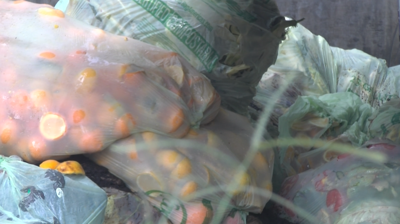
Go Green OC collects food waste from participating Ocean City restaurants and brings it to its composting operation, where volunteers sort the material, remove contamination, and mix the scraps with wood chips.
“So our truck comes in the morning and dumps all the food waste here,” says Josh Chamberlain, founder of Go Green OC. “We sort, look for contamination, mix it with wood chips, and then we move our food waste to our pile. This pile is about 40,000 pounds of food waste.”
Chamberlain tells CoastTV that finding volunteers was difficult when the organization started nearly eight years ago. Today, nearly 20 volunteers help keep the operation running.
Among them is volunteer Joan Worrall, who comes out every Monday to lend a hand.
“I enjoy doing this,” Worrall says. “Like I said, good people. I appreciate what everybody’s doing. So it’s an hour, hour and a half maybe out of my week to do this.”
Despite its slow start, Go Green OC has grown significantly. Chamberlain says the nonprofit expects to have diverted about 1.6 million pounds of food waste by year's end.
The process involves more than simply piling up discarded food. Food scraps are combined with wood chips and moisture and allowed to decompose. Chamberlain tells CoastTV that the piles can reach temperatures of about 140 to 160 degrees as the organic material is broken down.
The finished compost is sifted to remove anything that should not be there. It is then made available to community members who donate to the nonprofit.
“All this used to be thrown in the, you know, dumpsters and landfills,” Chamberlain says. “Now we’re able to turn it into a material that can be used throughout the community.”
Education is also a major part of Go Green OC’s work. The organization teaches people how to separate compostable materials from trash properly and emphasizes the problems created by contamination, particularly plastic.
“Plastics never, ever break down,” Chamberlain says while sorting through the collected material.
Even small pieces of trash can create extra work. Holding up a discarded creamer container, he pointed to a simple example.
“Like a little creamer, that’s trash,” Worrall says.
For Chamberlain, reducing food waste requires more effort than simply throwing everything into the same bin, but he said that effort is necessary to create lasting change.
“It just takes effort,” Chamberlain says. “It’s a lot more work, yes. But if you really want to make a difference in the world, you’ve got to put the work in.”
For Go Green OC, that work means keeping food waste out of landfills and turning what people leave behind into something that can benefit the community for years to come.
