



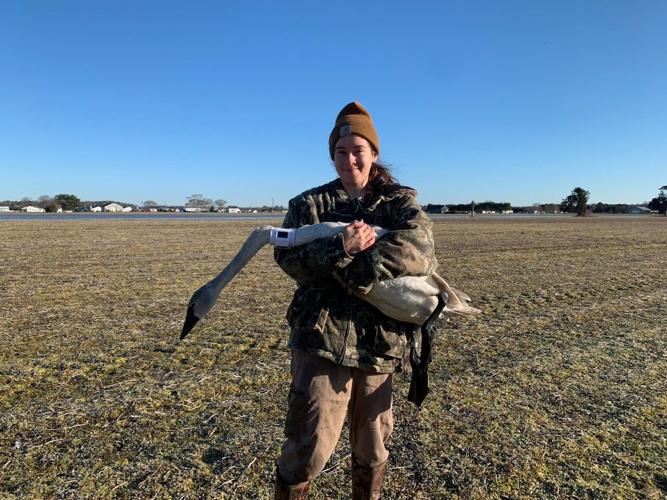

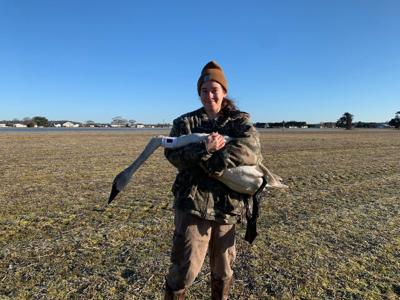
DELAWARE - Delaware’s DNREC Division of Fish and Wildlife recently began monitoring tundra swans that migrate through the state. Over the past few months the Division of Fish and Wildlife have captured many tundra swans throughout the state to fit them with GPS collars.
According to the U.S. Fish and Wildlife Service, tundra swans are a large waterfowl species with large bodies and long slim necks. The swans plumage is typically all white and it has a black bill and black feet. Tundra swans weigh typically between 13 and 20 pounds.
The diet of tundra swans while migrating consists of leftover corn, soybeans, and rice. They will also feed on winter crops such as winter wheat, rye, and barley.
Delaware is on the northern range of where tundra swans overwinter. When the weather begins to warm back up in the spring, the swans set out to fly back north to northern Canada and Alaska to mate.
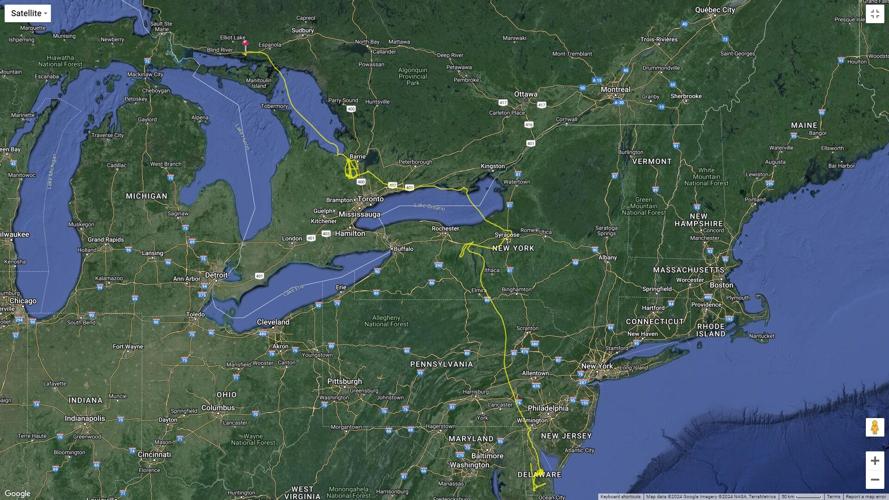
On March 15th, the Division of Fish and Wildlife tracked one swan as it departed Delaware around midnight. The swan flew continuously from Delaware all the way to New York reaching altitudes as high as 3,000 feet. That night the swan reached a peak airspeed of 69 mph. Since then the bird has achieved an airspeed as high as 83 mph. This swan recently pinged just north of Lake Huron in Canada.

The flight path of a tundra swan that left Delaware during the night of March 15th. As of April 12th, the swan was located just north of Lake Huron in Canada. Courtesy: DNREC Division of Fish and Wildlife
This project will allow DNREC’s Division of Fish and Wildlife to better monitor and manage waterfowl species, like tundra swans.
