



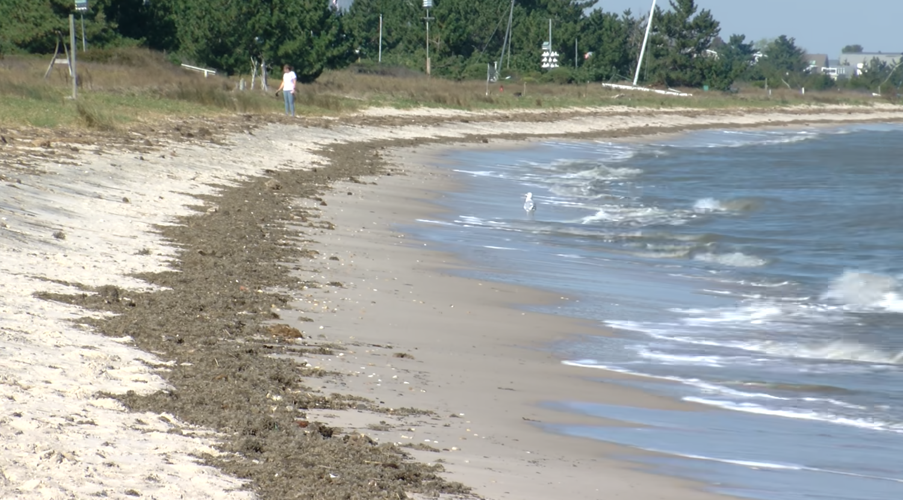
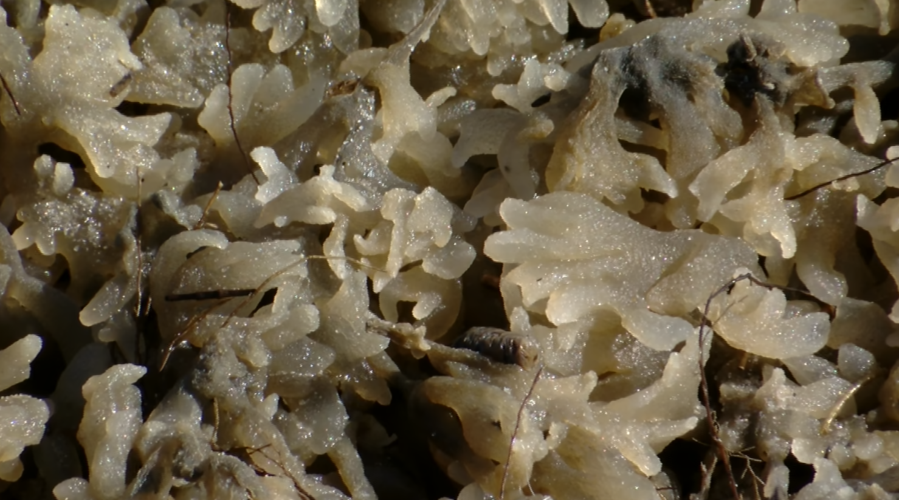
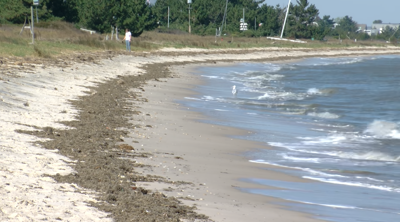
SLAUGHTER BEACH, Del. - Those rubbery, branching clumps currently covering Slaughter Beach might look like something from the plant world. But they’re actually made up of tiny animals.
Meet rubbery bryozoans.
Patrick Ruhle, manager of DNREC’s DuPont Nature Center, says the aquatic animals form colonies and feed by filtering microorganisms from the water. They are often seen in the Delaware Bay, especially on Slaughter Beach.
What looks like a single piece of branching material is actually a colony of creatures so small that the colony is much easier to spot than its individual residents.

Rubbery bryozoan
“They form these branchy colonies that have a rubber-like feel,” Ruhle said.
That feel changes as the colonies dry out, taking on what Ruhle describes as a wet-paper texture.
Bryozoans are also known as “moss animals,” according to DNREC’s Wetland Monitoring and Assessment Program. Their colonies come in different shapes and sizes, and most bryozoan species live in marine environments.
Delaware has freshwater varieties, too. A DNREC article describes the magnificent bryozoan, which forms jellylike colonies in ponds and other freshwater habitats. Those are different from the branching, rubbery colonies Ruhle describes along the bay.
For anyone taking a walk on Slaughter Beach, the clumps offer a small surprise: what looks like an odd bit of beach debris began as a whole community of tiny animals.
