



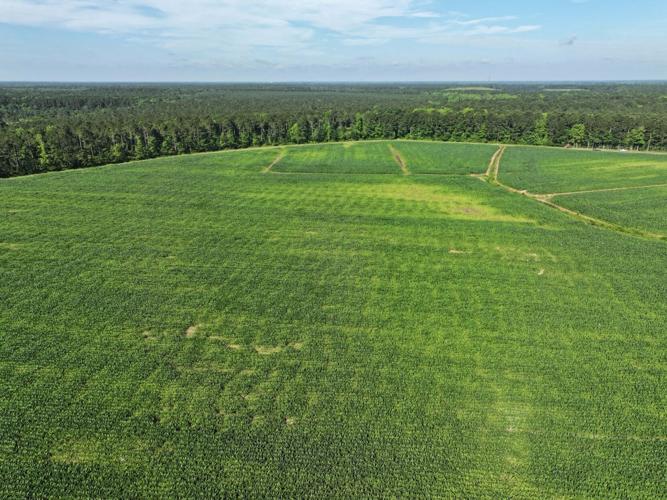
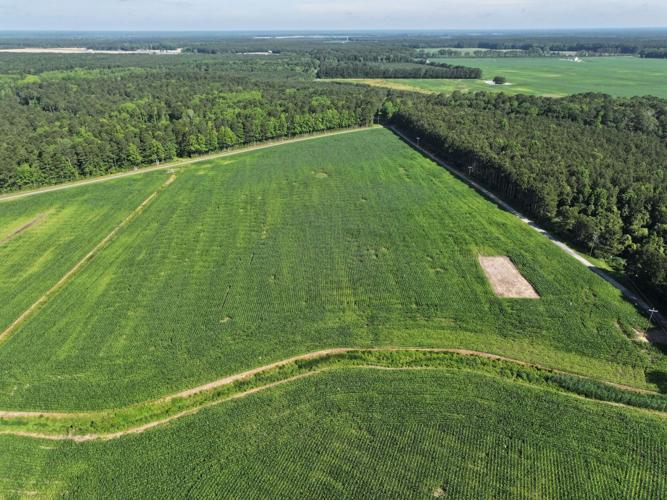
WORCESTER COUNTY, Md. - An 186-acre farm off Basket Switch Road is the latest property protected through an agricultural easement purchased by the Maryland Agricultural Land Preservation Foundation in Worcester County.
The property, Queponco Farms, is the first easement completed in the Newport Bay watershed since the creation of the Partnership for Newport Bay. The farm includes cropland and woodland, with more than 80% prime agricultural soils, and borders an existing block of protected forest.
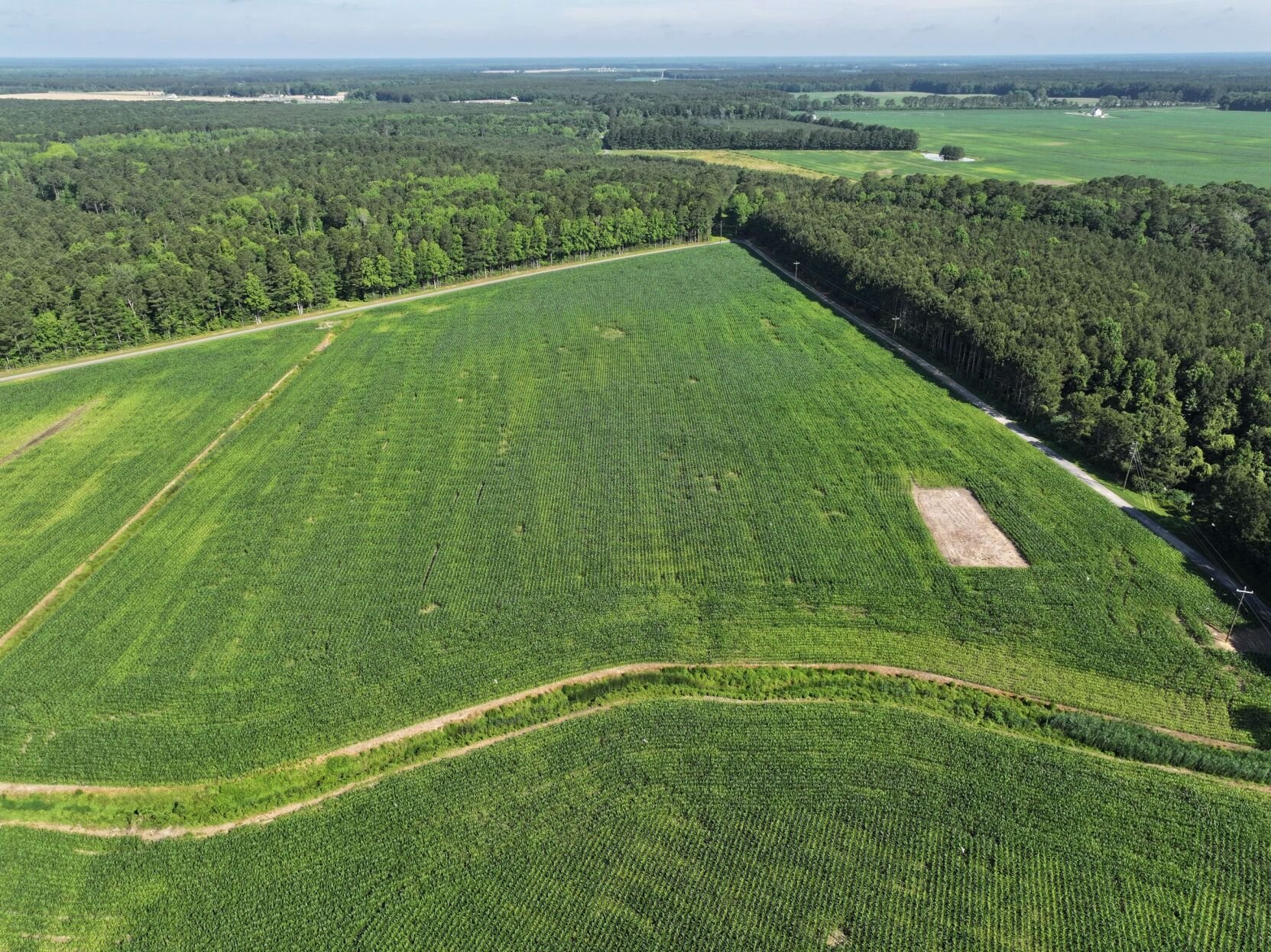
A 186-acre farm off Basket Switch Road is the latest property protected through an agricultural easement purchased by the Maryland Agricultural Land Preservation Foundation in Worcester County. (Worcester County Commissioners.)
The easement prevents subdivision and non-agricultural development in perpetuity, bringing the total contiguous protected land in the area to more than 747 acres. A tributary of Marshall Creek runs through the property, and its wooded areas provide water quality, habitat and riparian buffer benefits for the Newport Bay watershed.
"Land protection has lagged in the Newport Bay watershed compared to other areas of the county,” said Katherine Munson, a planner for Worcester County Government. “We are thrilled to work with this landowner and MALPF to protect this property.”
The Partnership for Newport Bay includes Worcester County, the Maryland Coastal Bays Program, the Lower Shore Land Trust, Assateague Coastal Trust and the town of Berlin. The group will manage a $20 million Whole Watershed Act grant over the next five years to fund water quality improvement projects in the watershed.
Mike Sirman, owner of Queponco Farms, said the easement helps protect both the farm and the surrounding environment. "By placing an easement on our farm, we've not only protected our land but also contributed to the larger ecosystem of our watershed," he said.
With this purchase, more than 11,000 acres of farmland and forest in Worcester County are now permanently protected by MALPF easements. The program allows landowners to continue owning and farming their land while limiting future development.
