



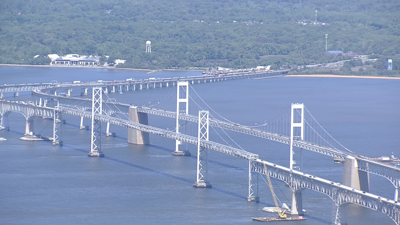

CHESAPEAKE BAY, Md. - The Maryland Transportation Authority announced final environmental approval for the Chesapeake Bay Crossing Study on Nov. 5.
The Federal Highway Administration selected Alternative C for the new Chesapeake Bay Bridge spans, which includes the construction of two new four-lane bridge spans with full shoulders across the Chesapeake Bay and the removal of the existing bridge spans. The administration said this alternative is the most cost-effective option.
The MDTA anticipates beginning design of the selected alternative in 2028 and construction as soon as 2032. The selected alternative includes two new four lane bridge spans, with full shoulders across the Chesapeake Bay, and removals of the existing Bay Bridge lanes, which will eliminate the need for major rehabilitation projects.
The selected alternative also includes improved navigational clearance to meet U.S. Coast Guard requirements. The new clearance will be 230 feet, which is the same as the new Francis Scott Key Bridge.
Additionally, the MDTA said the project will widen Route 50 and 301 to a total of 8 lanes, with four in each direction. The widening project will span from west of Oceanic Drive to east of Cox Creek to accommodate transitions to the new bridge spans.
The alternative includes a financial commitment for transit related improvements, with a proposed one time investment of up to $40 million. The plan also includes an optional bicycle and pedestrian shared use path, which will be based on a future financial analysis from the MDTA to determine if this path is feasible.
“I want to thank the Bay Crossing Study team and Federal Highway Administration for their years of hard work and dedication in delivering this study and advancing innovative solutions that better connect all Marylanders to opportunities and each other,” said MDTA Executive Director Bruce Gartner. “The public-input process was deeply valuable to the success of this study, and our team engaged with thousands of residents, community members, drivers and elected officials on both sides of the bay to ensure a collaborative approach for all stakeholders.”
The MDTA said the approved crossing will enhance safe and reliable travel for years to come and minimize environmental impact. The authority said it will add $23 billion to the local economy while creating more than 60,000 jobs.
The federal NEPA process is required for all major federal actions, including those involving federal funding or approvals. The process included comprehensive public engagement, with public open houses, public hearings and attendance at over 120 community events throughout the study area. The MDTA received over 5,600 comments and survey responses during the Tier 2 NEPA Study.
The Final Environmental Impact Statement concludes that Alternative C would be the most cost-effective alternative and have the least impact on the environment. The approval of the Final Environmental Impact Statement and Record of Decision marks completion of the Chesapeake Bay Crossing Study.
