



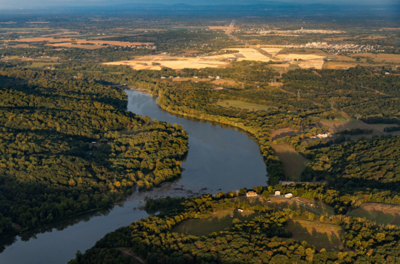

MARYLAND - More than 9.2 million acres of land across the Chesapeake Bay watershed have now been permanently protected from development, accounting for about 23 percent of the region’s total land area, according to data collected through 2024 by the Chesapeake Bay Program.
While falling short of the goal set under the 2014 Chesapeake Bay Watershed Agreement, conservation partners achieved about 90 percent of the target to protect an additional 2 million acres. From 2010 to 2024, roughly 1.8 million acres were conserved, representing a 21 percent increase, officials said.
The data, reported by the seven watershed jurisdictions, Delaware, the District of Columbia, Maryland, New York, Pennsylvania, Virginia and West Virginia reflect conservation efforts by state and federal agencies, local governments, private landowners, land trusts and other organizations.
State agencies own about 45 percent of all protected lands in the watershed, while the federal government holds approximately 23 percent. Forests account for about 76 percent of protected acreage, with wetlands making up roughly 6 percent, according to the 2024 Protected Lands Dataset and the Chesapeake Bay Program’s high-resolution land-use data.
Chesapeake Bay Program officials say Pennsylvania leads the watershed with 3.7 million acres of protected land, followed by Virginia with 3.1 million and Maryland with 1.7 million. Smaller totals were reported in West Virginia (320,000 acres), New York (308,000), Delaware (131,000) and Washington, D.C. (8,400).
"Pennsylvania is proud to lead the Chesapeake Bay watershed with the highest number of protected acres," said Cindy Adams Dunn, secretary of the Pennsylvania Department of Conservation and Natural Resources, citing decades of collaboration and sustained funding. She said land protection helps ensure clean water, healthy communities and long-term environmental resilience.
Officials noted that recent decreases in reported protected lands in the District of Columbia, Maryland, New York and West Virginia were largely due to data refinements, including corrections to land boundaries.
Virginia Secretary of Natural and Historic Resources, Stefanie Taillon, highlighted increased state investment, saying annual funding for the Virginia Land Conservation Fund rose from $10 million to $16 million under the Youngkin administration. Over the past four years, she said, grants totaling $59.5 million supported 125 projects and conserved more than 89,000 acres statewide.
Officials say protected lands are defined as areas with cultural, historical, ecological or agricultural value that are permanently shielded from development through easements, donations or the purchase of land or development rights.
Conservation advocates say protecting land is among the most effective ways to safeguard the Chesapeake Bay as population growth increases development pressure. Preserved forests and wetlands help improve water quality, support wildlife habitat, protect historic sites, expand recreation opportunities and strengthen community resilience to environmental change.
The revised Chesapeake Bay Watershed Agreement, approved by the Chesapeake Executive Council on Dec. 2, 2025, reaffirms land conservation as central to restoring the Bay. The updated Protected Lands Outcome calls for permanently protecting an additional 2 million acres beyond the original 2014 goal, with specific targets for forests, wetlands, agricultural lands, tribal homelands and urban green spaces, according to The Chesapeake Bay Program.
"Reaching 90 percent of the original conservation goal represents meaningful progress," said Susan Shingledecker, CEO of the Chesapeake Conservancy and co-chair of the Chesapeake Conservation Partnership. "But it also underscores the need to maintain urgency as development pressure intensifies across the watershed."
