





This Coastal Connection is sponsored by Baths by Spicer Bros.
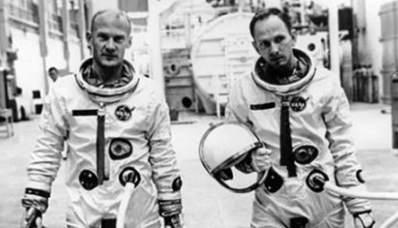
LEWES, Del - As the month of October neared an end in 1964, only six American men had flown in space. All were part of the Mercury program. The next phase in the goal of getting man to the Moon was Gemini. For over a year, NASA astronauts were training for those two-man flights. One of the astronauts was Ted Freeman, class of Lewes High School 1948.
On Oct. 31, 1964, Freeman was flying back to Houston. The city had become the home base for the astronauts. That week, Freeman was training at the McDonnell facilities in St. Louis. It is where the Gemini space capsule was being built. Freeman was piloting a T-38A Talon. As he approached Ellington Air Force Base near Houston, his jet hit a flock of geese causing an engine to flame. The eventual crash killed Freeman. He became the first astronaut to die.
"He had to make a decision about weather or not to eject and he ejected too late," NASA historian Dr. Jennifer Ross-Nazzal told CoastTV. "There was always this feeling that someone might die trying to get to the moon but nobody thought it would be in an aircraft just outside of Ellington Air Force Base."
Four members of Freeman's NASA class, Buzz Aldrin, Alan Bean, Gene Cernan, and David Scott, walked on the moon. In addition, Michael Collins was the lunar pilot of America's first Moon landing mission Apollo 11. Freeman would have been on track to be included on the rare list.
"That was that was definitely the pathway, to step on the Moon," 96 year-old and lifelong Lewes resident Hazel Brittingham said. Brittingham graduated Lewes High School in 1945 and was a friend of the Freeman family. In 1964, she was the secretary at Lewes High School and was the person who had to make the announcement over the school's public address system about Freeman's death. "It was a terrible blow because we had been aware that he was being pointed out for great things and that his mission was to get to the moon."
"There was an interview that Michael Cassutt did with Deke Slayton and he had asked him if Freeman had not perished, would he have been selected for a flight?" Ross-Nazzal said. "There seems to be the feeling on his part that he (Freeman) would have been named to an early flight, perhaps on Gemini, because he was one of the best and most skilled pilots of his class."
Freeman's crash was not the only tragedy to occur for members of that astronaut class. On Feb. 28, 1966 Charles Bassett, also flying in a T-38, died when his jet crashed into a building at the McDonnell facility. Roger Chaffee was part of the Apollo 1 crew that died in the command module fire while on the Cape Kennedy launch pad during a test on Jan. 27, 1967. Later that year Clifton Williams crashed in a T-38 flying from Cape Canaveral to Houston.
Freeman's name lives on in his home city. The stretch of U.S. Route 9 that approaches the Cape May-Lewes Ferry was dedicated as the Theodore C. Freeman Highway on Dec. 21, 1965. A plaque commemorating Freeman can be found at the Lewes terminal of the ferry. An article in the Dec. 26, 1968 edition of the News Journal stated NASA named a 54-mile wide crater on the Moon as Freeman Crater when the first images of it were sent to Earth during Apollo 8's historic mission. Freeman was 34 years-old when he died.
