







SUSSEX COUNTY, Del. - Delaware has confirmed its first case of Chronic Wasting Disease in a wild white-tailed deer from Sussex County, marking the first detection of the disease in the state.
The Delaware Department of Natural Resources and Environmental Control announced the positive result after confirmation by the U.S. Department of Agriculture’s National Veterinary Services Laboratory. The deer was harvested by a hunter in Sussex County as part of routine surveillance efforts. A second deer has tested presumptive positive at the Pennsylvania Animal Diagnostic Laboratory System and is awaiting federal confirmation.
DNREC said it has conducted annual surveillance for the disease since 2003, testing 12,938 deer. The two positive samples came from more than 600 deer tested during the 2025-26 hunting season.
Chronic Wasting Disease is a deadly illness that affects the brain and nervous system of deer, elk and moose. It is caused by abnormal proteins known as prions and can spread through bodily fluids such as saliva, blood, urine and feces, either through direct contact or contaminated environments, according to DNREC.
While there is no known transmission to humans, the Centers for Disease Control and Prevention recommends hunters test deer taken from areas where the disease is present before eating the meat. Meat from a deer that tests positive should not be consumed.
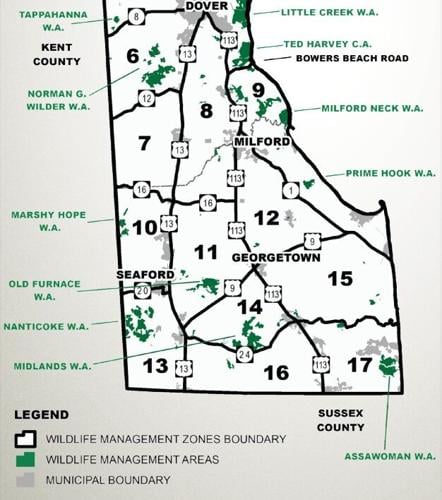
Following the confirmation, DNREC activated its response plan and established a management zone within a 5-mile radius of where the infected deer was found. The area includes wildlife management zones 14 and 16 in Sussex County. Additional sampling will be conducted to determine if more deer are affected.

The area includes wildlife management zones 14 and 16 in Sussex County. Additional sampling will be conducted to determine if more deer are affected. (DNREC)
Hunters who harvested deer in the area may be contacted directly, and DNREC plans to hold a public meeting to share information and answer questions.
During the next hunting season, Delaware plans to require mandatory deer check-ins at wildlife health stations within the management area for testing. Additional regulations may also be considered to limit the spread among wild deer.
The disease has now been reported in 37 states, including neighboring Maryland, Pennsylvania and Virginia.
DNREC is urging the public to help slow the spread by avoiding the movement of live deer, not feeding or baiting deer, and properly disposing of carcasses. People are also encouraged to report deer that appear sick or behave unusually.
Farmers who manage captive deer are being asked by the Delaware Department of Agriculture to maintain strict biosecurity measures and report any deer deaths promptly for testing.
